Rabbit · All · Routine
Rabbit Care: What Rabbits Actually Need
Published 06 Jul 2026 · ✓ Researched
TL;DR
- Rabbits are not easy starter pets. They're a long commitment, often ten years or more, with fairly specific needs.
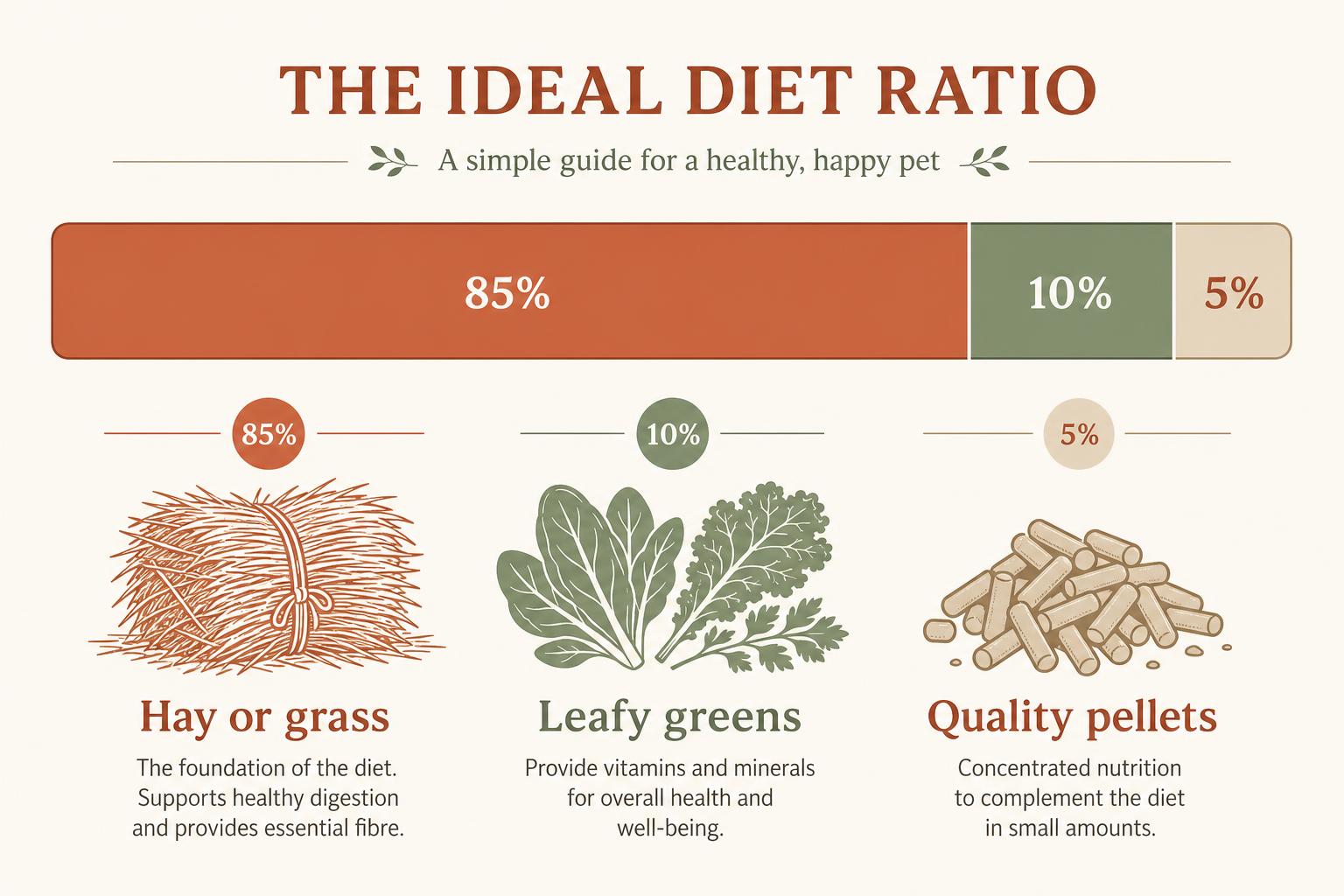
- Diet is the foundation: about 85% hay or grass, 10% leafy greens, 5% quality pellets. Avoid muesli mixes.
- They're social. Keeping a rabbit entirely alone is a welfare problem, not a preference. Neutered pairs are best.
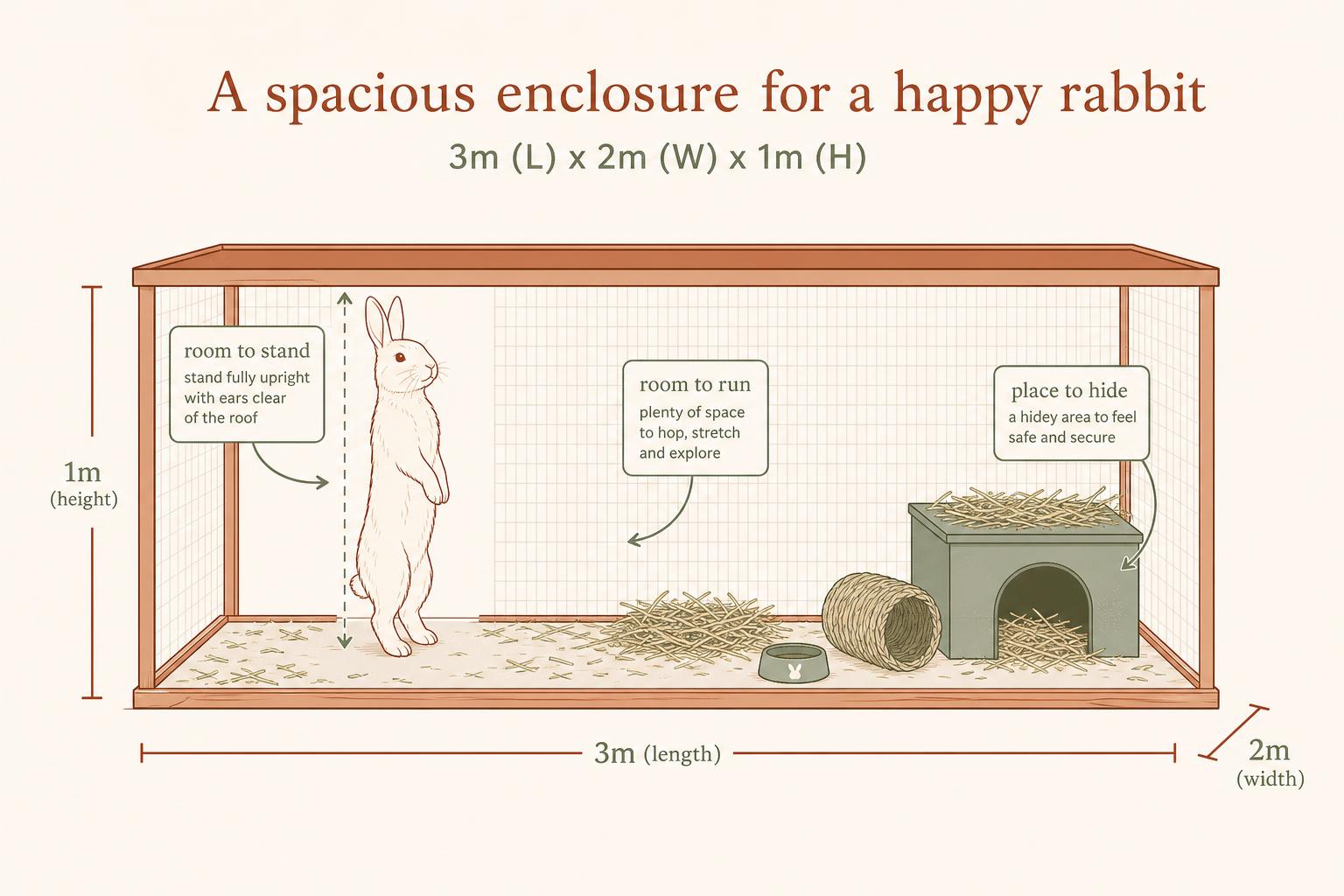
- A hutch is not enough. A pair needs a minimum of roughly 3m x 2m x 1m of space, always accessible.
- They dislike being picked up, and aren't ideal cuddly pets for young children. Build trust at ground level.
- Vaccinate against myxomatosis and RVHD, and neuter. See a rabbit-savvy vet promptly if one stops eating.
Rabbits have a reputation as a starter pet: cheap, low-effort, good for children. Almost none of that is true. They're the third most popular mammal kept in UK homes and also one of the most neglected, not usually through unkindness but because their needs are genuinely more complex than the reputation suggests, and the pet-shop version of rabbit care leaves a lot out.
The encouraging part is that the essentials aren't complicated once you know them. Get the diet, company, space and handling right, and a rabbit can be a characterful, rewarding companion for a decade or more. This guide covers what rabbits actually need, and gently clears up the myths that cause the most harm.
Diet: hay first, and it isn't close
If there's one thing to get right, it's diet, and the single most important element is hay. The Rabbit Welfare Association & Fund and every major UK welfare body agree on roughly the same balance: about 85% good-quality feeding hay or fresh grass, around 10% fresh leafy greens, and about 5% good-quality pellets.
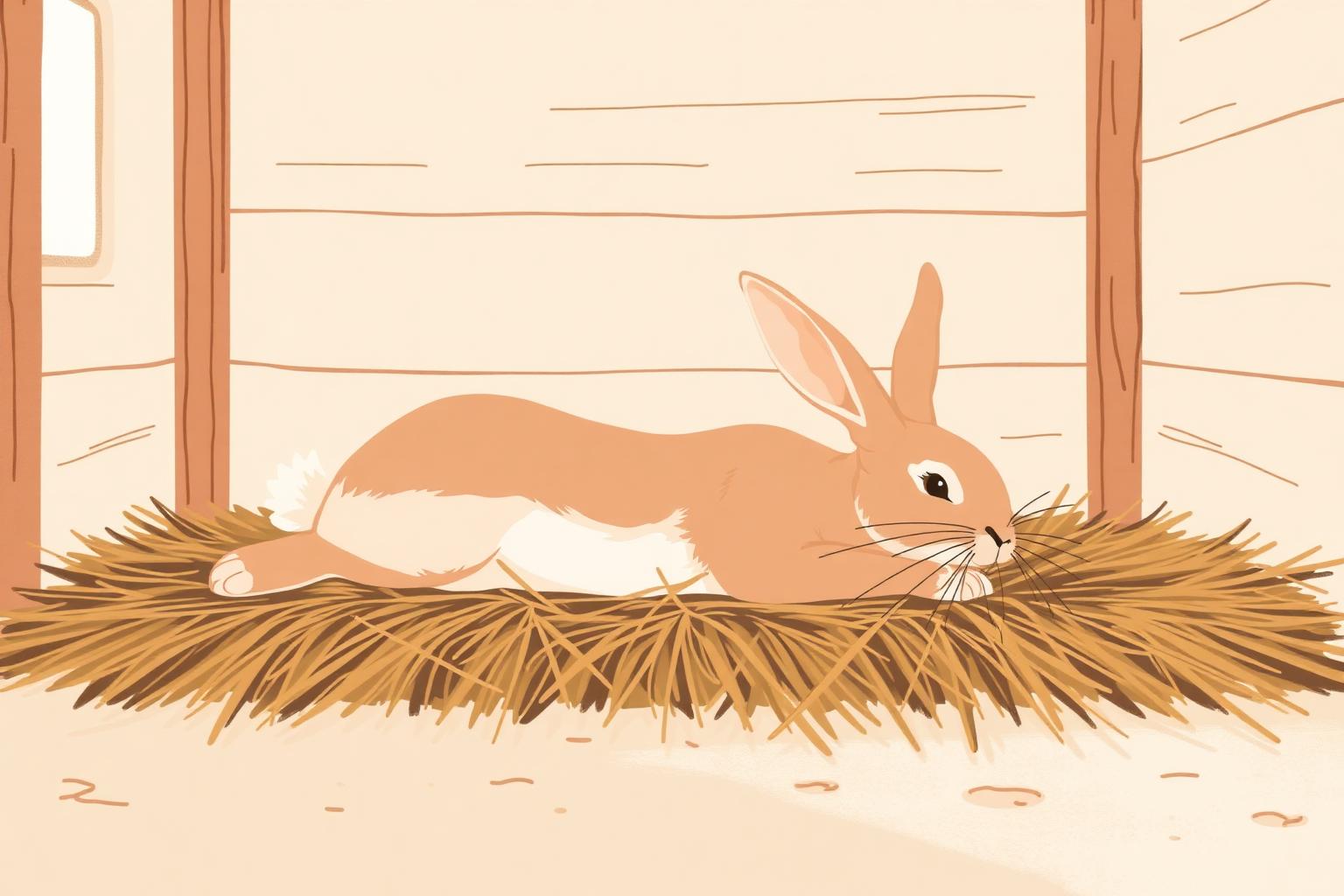
Hay isn't a background comfort or bedding that happens to be edible. It's the actual basis of a rabbit's health, for two reasons. First, the long fibre keeps their digestive system moving, and a rabbit's gut is unforgiving: if it slows or stops, a condition called gut stasis, it becomes a genuine emergency quickly. Second, rabbits' teeth grow continuously throughout life, and the grinding chew of hay is what wears them down. Without enough of it, dental disease, one of the most common and painful problems vets see in rabbits, sets in. A useful rule of thumb: a rabbit should eat a bundle of hay at least the size of its own body every single day.
A few clear don'ts. Avoid muesli-style mixes, the colourful ones with flaked bits: rabbits pick out the sugary pieces and leave the fibre, which causes both dental and digestive disease, and UK campaigns have spent years reducing their use for exactly this reason. Never feed grass clippings from a lawnmower, which ferment and can cause serious gut illness (fresh growing grass is fine). And introduce any new greens gradually, since a rabbit on a poor diet tolerates change badly.
Company: rabbits are not solitary
One of the most damaging myths about rabbits is that they're content on their own. They aren't. In the wild they live in groups, and pet rabbits are social animals that suffer from loneliness. Keeping a single rabbit with no company of its own kind is now widely recognised as a welfare problem, and UK organisations name "rabbits are happy alone" specifically as a myth to retire.
The recommendation is to keep rabbits in compatible, neutered pairs or groups. Neutering matters here for two reasons: it prevents unwanted litters, and it makes bonding far more likely to succeed, since un-neutered rabbits are more territorial and prone to fighting. Bonding two rabbits isn't automatic, though. It needs to be done slowly, on neutral ground, with patient supervision, and even same-sex pairs need careful introduction. If you already have a single rabbit, a rescue centre can often help match and bond a companion, and many will do "bunny dating" to find a pair that gets along.
Space: a hutch is not enough
"A hutch is not enough" is a phrase every UK welfare organisation now repeats, because the traditional small hutch is one of the biggest causes of poor rabbit welfare. Rabbits need room to run, take several hops in a line, stand fully upright on their back legs without their ears touching the roof, dig, and stretch out completely.
The welfare consensus is a minimum enclosure of around 3m x 2m x 1m high for a pair of average-sized rabbits, and crucially that space should be available all the time, not just during a brief daily run. This applies whether they live outdoors or as house rabbits indoors. Outdoor rabbits need secure protection from predators, including foxes, which can mean buried mesh or reinforced fencing, and shelter from extremes of weather. Indoor rabbits need a rabbit-proofed area free of electrical cables and safe from other pets. Larger and giant breeds need proportionally more room again.
Handling: trust, not cuddles
Rabbits are prey animals, and this shapes almost everything about how they experience the world. Being lifted off the ground is, to a rabbit, very much what being caught by a predator would feel like, so most dislike being picked up and can struggle, scratch or freeze when handled. This is normal rabbit behaviour, not a character flaw, and it's why rabbits are often a poor match for young children hoping for a cuddly pet.
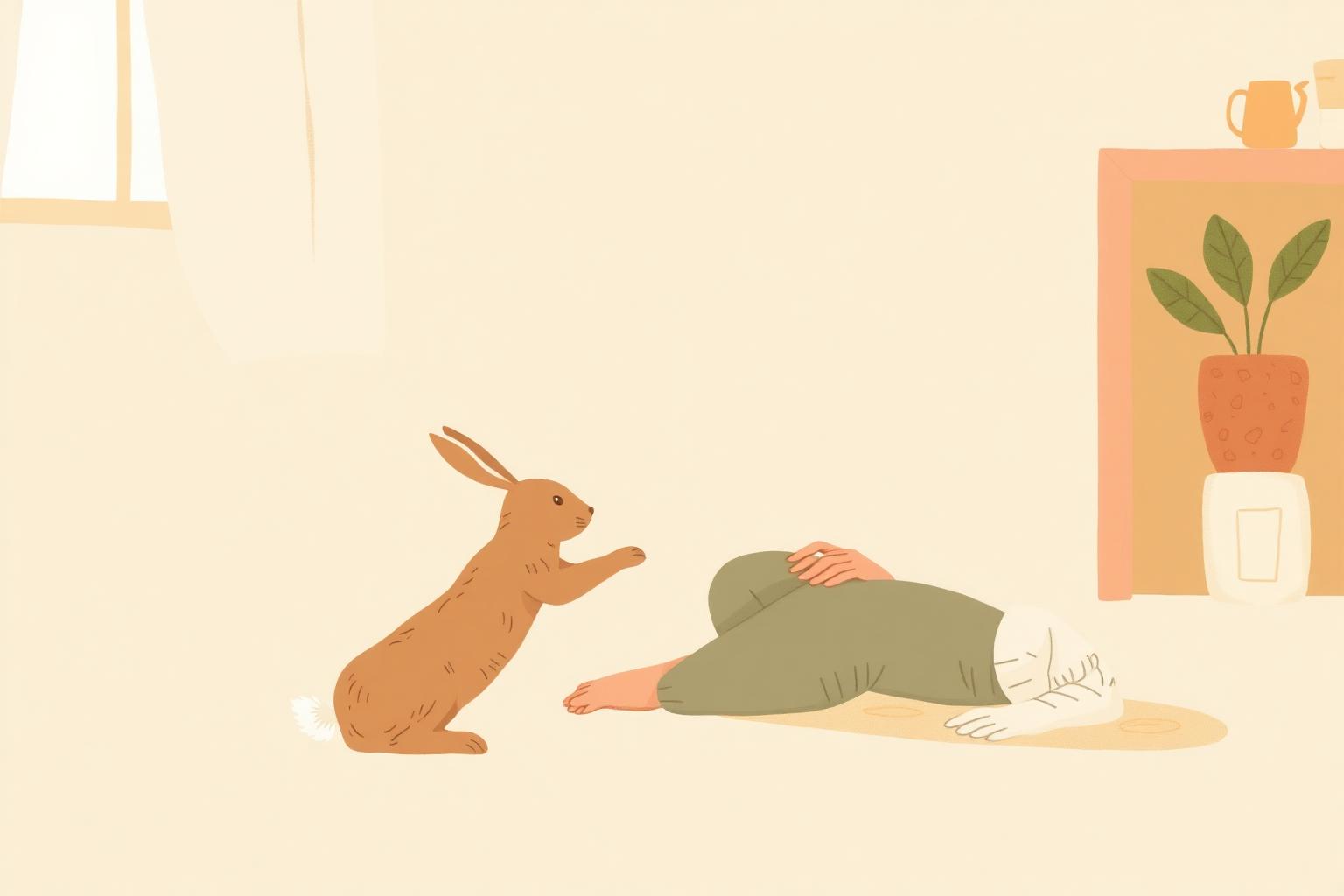
The better approach is to build trust at their level. Sit on the floor, let the rabbit approach you, and reward calm interaction. Over time many rabbits become affectionate and curious on their own terms, seeking out contact when it's their choice rather than being scooped up. When you do need to handle a rabbit, for health checks or moving them, it should be done confidently and securely, supporting the back legs, and kept brief. Loud noises and sudden movements frighten them, so a calm environment helps enormously.
Preventive health: the essentials
Rabbits hide illness well, another prey-animal trait, so preventive care and quick action matter more than with many pets. A few essentials:
Vaccination. In the UK, rabbits should be vaccinated against myxomatosis and rabbit viral haemorrhagic disease (RVHD1 and RVHD2), both of which are widespread and usually fatal. Your vet can advise on the current combined vaccines and timing. Indoor rabbits need it too — myxomatosis risk rises in late summer and biting insects come inside.
Neutering. Beyond enabling companionship, neutering carries a direct health benefit for females: uterine cancer is extremely common in unspayed does, affecting the majority by around four years of age. Spaying prevents it.
Watching for trouble. The most important thing any owner can learn is that a rabbit which stops eating or passing droppings is an emergency, not a wait-and-see. It often signals gut stasis and needs a vet the same day. In warmer months, check the back end daily for soiling and flystrike, where flies lay eggs on a dirty or damp rabbit and the maggots cause rapid, severe damage. Overgrown teeth, head tilt, lumps, and sudden lethargy all warrant a prompt call to a rabbit-savvy vet.
Common mistakes
| The mistake | Why it's a problem | Better approach |
|---|---|---|
| Feeding mostly pellets or muesli | Causes selective feeding, dental and gut disease | Make hay ~85% of the diet; pellets a small measured amount |
| Keeping one rabbit alone | Rabbits are social and suffer in isolation | Keep a neutered, bonded pair |
| A traditional small hutch | Far too little space to move naturally | Minimum ~3m x 2m x 1m, accessible at all times |
| Picking a rabbit up often | Handling stresses prey animals | Build trust at ground level; handle only when needed |
| Skipping vaccination or neutering | Leaves rabbits exposed to fatal disease and cancer | Vaccinate against myxo and RVHD; neuter |
| Waiting when a rabbit goes off food | Gut stasis can be fatal within a day | Treat not eating as a same-day emergency |
When to see a vet
Some things can't wait. Contact a rabbit-experienced vet promptly if your rabbit stops eating or producing droppings, seems suddenly quiet or hunched, has a runny back end or any sign of flies or maggots, shows a head tilt, or has a lump or overgrown teeth. For everything else, a rabbit-savvy vet is worth finding before you need one: not all practices see many rabbits, and the RWAF keeps a directory of rabbit-friendly vets.
The Bottom Line
Rabbits are wonderful, characterful animals, and poorly served by their "easy pet" reputation. Give them a hay-based diet, a companion of their own kind, real space to move, handling on their terms, and proper preventive care, and you'll have a healthy, engaging companion for years. The care is more involved than most people expect going in. It's also entirely manageable once you know what actually matters, which is most of what this guide is for.
Guides on Burrow are researched carefully and written to be genuinely useful, but they aren't a substitute for veterinary advice. Rabbits can go downhill fast, so if something seems wrong, particularly if your rabbit has stopped eating, contact a vet straight away.
Further reading: Flystrike in Rabbits, Guinea Pigs and Hamsters: A Summer Emergency · How Much to Feed Your Dog · Recognising Heatstroke in Dogs
Want guides like this in your inbox? Join The Once-Over, our weekly note from Hazel.
Related reading: Why Do Rabbits' Teeth Never Stop Growing? · Why Do Rabbits Eat Their Own Poo? · Winter Housing for Rabbits and Guinea Pigs · The Fireworks Guide
Common questions