Small Animals · Rabbit · 21 Aug 2026
Why Do Rabbits Eat Their Own Poo?
By Burrow · 21 Aug 2026
TL;DR
- Rabbits produce two very different types of droppings. Ordinary hard faecal pellets are waste. Caecotrophs are not — they are soft, nutrient-rich droppings produced after microbial fermentation in the caecum, and they are meant to be eaten.
- Caecotrophs provide important protein, B vitamins and other nutrients that cannot be absorbed from the caecum directly. Re-ingesting them allows a second pass through the small intestine.
- Rabbits usually eat them directly from the anus, often during quiet periods, so owners may never see them.
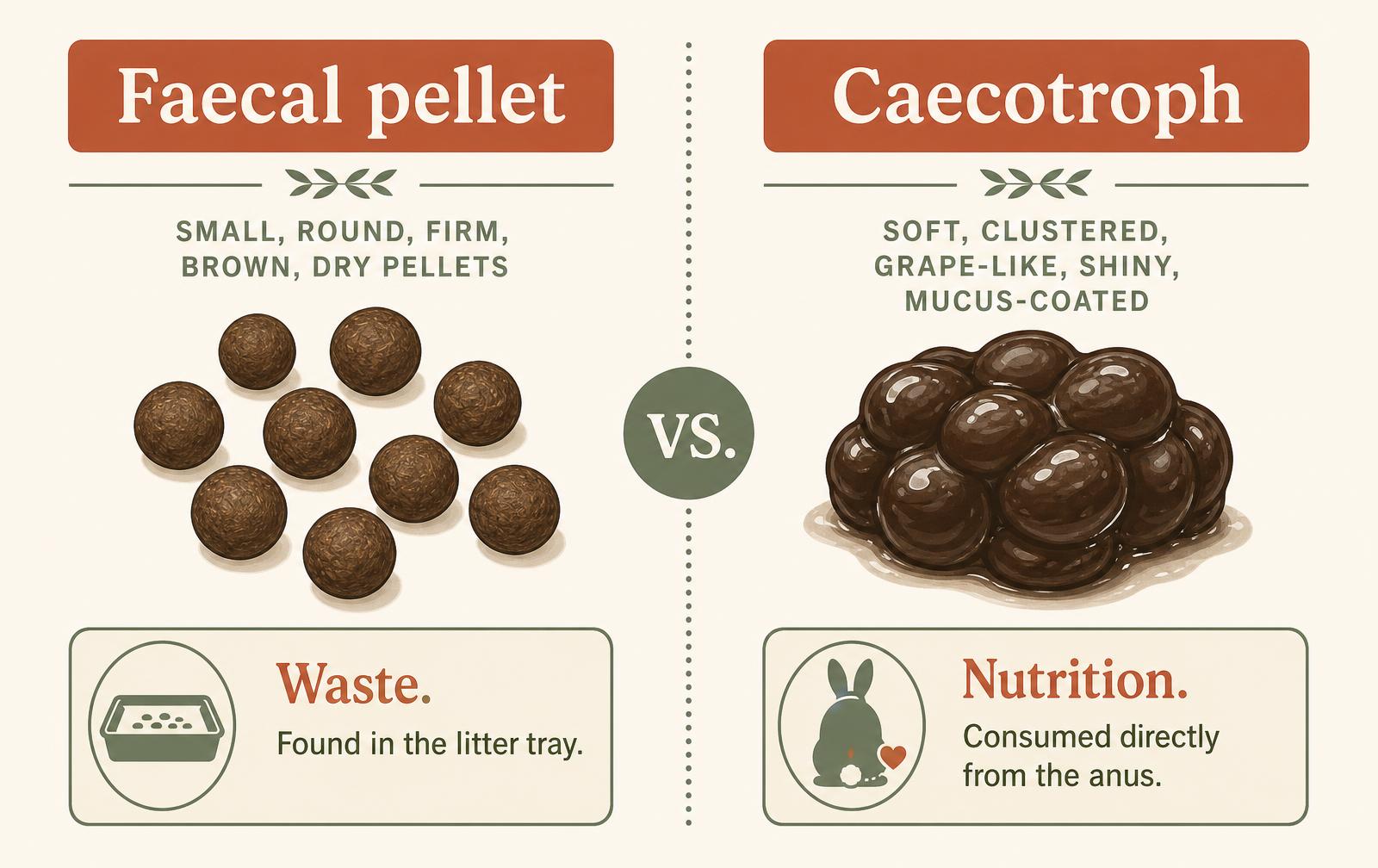
- Normal caecotrophs are soft, shiny, dark and clustered, often resembling a small bunch of grapes. They are not the same as diarrhoea.
- Regularly finding uneaten caecotrophs is a sign something needs attention — too much concentrated food, obesity, arthritis, dental disease or another health problem.
- Young rabbits may consume their mother's caecotrophs as their digestive microbiome develops.
It isn't poo. Not really. What rabbits eat is a specialised type of soft dropping called a caecotroph — produced specifically so that it can pass through the digestive system a second time.
It looks strange to us. To a rabbit, it is lunch. And the time to pay attention is usually not when your rabbit eats one, but when it doesn't.
Caecotrophy — the consumption of caecotrophs — is a normal and essential part of rabbit digestion. It allows rabbits to extract nutrients from tough plant material that their digestive system cannot fully use on the first pass. Most healthy rabbits do it every day. Most owners barely notice.
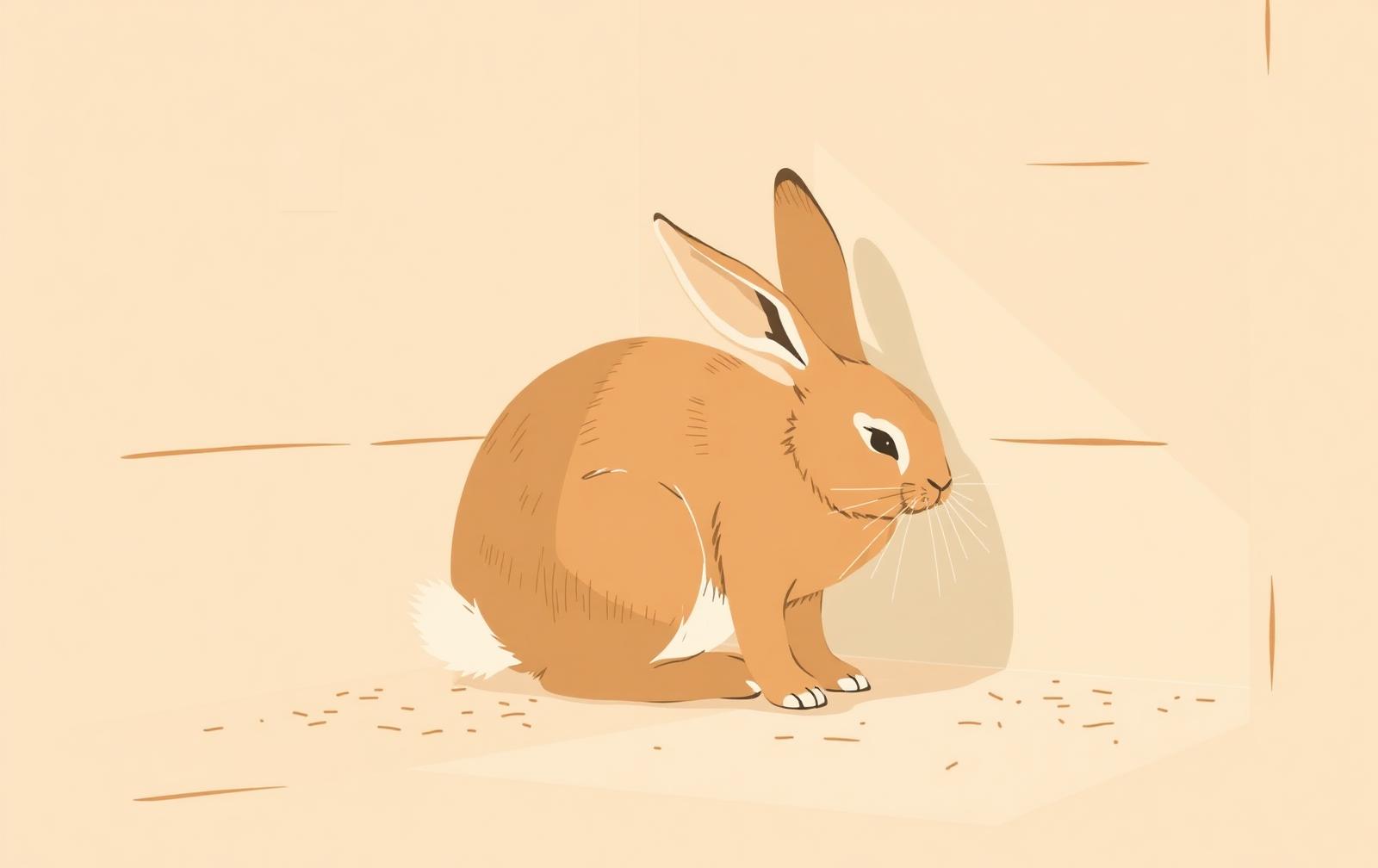
Rabbits actually make two kinds of droppings
The familiar rabbit dropping is the one you find in the litter tray: small, round, dry, brown, and relatively inoffensive. Those are ordinary faecal pellets — waste material that has completed its journey through the digestive tract.
Caecotrophs are completely different. They are soft, dark green to brown, moist, shiny and coated in mucus, grouped into clusters that are often compared with a small bunch of grapes or a mulberry. And unlike normal faecal pellets, they are not supposed to be left behind. A healthy rabbit eats them almost immediately after production.
Why rabbits need to eat twice
The answer lies in grass. Rabbits evolved to live on large quantities of fibrous plant material — a diet that is difficult to fully digest. They cannot break down all plant fibre using their own digestive enzymes, so they rely on microorganisms to do part of the work for them. That fermentation happens mainly in a large organ called the caecum, which acts as a fermentation chamber. Microorganisms there process material that escaped digestion earlier and generate nutritionally useful compounds including microbial protein, B vitamins and short-chain fatty acids.
The anatomical problem is that the caecum sits after the small intestine, where nutrients are most efficiently absorbed. So rabbits evolved a workaround: they send the useful material through again.
A rabbit's large intestine separates material according to particle size and digestibility. Larger, relatively indigestible fibre moves onwards to become the hard pellets in the litter tray. Smaller particles and more fermentable material are directed back towards the caecum, fermented by microorganisms, packaged into caecotrophs, and passed out ready for re-ingestion. On the second pass through the stomach and small intestine, those nutrients can be absorbed properly. Caecotrophy is essentially a second stage of digestion.
This isn't a dirty habit
Technically, eating faecal material is called coprophagy. But describing rabbit caecotrophy as "eating poo" is biologically misleading. A dog scavenging another animal's faeces from the park is doing something very different. For rabbits, caecotroph production is an organised, deliberate part of normal physiology. The body separates material. The caecum ferments it. A specialised dropping is produced. The rabbit consumes it immediately. The better question isn't "why does my rabbit eat its poo?" — it is "why does a rabbit's digestive system need food to make two trips?"
What is actually inside a caecotroph?
Caecotrophs are nutritionally much richer than ordinary faecal pellets. They contain substantial microbial protein, with analyses citing roughly 28–30% crude protein, alongside B vitamins, short-chain fatty acids and other nutrients generated through fermentation. Gut bacteria normally synthesise the rabbit's required B vitamins and vitamin K within the caecum, and caecotrophs are the vehicle by which those vitamins reach the small intestine for absorption. The mucus coat that gives caecotrophs their characteristic shiny, clustered appearance also serves a specific protective function: it shields the bacteria as they travel back through the acidic environment of the stomach, allowing them to re-establish in the caecum.
It would be misleading to say rabbits obtain all of their nutrition from caecotrophs — their ordinary diet must still provide adequate protein, energy and fibre. But caecotrophy makes that diet considerably more efficient.
Why most owners never see it happen
Healthy rabbits are discreet. Caecotrophs are normally eaten directly from the anus as they are produced — from the outside, the rabbit may simply appear to bend around and groom its underside, then come back up chewing. Caecotroph production also tends to occur during quieter periods, often overnight or early in the day.
If you rarely see caecotrophs lying around, the system is probably doing exactly what it should. In a healthy rabbit, not finding them is usually exactly what you want.
Young rabbits learn the system early
Caecotrophy also plays a role in early digestive development. Young rabbits begin consuming their mother's caecotrophs while transitioning from milk towards solid food — a process that helps introduce the microbial community needed for adult hindgut fermentation. Caecotrophy is therefore more than a feeding behaviour. It is part of the development of the rabbit digestive ecosystem itself.
Caecotroph or diarrhoea?
This distinction matters. A normal caecotroph is soft but formed — it appears as a shiny, clustered mass of small sections. True diarrhoea is watery or unformed, and that is not normal rabbit digestion. Watery diarrhoea can accompany serious gastrointestinal disease and should be treated very differently from finding an ordinary caecotroph.
If your rabbit has diarrhoea alongside lethargy, reduced appetite or other signs of illness, contact a vet promptly. If you are not sure what you are looking at, photograph it. A picture is considerably more useful to a vet than trying to describe unusual droppings over the telephone.
The interesting problem: when rabbits stop eating them
A healthy rabbit producing caecotrophs is entirely normal. A rabbit routinely leaving them around the enclosure is not. There are two broad possibilities: too many are being produced, or the rabbit cannot comfortably reach and eat them. Both are useful health clues.
Diet too rich in pellets. Rabbits given unlimited pellets alongside hay will often eat the pellets first. A diet too rich in concentrated food or treats can contribute to excessive or poorly formed caecotrophs. Uneaten caecotrophs in this context are a diet indicator. The fix is the same as the dental fix from our previous piece: reduce pellets substantially, increase hay, and cut unnecessary treats. PDSA recommends hay or grass as the majority of the rabbit diet, with pellets forming only a small supplementary portion. The rabbit's mouth and gut evolved together — treating them as separate systems misses the point.
Obesity. To collect caecotrophs directly, a rabbit needs to curl its body around towards the anus. An overweight rabbit may physically struggle to do that. Soft caecotrophs then become stuck around the rear end or left in the enclosure. Persistently soiled fur can irritate the skin and increase the risk of flystrike during warmer weather. So a dirty bottom should not simply be cleaned repeatedly without asking why it keeps becoming dirty.
Arthritis. An older rabbit may still want to eat its caecotrophs but find the necessary movement uncomfortable. Painful hips or spinal joints can make bending around difficult. The owner sees soft droppings; the underlying problem is mobility. Look at the whole rabbit. Has it become slower? Is grooming reduced? Has its posture changed? An apparent digestive problem may actually begin in the joints.
Dental disease. The Royal Veterinary College lists not eating caecotrophs among possible signs of dental disease in rabbits, alongside reduced appetite, weight loss, drooling and eye discharge. Dental pain changes eating. Reduced hay intake changes digestion. Pain alters grooming and normal behaviour. One health problem begins affecting another system — which is one of the recurring themes of rabbit medicine.
Don't treat the mess without investigating the cause
A rabbit with sticky caecotrophs around its rear may obviously need cleaning. But rabbits are not animals that should be routinely bathed, and cleaning treats the consequence rather than the cause. If the problem keeps returning, ask: is the diet pellet-heavy? Is the rabbit overweight? Is mobility changing? Is hay being eaten normally? Could dental pain be present? Persistent uneaten caecotrophs warrant investigation, not endless cleaning.
Try this today
Look in your rabbit's litter tray. Most of what you see should be firm, round, dry faecal pellets. Then check the rabbit itself: the rear end should be clean and dry, hay should be eaten enthusiastically, pellets should be arriving in the litter tray regularly, weight should be stable, movement comfortable, and grooming normal. You do not need to search for caecotrophs. In a healthy rabbit, not finding them is usually exactly what you want.
The Bottom Line
A rabbit eating something directly from its own bottom looks deeply strange through human eyes. Biologically, it is brilliant. Rabbits live on plants that are difficult to extract nutrition from, and their solution is to use microorganisms in the caecum to ferment that material, package some of the resulting nutrients into caecotrophs, and send them through the digestive system again.
This isn't poo. It's lunch.
And that turns the usual owner concern on its head. Seeing your rabbit eat a caecotroph is normal. Regularly finding caecotrophs it hasn't eaten is more interesting — a clue that the diet is too rich, the rabbit is overweight, its joints hurt, its teeth are causing trouble, or something else is interfering with one of the most fundamental behaviours in rabbit biology.
This is general guidance and not veterinary advice. If your rabbit repeatedly leaves caecotrophs uneaten, develops watery diarrhoea, stops eating or produces fewer droppings, contact a vet experienced in rabbit care.
Related reading: Why Do Rabbits' Teeth Never Stop Growing? · Rabbit Care: What Rabbits Actually Need · Flystrike in Rabbits, Guinea Pigs and Hamsters
Common questions
Frequently asked.
Keep reading
Further reading.
Want plain-English notes on pet health and the things that affect it? Join The Once-Over, our weekly note from Hazel.