Small Animals · Rabbit · 20 Aug 2026
Why Do Rabbits' Teeth Never Stop Growing?
By Burrow · 20 Aug 2026
TL;DR
- Rabbit teeth grow continuously throughout life — a system that works in the wild and frequently fails in captivity.
- A new UK study of 69,166 rabbit consultations found dental overgrowth in 17.8% of records.
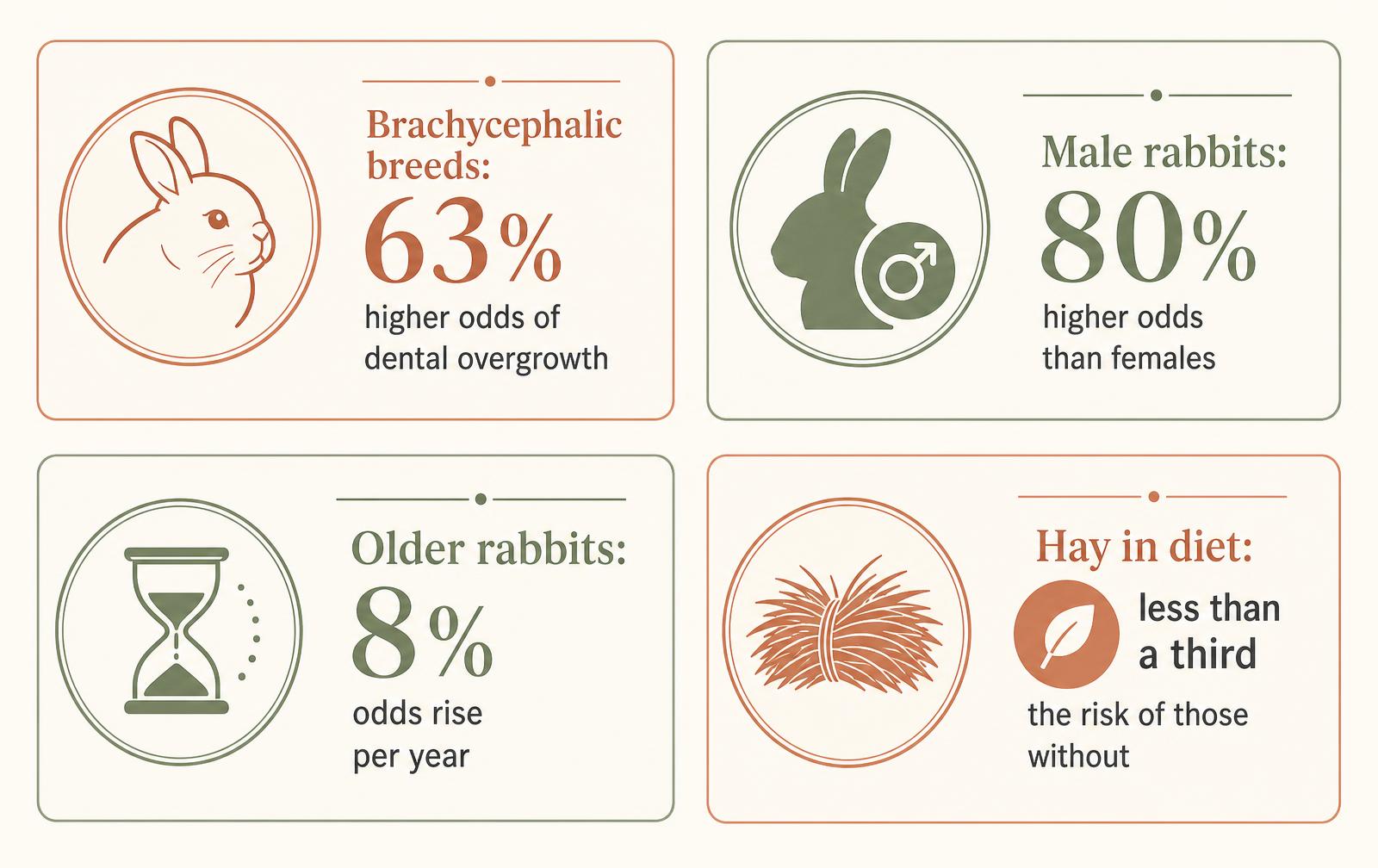
- Brachycephalic rabbits had 63% higher odds of dental overgrowth than normocephalic rabbits.
- Male rabbits had 80% higher odds of dental overgrowth than females.
- Older rabbits face higher risk, with odds increasing around 8% per additional year of age.
- Diet is the most important modifiable factor. Hay in the diet is associated with less than a third the dental disease risk of those without it in one large study.
- Signs are easy to miss. Weight loss, a wet chin, reduced appetite and gut problems can all trace back to dental disease in a rabbit that otherwise appears fine.
It's one of the most remarkable things about rabbits — and one of the most frequent reasons they end up at the vet.
A rabbit's teeth grow throughout its entire life. Not slowly, and not a little — they erupt continuously, calibrated to the constant grinding of fibrous vegetation that rabbits consume for most of their waking hours in the wild. The system is elegant. In a domestic rabbit eating the wrong diet, it can quietly become a welfare crisis.
Dental disease is now established as one of the most common health problems in pet rabbits in the UK. A new retrospective study from the University of Liverpool, published in Veterinary Record, drew on 69,166 rabbit consultations recorded across UK veterinary practices between 2014 and 2023. It found that 17.8% of records indicated dental overgrowth as a presenting feature — and identified which rabbits carry the highest risk.
The biology: why teeth that never stop growing can become a problem
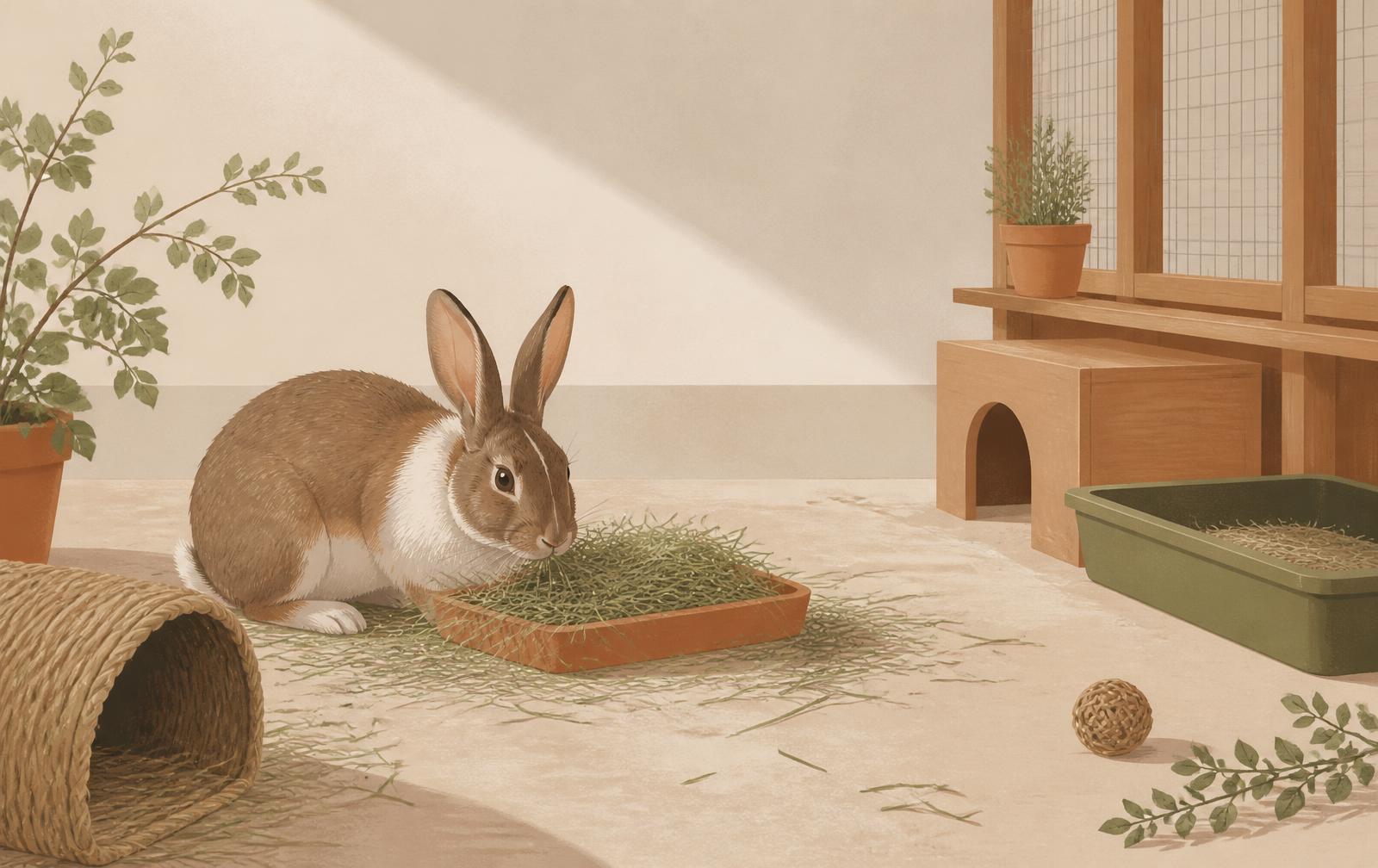
In the wild, a rabbit spends most of its active hours grazing — pulling at grass stems, gnawing bark, working through tough, abrasive vegetation that keeps the teeth worn to exactly the right length. The teeth grow; the chewing wears them down; the system stays in balance.
The technical term for rabbit dentition is aradicular hypsodont — open-rooted and high-crowned, meaning the teeth have no defined root apex and continue erupting from a deep reserve throughout the animal's life. This is fundamentally different from the teeth of dogs, cats or humans, which stop growing once adult teeth are established. A rabbit's teeth don't stop. So the consequences of disrupting the wear side of the equation are cumulative and progressive.
Domestic life disrupts that equation in several ways. Pellets and muesli require much less chewing effort than hay and grass. The lateral grinding motion that keeps the cheek teeth in shape simply doesn't happen to the same extent. Selective breeding for conformation traits — flat faces, compact skulls — has altered the relationship between skull shape and tooth alignment in ways that may compromise normal occlusion. And where a wild rabbit's teeth are worn by hours of grazing daily, a hutch rabbit eating a bowl of pellets has none of that.
The result is striking. One comparative study found that wild rabbits universally had normal occlusion, compared with only 16% of domestic rabbits.
Which rabbits are most at risk
The University of Liverpool study — Coles, Radford and Chapman, published in Veterinary Record, 2026 — identified 749 individual rabbits with dental overgrowth from 69,166 consultations in the SAVSNET UK primary-care surveillance network. The researchers then conducted a case-control analysis to identify which rabbit characteristics were independently associated with dental overgrowth.
Brachycephalic conformation. Rabbits classified as brachycephalic — breeds with dwarf, miniature or lop-eared phenotypes, including Lionheads and Polish rabbits — had 63% higher odds of dental overgrowth than normocephalic rabbits (OR 1.63). Selective breeding that shortens and compacts the skull may alter the alignment of teeth and reduce the occlusal contact necessary for normal wear. Comparative anatomy supports this: domestication has shifted the biomechanical relationship between skull conformation and dentition in ways that predispose rabbits to malocclusion. This finding is consistent with smaller clinical studies that have also identified brachycephaly as a risk factor.
Male sex. Male rabbits had 80% higher odds of dental overgrowth than females (OR 1.80). The mechanism is not fully established. One hypothesis is that oestrogen in females plays a protective role through its effects on calcium absorption and vitamin D metabolism, supporting enamel and dentine formation — but this remains speculative, and earlier studies produced inconsistent findings on sex and tooth growth. What is consistent across multiple rabbit dental disease studies is that male sex appears to be a risk factor.
Age. Odds of dental overgrowth increased by approximately 8% per additional year of age (OR 1.08 per year). Continuous eruption means that even a modest, chronic imbalance between growth and wear accumulates over time. Age also acts as a proxy for cumulative exposure to an inadequate diet or husbandry.
Neutered status. Neutered rabbits had lower odds of dental overgrowth than entire rabbits (OR 0.68). The researchers suggest this may reflect more proactive ownership rather than a direct endocrine effect — owners who neuter their rabbits may also attend more to diet and veterinary care, reducing clinically significant overgrowth. The mechanism is not established.
A note on lop ears specifically: this study classified conformation at breed level and did not separately evaluate lop ears as a distinct variable. Smaller studies using direct clinical examination have found higher dental pathology in lop-eared rabbits. Larger population studies have not confirmed lop ears as a statistically significant independent risk factor. The evidence remains mixed. The most reasonable working position is that any rabbit with a compact or modified skull conformation warrants closer dental monitoring, regardless of ear carriage.
Diet: the most important modifiable factor
The Liverpool study did not collect diet data — the EHR records didn't include it — but the broader research base is consistent and clear. What a rabbit eats is probably the single most important factor that owners can influence.
A study of 1,420 rabbits found that feeding hay was associated with less than a third the risk of acquired dental disease compared with rabbits not receiving it (OR 0.323). The mechanism is straightforward. Hay is long-stem, high-fibre and abrasive. Chewing it requires the lateral grinding motion that wears the cheek teeth evenly and keeps the incisors in correct occlusion. Pellets and muesli require far less effort and deliver a different — far less abrasive — mechanical challenge. Muesli additionally allows selective feeding, with rabbits eating the tastiest, least fibrous components first.
Hay should make up around 80–90% of a rabbit's diet, available ad libitum and always fresh. A daily bundle approximately the size of the rabbit is a reasonable guide. Pellets, when offered, should be a small, measured supplement. Muesli mixes are not recommended on current welfare evidence. Rabbit Care: What Rabbits Actually Need covers the rest of the diet and housing picture.
The signs owners most often miss
Rabbits are prey animals, built to mask illness and discomfort. By the time a rabbit with dental disease appears overtly unwell, the condition has often been progressing quietly for some time. Knowing the earlier signs matters.
Weight loss. Often the first detectable signal. A rabbit that appears to be eating may be losing weight because chewing is painful or mechanically impaired. Monthly weighing is the most reliable early-warning tool — a loss of around 10% of body weight without a clear cause warrants investigation.
Reduced appetite or preference for soft foods. A rabbit that leaves hay but eats pellets, or that shows reduced interest in food overall, may be finding chewing painful or difficult.
Wet chin or drooling. Dental pain and misalignment can cause excess salivation. Persistent wetness around the chin or dewlap — or fur that is matted and stained in that area — is worth investigating. Damp, soiled fur also raises the risk of flystrike in warm weather.
Weeping or discharging eyes. The roots of the upper cheek teeth sit in close anatomical proximity to the tear ducts in rabbits. When tooth roots elongate abnormally, they can compress these ducts, causing persistent ocular discharge with no obvious eye-related cause.
Reduced or absent faecal output. If eating becomes painful and food intake falls, gut motility slows. Gut stasis — the disruption of normal digestive movement — can follow dental disease, and a rabbit producing very few or very small droppings, or none at all, needs prompt veterinary attention.
Facial swelling. Dental abscesses are a serious and relatively common complication. A firm, asymmetric swelling on the jaw or face should be seen by a vet without delay.
What improving treatment looks like
One finding in the Liverpool study deserves mention. The proportion of dental shortening procedures recorded as tooth clipping fell from 21.4% in 2014 to 0% of recorded procedures in 2022. Clipping carries a significant welfare cost — it risks tooth fracture and associated pain — and is considered an inferior technique to burring under anaesthetic, which allows controlled reduction of tooth length without the same mechanical risk. The apparent shift in UK veterinary practice towards burring is an encouraging welfare development.
What it cannot address, however, is dental disease that is identified only once it has progressed significantly. A rabbit that has been managing chronic dental pain quietly for months before anyone notices may already have compromised quality of life. That is the argument for routine dental checks, for knowing the early signs, and for not waiting until a rabbit is obviously struggling.
Try this today
Weigh your rabbit now. Write it down, with the date. Then do the same thing next month. Weight loss is the earliest detectable signal of many health problems in rabbits, dental disease included, and it is essentially impossible to assess by eye through a thick coat. While you have your rabbit in your hands, check the chin — it should be dry — and look at both eyes, which should be clear and symmetrical. Then look at what it's eating. If hay is not the foundation of the diet, the most evidence-backed change you can make to its long-term dental health is to change that.
The Bottom Line
Rabbit teeth are extraordinary, evolved for a lifetime of continuous growth and constant wear. Domestic life disrupts the wear side of that equation, and dental disease is the result — one of the most common health problems in UK pet rabbits, and one that progresses quietly while the rabbit gives little obvious sign.
The Liverpool study tells us which rabbits face the highest structural risk: brachycephalic breeds, male rabbits, and older animals. But the most actionable message in the research isn't about conformation. It's about hay. Feed it as the foundation of the diet, weigh your rabbit monthly, learn the early signs, and don't wait until a rabbit is obviously struggling to have its teeth assessed.
This is general guidance and not veterinary advice. If you are concerned about your rabbit's weight, appetite or general health, speak to a vet with small animal or exotic experience.
Related reading: Rabbit Care: What Rabbits Actually Need · Why Do Rabbits Eat Their Own Poo? · Rabbit Vaccinations Have Changed · Flystrike in Rabbits, Guinea Pigs and Hamsters
Common questions
Frequently asked.
Keep reading
Further reading.
Want plain-English notes on pet health and the things that affect it? Join The Once-Over, our weekly note from Hazel.