Small Animals · Rabbit · 11 Sept 2026
Your Rabbit Tests Positive for E. cuniculi. What Does That Actually Mean?
By Burrow · 11 Sept 2026
TL;DR
- E. cuniculi is common in rabbits. Many exposed or infected animals never develop clinical disease.
- Antibody tests mainly show exposure. A positive result does not prove the parasite is causing the rabbit's current symptoms.
- Urine PCR can detect parasite DNA associated with shedding, but a positive result still needs clinical context.
- A negative urine PCR does not completely rule infection out, because shedding can be intermittent.
- Head tilt is a particularly important example. E. cuniculi is one possible cause, but middle- or inner-ear disease can look very similar and needs different treatment.
- Fenbendazole is commonly used when clinical disease is suspected, but evidence defining the best treatment regimen remains limited.
- The useful question isn't simply whether the test is positive, but whether E. cuniculi best explains what is happening to this rabbit.
A positive result feels like an answer. In this particular case it usually isn't — and understanding why can change what happens next.
A rabbit develops a head tilt, becomes wobbly or starts losing weight. A test comes back positive for Encephalitozoon cuniculi. The natural conclusion is that the cause has been found.
But with E. cuniculi, that is often too simple. Exposure, infection, shedding and clinical disease are not the same thing. Current tests used in living rabbits cannot reliably separate them on their own, and a substantial proportion of healthy rabbits test positive. That does not make testing useless. It means interpreting the result properly is the important part.
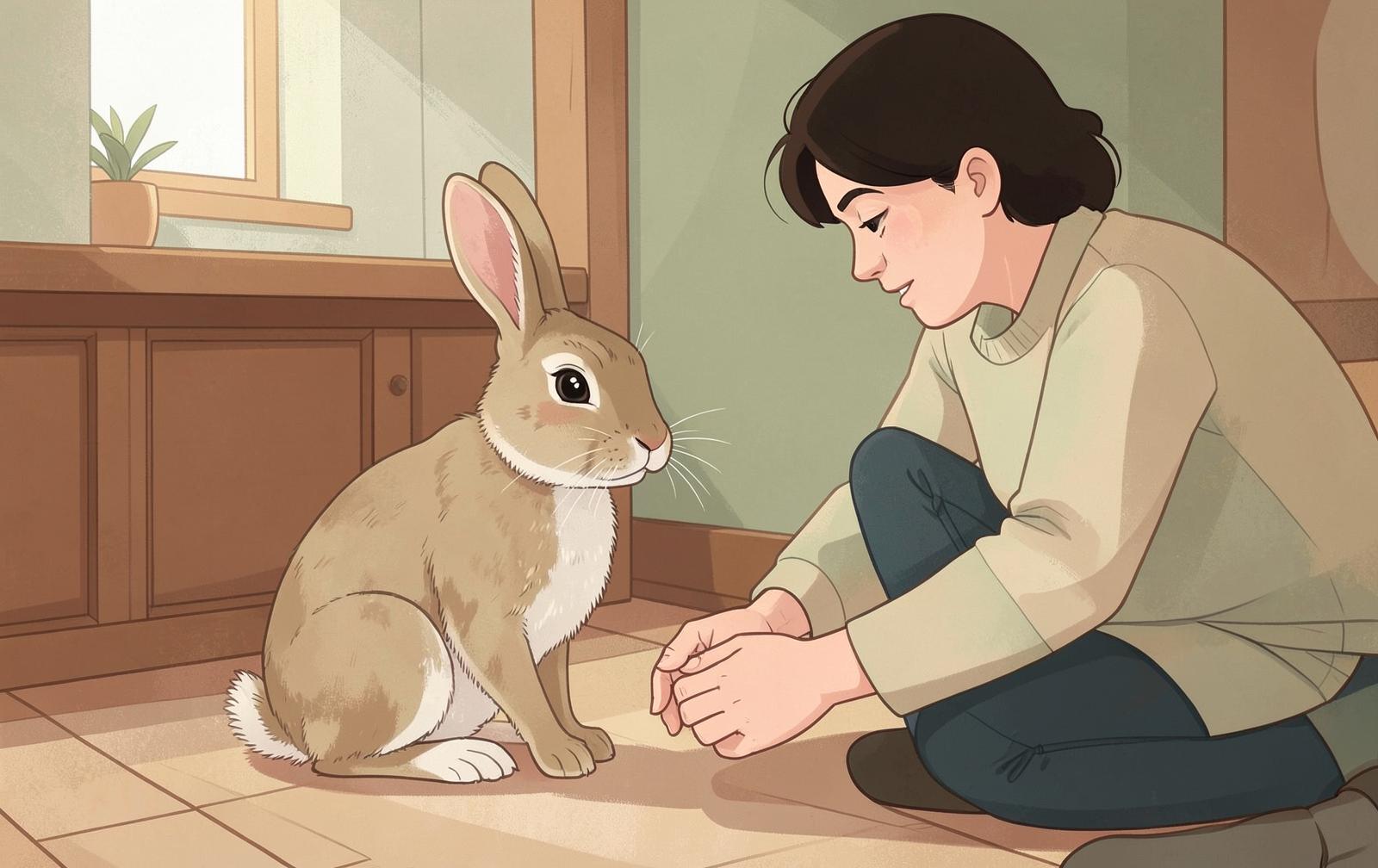
What E. cuniculi actually is
Encephalitozoon cuniculi is a microsporidian organism that can infect rabbits and other species. Rabbits usually become infected by ingesting spores shed in the urine of another infected rabbit, and infection can also occur before birth.
The organism has a particular association with the nervous system, kidneys and eyes, which explains the classic clinical presentations. Neurological disease can cause head tilt, loss of balance, abnormal eye movements, weakness or seizures. Kidney involvement may contribute to increased drinking, increased urination, weight loss or chronic renal disease. Ocular infection can cause characteristic eye abnormalities, particularly in rabbits infected before birth.
But many infected rabbits remain well. That is the reason a positive test needs context.
Exposure, infection, shedding and disease are different
The simplest way to understand the problem is to imagine four rabbits.
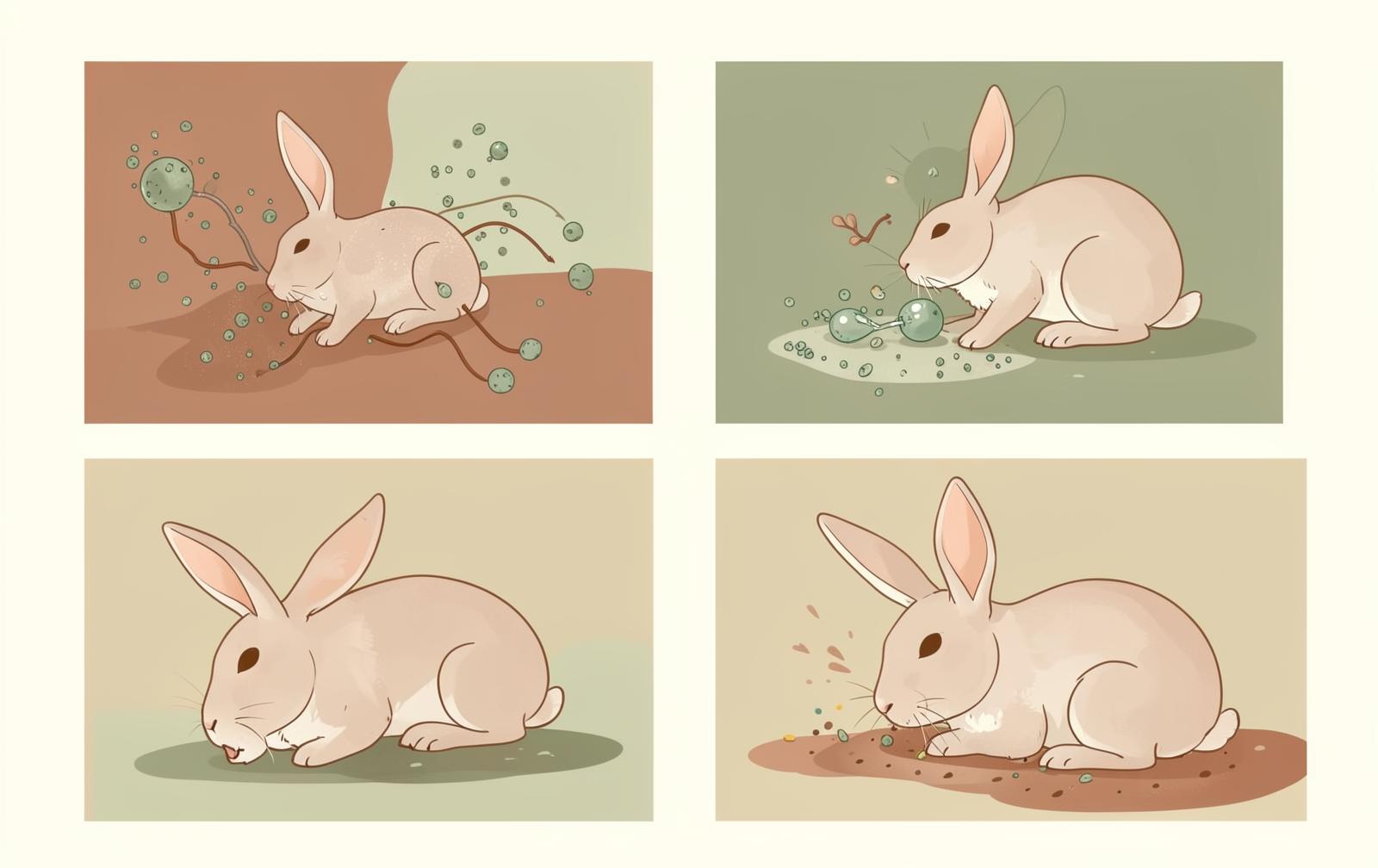
One has encountered E. cuniculi in the past, has antibodies and is completely healthy. Another is infected and currently shedding parasite material in its urine but shows no symptoms. A third has neurological disease genuinely caused by E. cuniculi. And a fourth has a positive antibody test and a head tilt — but the head tilt is actually due to ear disease.
All four may produce a result that brings E. cuniculi into the conversation. They are not the same clinical situation.
What an antibody test actually tells you
Most testing in living rabbits relies on serology — looking for antibodies such as IgG and sometimes IgM. A positive antibody result shows that the rabbit's immune system has encountered E. cuniculi. What it cannot reliably tell you on its own is whether the organism is causing the problem you are seeing today.
That limitation matters because exposure is common. A 2026 clinical consensus review reports worldwide seroprevalence estimates ranging from 41% to 85% in pet rabbits and concludes that most infections are likely to remain subclinical.
A Slovenian study illustrates the point in clinical practice. Of 224 pet rabbits tested using an antibody assay, 160 were positive, and a quarter of those positive rabbits had no obvious clinical signs. Because this was a veterinary clinical population rather than a random sample of all pet rabbits, it should not be treated as a population-wide estimate. It does show why antibodies alone cannot establish the cause of a rabbit's symptoms.
So a positive antibody result is useful evidence. It just isn't a diagnosis by itself.
What about urine PCR?
PCR looks for the organism's genetic material rather than the rabbit's immune response. A positive urine PCR supports the presence of parasite DNA and current shedding, but it still does not prove that E. cuniculi is responsible for the rabbit's clinical signs.
A negative PCR has limits too. The consensus review reports that spores may be excreted in urine for up to three months after shedding begins and intermittently thereafter. An infected rabbit can therefore test negative when it is not shedding detectable material. That leaves an awkward but important reality: both positive and negative tests need interpretation.
The head tilt problem
This is where that distinction matters most. Two important causes of head tilt in rabbits are neurological disease associated with E. cuniculi, and middle- or inner-ear disease. Other neurological and vestibular causes also exist, and from the outside these conditions can look very similar.
That creates a diagnostic trap. If a rabbit with head tilt tests positive for E. cuniculi, it is tempting to treat the test result as confirmation. But if the actual cause is bacterial ear disease, an antiparasitic alone will not address the problem — and given how common exposure to E. cuniculi is, the positive result may be incidental. The conditions can also occur together.
A proper assessment may therefore include examining the ears, considering imaging, looking for other neurological causes, and interpreting any serology or PCR result as part of the wider clinical picture. The useful question to ask is: what else could be causing these signs, and what have we ruled out?
Why there is no perfect test
The 2026 consensus review reaches a fairly clear conclusion: there is currently no ante-mortem test with sufficiently high sensitivity and specificity to give a simple definitive answer in every living rabbit.
That does not mean vets are guessing. It means diagnosis is built from several pieces — clinical signs, history, physical and neurological examination, antibody or PCR results where useful, investigation of alternative causes, and sometimes response to treatment. That may feel less satisfying than a single positive or negative answer. But it is more accurate.
What happens if your rabbit is positive
The first question is why the test was done. A healthy rabbit with antibodies is not the same clinical problem as a rabbit with sudden neurological signs.
If symptoms are present, your vet may treat for suspected E. cuniculi while also investigating other possible causes. Fenbendazole is commonly used when clinical encephalitozoonosis is suspected, often as a 28-day course. But the evidence is less settled than many owners assume: the consensus review notes variation in protocols and limited robust evidence defining the optimal regimen.
That makes supportive care particularly important. A rabbit with neurological disease may need help maintaining food intake, hydration and safe movement. Severe balance problems can require careful nursing, while other treatment may be needed depending on the clinical picture. Treating the parasite also does not necessarily reverse damage that has already occurred in nervous or renal tissue.
Should healthy rabbits be treated routinely?
Routine preventive fenbendazole courses have historically been used in some pet rabbits. A small experimental study helped establish that practice, but prophylactic treatment of healthy pet rabbits is not supported by robust modern field evidence. Medication is not a substitute for good hygiene and sensible management, and repeated treatment should not automatically be regarded as harmless.
If one rabbit in a household is positive, or a new rabbit is being introduced to others, discuss the individual situation with a rabbit-savvy vet rather than assuming every rabbit should be medicated.
Hygiene still matters
Spores can be shed in urine and contaminate the environment, so basic hygiene helps reduce transmission. Clean litter and toileting areas regularly, remove urine contamination promptly, keep food and water away from heavily contaminated areas, and wash hands after cleaning enclosures.
For most people, ordinary hygiene is appropriate. E. cuniculi can act as an opportunistic human pathogen, so anyone who is severely immunocompromised should seek individual medical advice about close contact with urine and enclosure cleaning.
If one rabbit is suspected of active infection, don't automatically separate bonded rabbits without veterinary advice. Separation itself can be stressful, and the right management depends on the circumstances.
Try this today
If your rabbit has tested positive, find out what test was actually performed — an antibody test, or a urine PCR. Then ask your vet: what does this result tell us, and what does it not tell us?
If your rabbit has head tilt or other neurological signs, add: what else could be causing this, and have we investigated those possibilities? Those questions aren't challenging the diagnosis. They're how a difficult diagnosis should be approached.
The bottom line
A positive E. cuniculi test can tell you that the organism is in the picture. It cannot, by itself, tell you that it is the reason your rabbit is ill.
That distinction matters because exposure is common, healthy rabbits can test positive, and the symptoms associated with E. cuniculi — particularly head tilt — can have other causes requiring different treatment.
So the useful question after a positive result isn't “does my rabbit have E. cuniculi?” It's “does the evidence suggest E. cuniculi is causing what is happening to my rabbit?” Sometimes the answer will be yes. Sometimes another diagnosis will fit better. And sometimes the correct veterinary answer is that more than one possibility remains.
Knowing what the test can and cannot tell you is what makes the result useful.
Burrow provides evidence-led pet health information and does not replace veterinary diagnosis or treatment. Head tilt, loss of balance, seizures or sudden neurological signs require prompt veterinary assessment. If your rabbit stops eating or producing droppings, seek veterinary care urgently.
Related reading: Rabbit Care: What Rabbits Actually Need · Why Do Rabbits' Teeth Never Stop Growing? · Myxomatosis in Rabbits: Why Risk Rises at This Time of Year
Common questions
Frequently asked.
Keep reading
Further reading.
Want calm, evidence-led rabbit health guidance? Join The Once-Over, our weekly note from Hazel.