Seasonal Health · Rabbit · 28 Aug 2026
Myxomatosis in Rabbits: Why Risk Rises at This Time of Year
By Burrow · 28 Aug 2026
TL;DR
- Myxomatosis is a serious viral disease of rabbits caused by myxoma virus, which remains established in the UK wild rabbit population.
- UK cases show a strong seasonal pattern, with many occurring from August into autumn.
- Rabbit fleas and mosquitoes can transmit the virus, so direct contact with a wild rabbit isn't necessary for exposure.
- Indoor rabbits can still be exposed through insects entering the home or contact with contaminated material.
- Early signs include swelling around the eyes, face and genitals, red or inflamed eyes, discharge, lethargy and reduced appetite.
- Vaccination substantially reduces risk and severity, but no vaccine offers absolute protection. Vaccinated rabbits were 8.3 times less likely to be cases than unvaccinated rabbits in one large British study.
- Any rabbit with suspected myxomatosis needs prompt veterinary assessment.
Late summer is when myxomatosis starts to become a more visible threat to pet rabbits in Britain. And keeping a rabbit indoors does not remove the risk completely.
Myxomatosis has been present in Britain for decades, so it can feel like an old problem. It isn't. Large UK veterinary datasets have shown a clear seasonal pattern, with pet-rabbit cases clustering particularly from August into autumn. That timing makes sense — myxomatosis is caused by myxoma virus, and transmission can occur through biting insects including rabbit fleas and mosquitoes. As insect activity increases, so does the opportunity for virus to move between rabbits.
Wild rabbits act as an important reservoir, which means a pet rabbit does not need to meet a wild rabbit directly to become exposed. And that leads to the part owners sometimes underestimate: a house rabbit is not necessarily a protected rabbit.
What actually causes myxomatosis
Myxomatosis is caused by myxoma virus, a poxvirus that primarily affects rabbits. The virus originally circulated in rabbit species in the Americas, where infection is generally much less severe. In European rabbits — the species from which pet rabbits descend — it can cause devastating disease. After the virus was deliberately introduced into wild rabbit populations in Europe during the twentieth century, it became established in Britain and remains present today. Myxomatosis isn't something Britain has dealt with and moved on from. Wild rabbits continue to provide a reservoir from which infection can reach domestic rabbits.
Why risk rises in late summer
Myxomatosis can occur throughout the year, but British veterinary data have shown a marked seasonal pattern with cases concentrated particularly from August through November. The likely explanation is vectors. Myxoma virus can spread through direct contact, but biting insects are especially important — rabbit fleas, mosquitoes and other biting insects. As insect numbers rise during warmer months, transmission becomes easier. This creates a delay between the warmest part of summer and the period when veterinary cases become particularly noticeable. August isn't an arbitrary date on the calendar. It is the beginning of the period in which historical UK case numbers have tended to rise.
How a pet rabbit catches it
One common misconception is that a rabbit must physically encounter an infected wild rabbit. It doesn't.
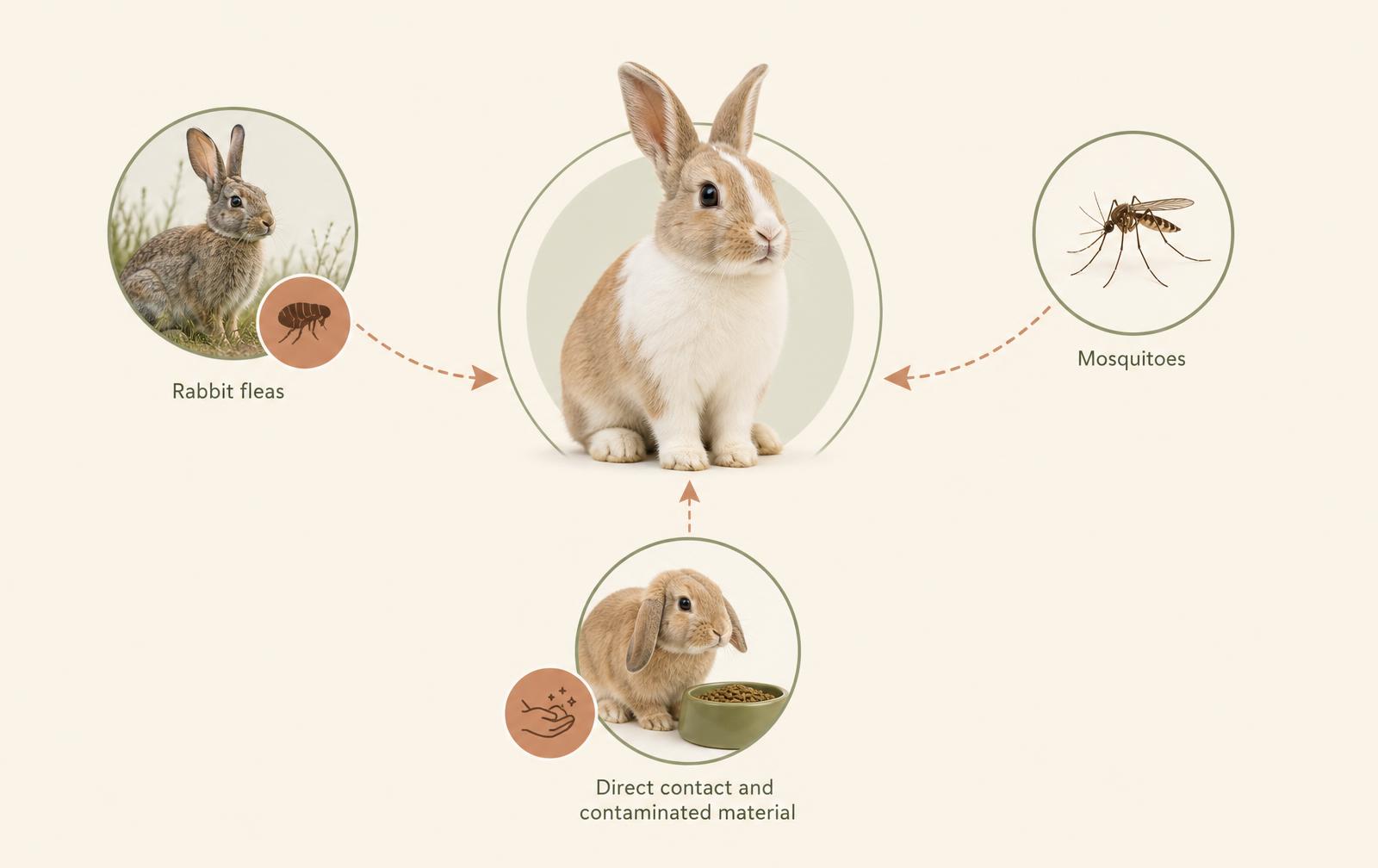
Rabbit fleas can carry the virus between animals, meaning wild rabbits can act as a source of infection even when they never enter the same enclosure as a pet.
Mosquitoes can mechanically transfer virus after feeding on an infected rabbit, making transmission possible over a greater distance.
Direct contact with infected rabbits or contaminated material can also spread the virus — particularly relevant in multi-rabbit environments or where equipment and surfaces are shared.
The practical consequence is simple: "my rabbit doesn't mix with wild rabbits" isn't enough to eliminate myxomatosis risk.
But my rabbit lives indoors
Indoor housing lowers exposure to some hazards. It doesn't create a sealed biological environment. Mosquitoes come indoors. Fleas can be carried into homes by other animals. People move between outdoor areas and rabbit spaces. Hay, bedding, equipment and other materials move through the environment.
That doesn't mean owners should be frightened of every insect in the house. It means indoor status shouldn't be used as a substitute for vaccination. Veterinary organisations in the UK recommend vaccination against myxomatosis and rabbit haemorrhagic disease even for house rabbits, for a straightforward reason: exposure risk is reduced indoors, not eliminated.
What the early signs look like
The classic picture of myxomatosis is a rabbit with very obvious swelling around the face. But disease does not necessarily begin dramatically. Early signs can include red or inflamed eyes, swelling around the eyelids, eye discharge, swelling around the nose, lips or ears, swelling around the genital area, lethargy, reduced appetite, and fever. As disease progresses, swelling can become severe, the eyelids may close, and breathing can become difficult if swelling and secondary respiratory disease develop. Skin nodules or lesions may also appear.
Any combination of facial swelling, eye inflammation and sudden illness in a rabbit should be treated seriously.
Why reduced appetite matters so much in rabbits
With rabbits, almost any significant illness can create a second problem quickly. A rabbit that feels unwell often eats less, and reduced food intake can disrupt normal gastrointestinal motility, increasing the risk of gut stasis. So an owner doesn't necessarily have to recognise myxomatosis specifically to know that something is wrong. A rabbit that suddenly stops eating, becomes unusually quiet or develops swollen eyes needs veterinary attention. The diagnosis comes later. The important thing at home is recognising that the change is urgent. It's the same logic that makes uneaten caecotrophs and dental problems worth acting on early.
Does vaccination work?
Vaccination is the most important protection available. A large British study found that vaccinated rabbits were substantially less likely to be cases than unvaccinated ones — with an estimated 8.3-fold difference in risk. That is a strong association.
But vaccination shouldn't be described as an invisible shield. Vaccinated rabbits can occasionally still develop myxomatosis. When infection does occur, however, vaccination generally reduces the likelihood of severe disease and improves the chances of a better outcome. Current UK rabbit vaccination programmes are also designed to protect against rabbit haemorrhagic disease, including RHDV2. Exactly which vaccine and schedule your rabbit needs depends on previous vaccination history, the product used and veterinary advice.
If you're not sure when your rabbit was last vaccinated, check the record rather than relying on memory.
What if vaccination has lapsed
This is particularly relevant right now. If you discover that vaccination is overdue, contact your veterinary practice — don't wait until the next routine appointment if that means delaying for months. Your vet can tell you what protection your rabbit previously received, whether a booster or new course is appropriate, when protection is expected to develop, and how vaccination should be timed if the rabbit is currently unwell.
A rabbit showing signs consistent with myxomatosis should not simply be booked for vaccination. That rabbit needs clinical assessment. Vaccination is preventive, not a treatment for active infection.
Is myxomatosis always fatal
Historically, classic myxomatosis in unvaccinated European rabbits has had a very high mortality rate. But outcome varies. Severity depends on factors including vaccination status, virus strain, immune response, secondary infection, supportive treatment and the individual rabbit. Vaccinated rabbits may develop milder or atypical disease, which can actually make recognition less obvious. So vaccination history helps a vet interpret the clinical picture, but it shouldn't be used to dismiss suspicious symptoms.
What treatment is available
There is no simple antiviral treatment that removes myxoma virus from the body. Veterinary care is therefore largely supportive and may include pain relief, fluids, nutritional support, management of secondary bacterial infection, eye care, maintaining body temperature, and helping the rabbit continue eating and moving its gut normally. Prognosis depends heavily on severity. In some advanced cases, welfare may become the overriding concern and euthanasia may be recommended. That is one reason prevention matters so much.
What you can do to reduce exposure
Keep vaccination current. This is the foundation. If you're not sure what your rabbit's record shows, check it now.
Flea control. If your rabbit, household pets or environment have a flea problem, get veterinary advice about appropriate treatment. Never use a flea treatment intended for dogs or cats on a rabbit unless a vet specifically confirms it is safe — some products are dangerous to rabbits.
Reduce mosquito access. Fine insect mesh on outdoor accommodation can reduce contact with mosquitoes and other biting insects. Useful, but not a substitute for vaccination.
Avoid contact with wild rabbits. Don't allow pet rabbits to mix with wild rabbits. Keep food, bedding and equipment away from areas heavily contaminated by wild-rabbit activity where practical.
Clean shared equipment. If you care for multiple rabbits or visit other rabbit environments, wash hands and clean equipment before moving between groups.
Try this today
Find your rabbit's vaccination record and check the date rather than relying on memory. Confirm that protection covers myxomatosis and both major forms of rabbit haemorrhagic disease relevant to UK rabbits. If you're not sure what the vaccine entry means, photograph the record and ask your veterinary practice. Late summer is a particularly good time to discover a gap before you need the protection. What changed in rabbit vaccinations is worth a read if your rabbit's course predates recent updates.
The bottom line
Myxomatosis isn't only a disease of wild rabbits, and it isn't only a risk to rabbits kept outdoors. Biting insects create a bridge between the two — and that matters particularly now. UK cases have historically risen from August into autumn, making late summer a sensible time to check whether a rabbit's protection is current.
The practical steps aren't complicated. Keep vaccination up to date. Reduce contact with biting insects and wild rabbits where possible. And know the warning signs — particularly swelling and inflammation around the eyes and face, lethargy and loss of appetite. You don't need to wait until a rabbit looks seriously ill. In rabbits, early changes matter.
This is general information and not a substitute for veterinary advice. If your rabbit develops facial or eye swelling, suddenly stops eating or you suspect myxomatosis, contact a veterinary professional promptly.
Common questions
Frequently asked.
Keep reading
Further reading.
Want seasonal pet health warnings before they become urgent? Join The Once-Over, our weekly note from Hazel.