Small Animals · Rabbit & Guinea Pig & Hamster · 06 Aug 2026
Flystrike in Rabbits, Guinea Pigs and Hamsters: A Summer Emergency
By Burrow · 06 Aug 2026
TL;DR
- Flystrike is a veterinary emergency. Blowflies lay eggs on small animals, usually around the rear, and the maggots that hatch begin feeding within hours.
- It can become fatal in under 12 hours. Speed of detection is the single most important factor in survival.
- Rabbits are most at risk, but guinea pigs and hamsters are also vulnerable. Any small animal with a damp, soiled or irritated rear end is at risk.
- Check twice daily, morning and evening, throughout the warm months. Look at the rear end, under the tail, and anywhere there's damp or soiled fur.
- The signs: a strong smell from the hutch, the animal being quiet and unresponsive, loss of appetite, digging into corners, and in advanced cases, visible maggots.
- If you suspect flystrike, call a vet immediately. Day or night. This cannot wait until the morning.
It can go from fine to fatal in under 12 hours. Most owners don't realise how quickly flystrike moves, or how easy it is to catch early.
Flystrike is one of those conditions that sounds unpleasant and is, in practice, one of the most serious emergencies in small animal care. Blowflies lay eggs on a rabbit, guinea pig or hamster — usually around the rear end — and the maggots that hatch begin feeding on the flesh within hours. Left undetected, the animal can die. Caught early, most can be treated and recover fully. The difference between those two outcomes is almost entirely down to whether the owner checked that morning.
This is the piece to read if you keep rabbits, guinea pigs, hamsters, or any similar small animal, and particularly if any of them live partly or wholly outdoors. August is peak season.
What flystrike actually is
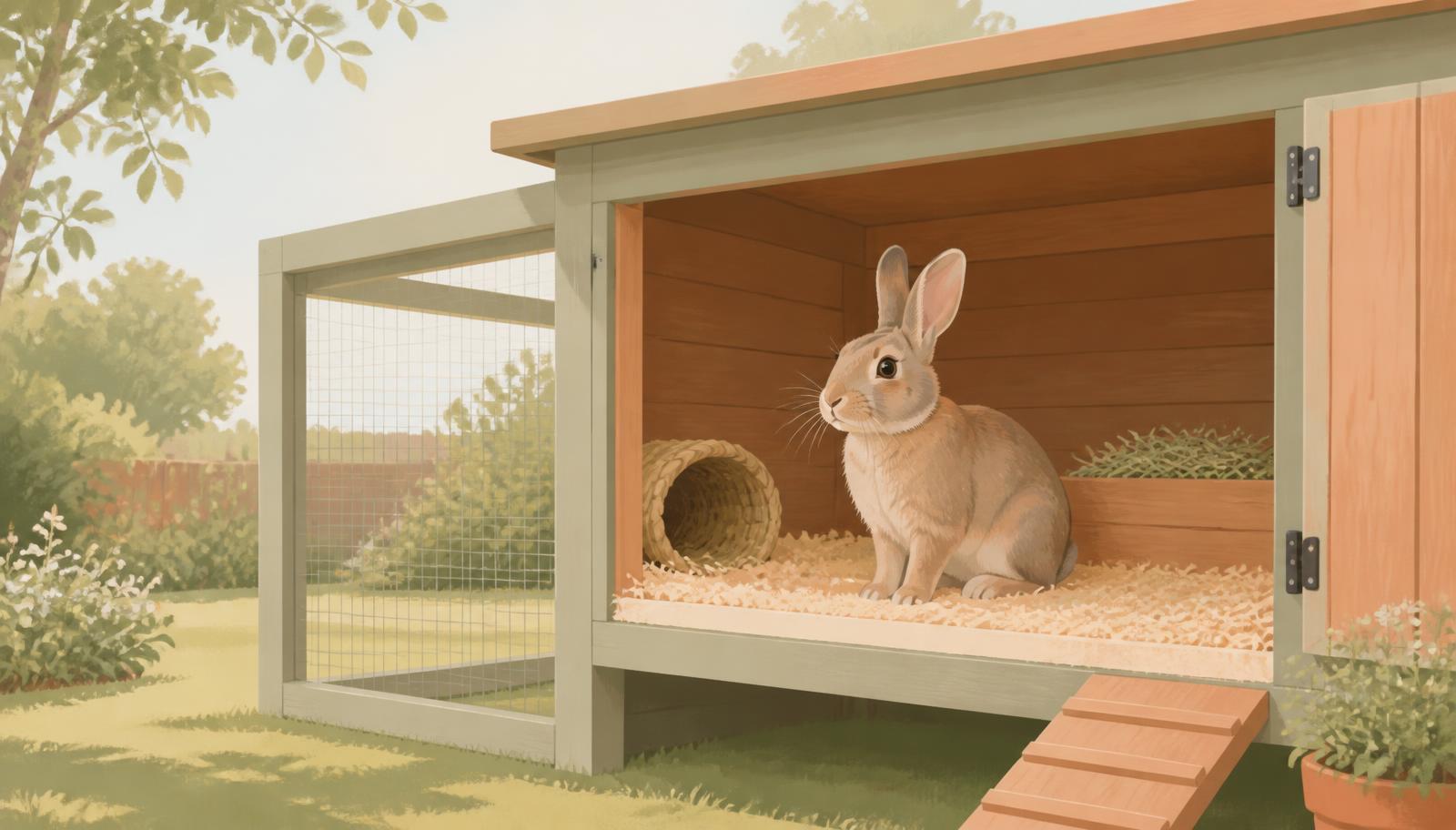
Flystrike, or myiasis, occurs when blowflies — primarily the green bottle fly in the UK — are attracted to damp, soiled, or broken skin on a small animal and lay their eggs there. The eggs hatch into maggots within hours in warm conditions, and those maggots begin feeding on the surrounding tissue almost immediately.
The area most commonly affected is around the rear end, where urine and faecal soiling can accumulate in the fur. This is why animals that struggle to keep themselves clean — whether due to obesity, arthritis, dental disease affecting their ability to groom, or diarrhoea — are at significantly higher risk. The flies don't need a wound or sore to get started: damp, soiled fur is enough.
What makes flystrike so dangerous is its speed. In warm August conditions, the progression from egg-laying to significant tissue damage can happen within 12 hours. An animal that was checked at breakfast may be in a critical state by early afternoon if the conditions were right and something was missed.
Who is most at risk
Any rabbit, guinea pig or hamster can get flystrike during the warm months, but some are considerably more vulnerable than others.
Animals with underlying health problems. Bladder issues that cause urine dribbling, dental disease affecting the ability to groom, arthritis that limits movement, or obesity that prevents an animal reaching its rear end all raise the risk significantly, because the animal cannot keep itself clean. Our rabbit care guide covers the everyday care that keeps most of these problems at bay.
Long-haired breeds. Long coats accumulate damp and soiling more readily and are harder to check thoroughly. This applies to long-haired guinea pig breeds and long-haired rabbit breeds in particular.
Animals with diarrhoea or loose stools. A constantly contaminated rear end is an open invitation to flies. Addressing the cause of the diarrhoea is itself a flystrike prevention measure.
Outdoor animals in warm, humid weather. Flystrike peaks in summer, particularly in humid conditions that favour blowfly activity. Indoor animals are at lower risk, though not zero — if flies can get into the house, the risk follows them. Hot weather brings its own separate dangers too, covered in our guide to keeping your pet cool in hot weather.
Hamsters too
Hamsters are less commonly thought of as flystrike-susceptible, but they are. The same conditions apply: damp, soiled or broken skin attracts blowflies regardless of species, and the rear end is the primary site. A hamster with wet tail, diarrhoea, or difficulty grooming is just as much at risk as a rabbit in the same condition.
What makes flystrike in hamsters particularly serious is that hamsters are smaller than rabbits and guinea pigs and deteriorate even faster. The window between the problem starting and the animal being in serious danger is, if anything, shorter. A hamster kept indoors is at lower risk — flies need to reach the animal — but if windows are open in summer and the enclosure isn't well protected, the risk is real.
There is no licensed preventive topical treatment for hamsters equivalent to Rearguard for rabbits. Prevention for hamsters is entirely hygiene-based: a scrupulously clean enclosure, daily removal of soiled bedding, and a daily check of the animal. Our hamster care guide covers the housing and cleaning routine that underpins all of this. Any hamster with a persistently damp or soiled rear end needs veterinary attention to address the underlying cause, not just a clean-up.
If you suspect flystrike in a hamster, contact a vet immediately — the same urgency applies as for rabbits.
The twice-daily check
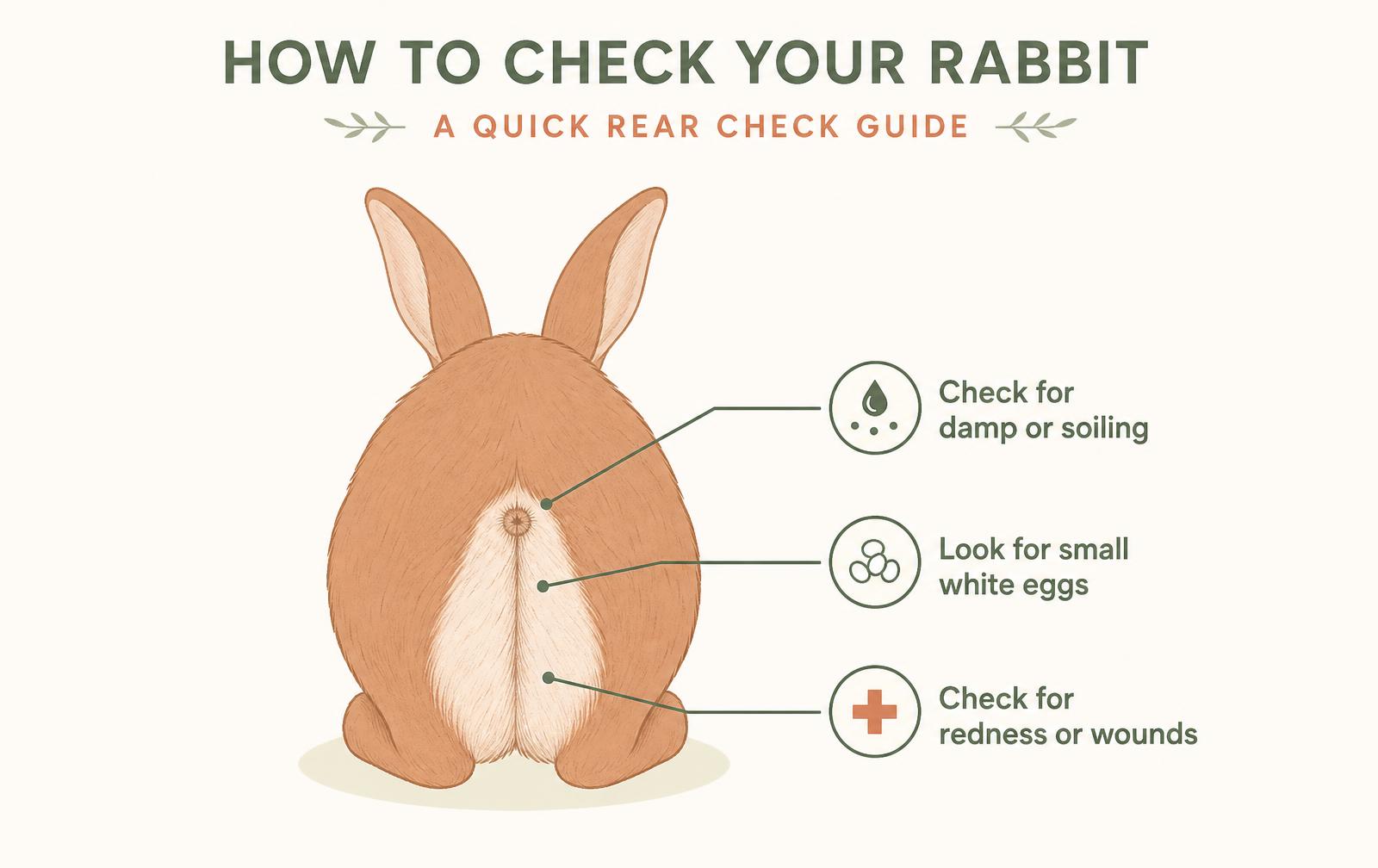
The single most effective thing you can do to prevent flystrike becoming fatal is a thorough check of your animal twice every day during the warm months — once in the morning and once in the evening. For most small animals this takes less than a minute once you know what you're looking for, and it is what stands between catching something early and a tragedy.
What to look for:
- Damp or stained fur around the rear end, under the tail, or around the genitals
- Any soiling or faecal matter stuck in the fur
- Small white specks in the fur — these may be fly eggs before hatching
- Redness, swelling or broken skin anywhere on the body
- Any unusual smell from the animal or their bedding
- A change in behaviour — quieter than usual, reluctant to move, not eating
If you find soiling or damp fur, clean it gently and thoroughly, dry the area, and watch closely for the next few hours.
The signs of flystrike
Even with daily checks, flystrike can develop between checks if conditions are right. Know what you're looking for.
Early signs:
- The animal is quieter than usual, seems subdued or reluctant to move
- Loss of appetite, not interested in food or water
- A strong, unpleasant smell from the hutch or from the animal
- The animal digging into corners, pressing their body against surfaces — a sign of pain
Advanced signs (act immediately):
- Visible maggots on the skin or in the fur
- Open wounds or raw, damaged skin
- The animal is unresponsive or collapsed
- A very strong foul odour
At the advanced stage, the animal is in serious pain and shock. The prognosis worsens rapidly as damage progresses.
What to do if you suspect flystrike
Contact a vet immediately. The RWAF is explicit on this: flystrike is a true emergency, day or night, and treatment cannot wait until the next morning. If your regular practice is closed, find the nearest emergency vet.
While you are getting ready to go, keep the animal warm and calm. Do not attempt to remove maggots yourself — this must be done by a vet under sedation or anaesthetic, as a thorough examination is needed to find all of them, including those that have burrowed into the tissue. Partial removal makes things worse.
The vet will clip the surrounding fur, remove the maggots, clean and treat the wounds, and provide pain relief and supportive care. In cases where the damage is extensive, euthanasia may be recommended — which is why speed of detection matters so much. Caught in the very early stages, most animals make a full recovery.
Prevention
Prevention is the whole game with flystrike. The check is the most important element, but a few other measures reduce the risk substantially.
Keep the living environment clean and dry. Remove soiled bedding and droppings daily, not every few days. Damp, dirty bedding is the primary attractor for flies.
Address any underlying health problems. If your animal has trouble grooming themselves — because of weight, arthritis, dental disease, or any other reason — work with your vet to manage those conditions. A clean rear end is the primary defence.
Consider a preventive treatment for rabbits. Rearguard is a licensed veterinary product for rabbits that provides protection against blowfly strike for up to ten weeks by preventing maggots from developing. There is no equivalent licensed product for guinea pigs or hamsters — for these animals, prevention is entirely hygiene-based. Ask your vet whether Rearguard is appropriate for your rabbit, particularly if they're higher risk. Never use flea treatments designed for dogs or cats on small animals — some ingredients are highly toxic to small mammals.
Groom long-haired animals regularly. Long coats trap moisture and make checks harder. Keep the fur around the rear end trimmed during summer.
Monitor for diarrhoea. Loose stools are both a cause and a warning sign. Address the cause with your vet rather than waiting for things to resolve on their own.
The bottom line
Flystrike is a summer emergency that most owners of rabbits, guinea pigs and hamsters know about in theory and underestimate in practice. The speed at which it progresses — potentially fatal within 12 hours in warm conditions — means that twice-daily checks during the warm months are not excessive, they're simply what the timeline demands. Check morning and evening, look at the rear end thoroughly, address any underlying health issues that make grooming harder, and keep the living area clean and dry. And if you find something: call a vet immediately, any hour. This is one emergency that genuinely cannot wait.
This is general guidance and not veterinary advice. Flystrike is a veterinary emergency. If you suspect your rabbit, guinea pig or hamster is affected, contact a vet immediately, day or night.
Related reading: Why Do Rabbits' Teeth Never Stop Growing?
Common questions
Frequently asked.
Keep reading
Further reading.
Want plain-English notes on pet health and the things that affect it? Join The Once-Over, our weekly note from Hazel.