Seasonal Health · Rabbit & Guinea Pig · 17 Sept 2026
Your Rabbit Can Probably Stay Outside. Your Guinea Pig Probably Can't.
By Burrow · 17 Sept 2026
TL;DR
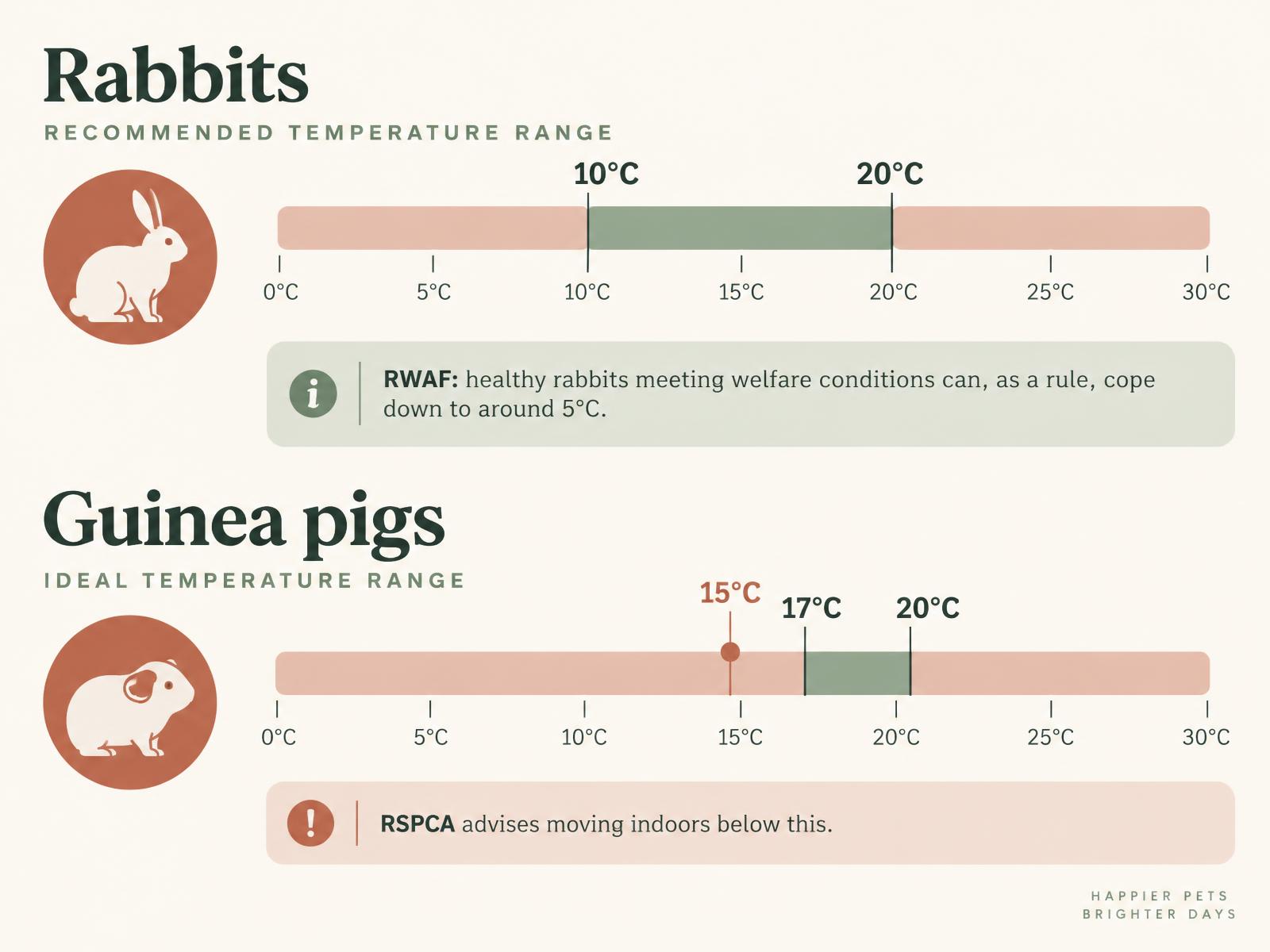
- Rabbits tolerate cold considerably better than guinea pigs. The RSPCA recommends 10–20°C for domestic rabbits, while the RWAF says healthy rabbits meeting several welfare conditions can, as a rule, cope down to around 5°C.
- Guinea pigs are less tolerant. The RSPCA describes 17–20°C as ideal and advises moving outdoor guinea pigs indoors below 15°C.
- Tolerating cold and being well housed are different things. A rabbit coping with winter doesn't mean its accommodation is adequate.
- Damp and wind matter alongside temperature. Accommodation needs to stay dry, well ventilated and protected from draughts.
- Don't shut animals into a small sleeping compartment to keep them warm. They need adequate exercise space year-round.
- Insulating without ventilating creates damp, which can make the environment you were trying to improve considerably worse.
- Weigh them regularly. Winter coats can make changes in body condition harder to see.
They're often kept in similar housing and given similar advice, but the two species have genuinely different tolerance for cold — and this is the point in the year to do something about it.
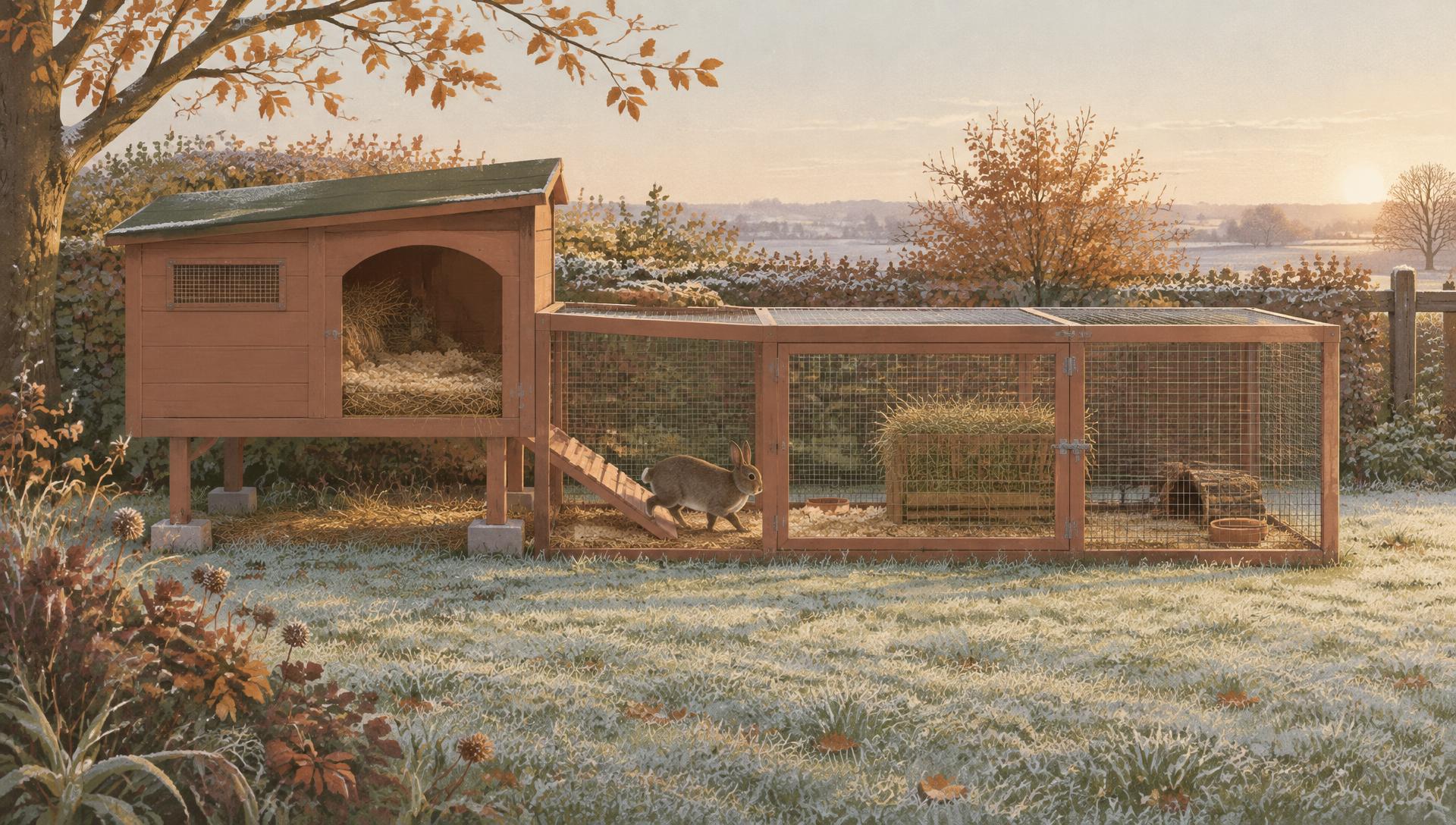
Rabbits and guinea pigs get grouped together constantly. Similar housing, similar bedding, often the same aisle in the pet shop. Winter is where that becomes misleading. Healthy rabbits acclimatised to outdoor living can tolerate cold remarkably well when they have dry, sheltered accommodation and space to move. Guinea pigs have a narrower comfortable temperature range and need considerably more protection as temperatures fall.
There's another distinction worth making, and it applies to both species. An animal's tolerance of cold and its housing's ability to protect it from cold are not the same thing. A rabbit may cope well with winter. A damp, draughty box in the garden is still poor rabbit housing.
Overnight temperatures haven't dropped properly yet, which makes this the useful moment to sort it out rather than the moment you're doing it in the dark with a torch.
Why the two species differ
Wild rabbits live in burrow systems that buffer them from extremes of temperature. A domestic outdoor enclosure has no equivalent protection unless we provide it.
Rabbits also develop a winter coat, and a healthy adult already acclimatised to outdoor living can handle cold reasonably well. Current RSPCA guidance recommends 10–20°C for domestic rabbits but acknowledges they can cope with lower temperatures. The Rabbit Welfare Association and Fund goes further: for healthy rabbits living with companions, able to move freely, protected from wind and rain and without significant areas of missing fur, it says that as a rule temperatures down to around 5°C can be tolerated. Below that, the quality of the protected sleeping accommodation becomes increasingly important.
Guinea pigs are different. The RSPCA describes 17–20°C as their ideal room temperature and advises moving outdoor guinea pigs indoors when temperatures fall below 15°C, warning that below that point they can become chilled.
The practical upshot is simple: the same accommodation in the same garden can be adequate for one species and unsuitable for the other.
Guinea pigs: the honest answer
If your guinea pigs live outside and temperatures are heading below 15°C, the RSPCA advice is to move them indoors. That doesn't necessarily mean your living room. A suitable shed, protected outbuilding or other accommodation can work provided the environment is dry, well ventilated, free from draughts and fumes, and maintained at an appropriate temperature. A garage requires particular thought — it shouldn't be somewhere vehicles are used or stored in a way that exposes animals to exhaust fumes or other chemicals.
Where outdoor accommodation is still being used before temperatures reach that point, it needs to offer genuine protection rather than simply having another blanket thrown over it. It should be sheltered from direct wind, kept dry and off damp ground, with sufficient safe bedding and a protected sleeping area.
There are two other things to be careful about.
Avoid improvised heating. Household heat pads, unprotected lamps and electrical equipment run into bedding introduce risks around moisture, fire and animals that chew. If supplementary heating is necessary, use equipment intended for animal housing and arrange it so the animals can move away from the heat.
Avoid repeated large temperature swings. Guinea pigs don't cope well with big changes in temperature. If they're moved indoors for winter, think of it as a seasonal change in accommodation rather than a daily commute between a heated house and a cold garden.
And don't dress them in coats or jumpers. Clothing isn't a substitute for suitable accommodation and can interfere with normal movement and behaviour.
Rabbits: what the housing needs to do
Healthy rabbits already acclimatised to outdoor living can generally remain outdoors through a British winter when their accommodation is appropriate. That last part matters. The RWAF says a good outdoor setup should be sufficient through most winter conditions, while the RSPCA recommends considering more protected accommodation as temperatures approach freezing.
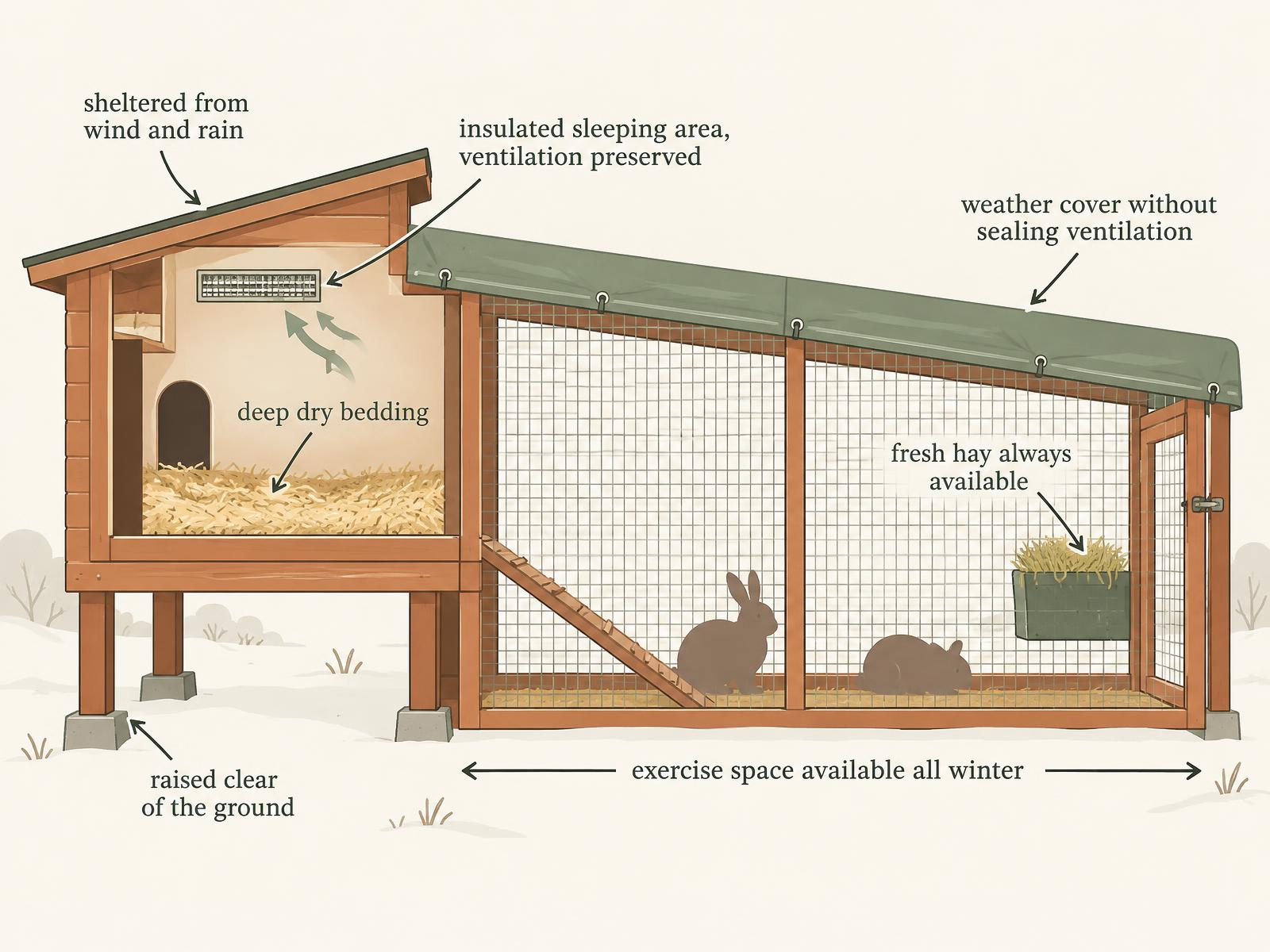
What appropriate winter accommodation means in practice:
Raised clear of the ground. The RSPCA recommends at least four inches for outdoor rabbit housing, helping to reduce damp and cold transferring from below.
Sheltered from prevailing wind and rain. A protected enclosure begins with where you put it, not how many layers you wrap around it.
A well-insulated sleeping area. Insulation can improve protection considerably, but it mustn't eliminate ventilation.
Plenty of dry bedding. The RWAF recommends bedding material such as suitable soft, dust-extracted straw for warmth in the sleeping area, alongside plenty of fresh hay for eating. The two aren't interchangeable — straw insulates, hay feeds.
Protection from rain. Covers or tarpaulins can provide useful weather protection, provided airflow is maintained.
Permanent access to proper exercise space. Cold weather isn't a reason to reduce a rabbit's world to a box.
Rabbits that are young, elderly, underweight, unwell or missing significant areas of fur have less margin for cold. Those animals need an individual plan rather than general winter advice, ideally discussed with a rabbit-savvy vet before temperatures fall.
Two mistakes that make things worse
Shutting them in to keep them warm. The instinct is understandable — if it's freezing outside, closing a rabbit into the warmest part of its accommodation can feel protective. But rabbits still need to move, forage, run, dig and explore during winter, and RWAF guidance specifically says they should retain access to exercise space throughout the colder months rather than being permanently confined to a hutch. Movement also helps generate body heat. The answer to cold is better protected accommodation, not drastically less space. The same basic welfare principle applies to guinea pigs: a warm sleeping area doesn't replace sufficient room to move and behave normally.
Insulating without ventilating. This is the easier mistake to make. You add covers, then another layer, then close the front because the wind has picked up — and eventually you've created something warmer, and wet. Animals breathe. Water bowls spill. Urine adds moisture. Bedding becomes damp. Without adequate ventilation, humidity and ammonia accumulate inside the enclosure. Rabbit accommodation should be waterproof, draught-proof, dry and well ventilated, and those requirements have to coexist. If the sleeping area feels clammy or smells strongly of ammonia, wrapping another blanket around it isn't the solution.
Water is the thing that catches people out
Water bottles can freeze during cold weather, including around the nozzle where the blockage may not immediately be obvious. So a bottle that still appears to contain water isn't necessarily delivering it.
Check drinking water at least twice daily during freezing conditions — the RSPCA specifically advises checking guinea pig water twice daily and ensuring it doesn't freeze in winter. Insulated bottle covers can help, and positioning water away from the most exposed part of an enclosure can reduce freezing. Heavy bowls are another option for some animals, although they can freeze too and still need checking.
Whatever system you use, physically check that water is available rather than looking at the container from outside the enclosure. Reduced water intake can quickly contribute to reduced food intake, and an animal that stops eating needs attention.
What to watch for
Winter coats can make body condition harder to judge by sight alone, which makes regular weighing useful. Use the same scales under similar conditions and record the number rather than trusting yourself to remember it — the trend is more useful than an isolated measurement.
Also check every day that each animal is eating normally, drinking, producing its usual quantity and appearance of droppings, moving comfortably, dry around the coat and rear end, and behaving normally for that individual.
A rabbit or guinea pig that stops eating or stops producing droppings needs prompt veterinary attention regardless of the weather. And if an animal appears profoundly cold, weak, collapsed or unresponsive, treat that as an emergency rather than trying to warm it up and see what happens.
Try this today
Put a thermometer inside the sheltered part of the enclosure, close to the level where the animals actually spend their time, then check it morning and evening for a week. Most people are guessing about the temperature their animals experience, and conditions at animal level inside the accommodation can be quite different from what the garden feels like to a standing adult.
Temperature isn't the whole assessment — humidity, draughts, bedding, health, companionship and acclimatisation matter too. But once you have an actual number, you're no longer preparing for winter entirely by feel.
The bottom line
The most useful thing to know about winter accommodation is that rabbits and guinea pigs aren't interchangeable. Healthy rabbits already acclimatised to outdoor living can generally remain outdoors through a British winter when their accommodation is appropriate. Guinea pigs need considerably more protection, with current RSPCA guidance advising they be moved indoors once temperatures fall below 15°C.
Beyond that, good winter housing is less about wrapping an enclosure in as many layers as possible and more about getting several things right at once. It needs to be warm enough and dry. Protected from draughts and ventilated. Sheltered without taking away exercise space. Drinking water needs to remain available. And body condition needs checking, because a thick winter coat can hide change underneath it.
This is why September is useful. You don't need to wait for the first freezing night to discover where the rain gets in, whether the water bottle freezes, or how cold the sleeping area actually becomes. Put a thermometer in there now, check the housing while the weather is still forgiving, and fix what needs fixing before winter does the testing for you.
This is general guidance and not veterinary advice. If your rabbit or guinea pig stops eating, stops producing droppings, or becomes weak, collapsed or unresponsive, contact a vet promptly. Animals that are young, elderly, underweight or unwell need an individual winter plan.
Related reading: Rabbit Care: What Rabbits Actually Need · Why Do Rabbits' Teeth Never Stop Growing? · Flystrike in Rabbits, Guinea Pigs and Hamsters
Common questions
Frequently asked.
Keep reading
Further reading.
Want plain-English notes on seasonal care and the things that affect your animals' health? Join The Once-Over, our weekly note from Hazel.