Dog & Cat & Small Pet · All · Seasonal
Keeping Your Pet Cool in Hot Weather
Published 06 Jul 2026 · ✓ Researched
TL;DR
- Heatstroke in UK pets is rising and largely preventable. Plan around hot days rather than reacting to them.
- Exercise, not just hot cars, is the leading trigger of heatstroke in dogs. Walk at dawn or dusk, or not at all.
- Every pet needs constant shade and fresh water, and shade moves through the day, so check on it.
- Flat-faced, older, overweight and thick-coated animals are at much higher risk, even in mild heat.
- Cats need shade and water and can be sunburnt. Small animals are very vulnerable and need twice-daily flystrike checks.
- If a pet overheats: cool first (wet fur, air movement, towels under not over), then get to a vet. For a dog in a hot car, call 999.
Hot weather is one of the few genuinely predictable dangers in pet ownership, and one of the most preventable. Yet cases keep rising: UK vets recorded 355 suspected heatstroke incidents in pets in 2025, up 28% on the year before, with around two-thirds happening over the summer. Almost all of it is avoidable with a bit of planning.
This guide covers keeping dogs, cats and small animals safe when the temperature climbs: what to do before a hot spell, the risks specific to each kind of pet, how to recognise heatstroke early, and what to do if it happens. The theme running through all of it is simple. With heat, prevention beats cure by a wide margin.
Prevention comes first
Almost everything that matters about heat happens before there's a problem. A few habits cover most of the risk across every kind of pet.
Give constant access to shade and fresh, cool water, indoors and out. A point that's easy to miss: shade moves. Somewhere shaded at breakfast can be in full sun by mid-afternoon, so an outdoor animal needs shade that lasts the whole day, not just the morning. Keep water topped up and cool, and dropping a few ice cubes in the bowl is a fine way to do it.
Keep the indoors sensible too. Good airflow helps, but don't aim a fan directly at a small animal, and remember that conservatories, sheds and greenhouses become dangerous heat traps very fast. Sunburn is a real risk for pets as much as people, particularly on the ear tips and nose, and especially for white or thin-coated animals. A pet-safe sunscreen of at least factor 30 on those exposed spots is worth having.
Dogs
Dogs are the pets most often affected, partly because we take them out into the heat with us. The most important and least understood point: exercise is the leading trigger of heatstroke in UK dogs, ahead of even the hot car. A dog will often push on through a walk or a game of fetch well past the point that's safe, so the responsibility to stop sits with us.
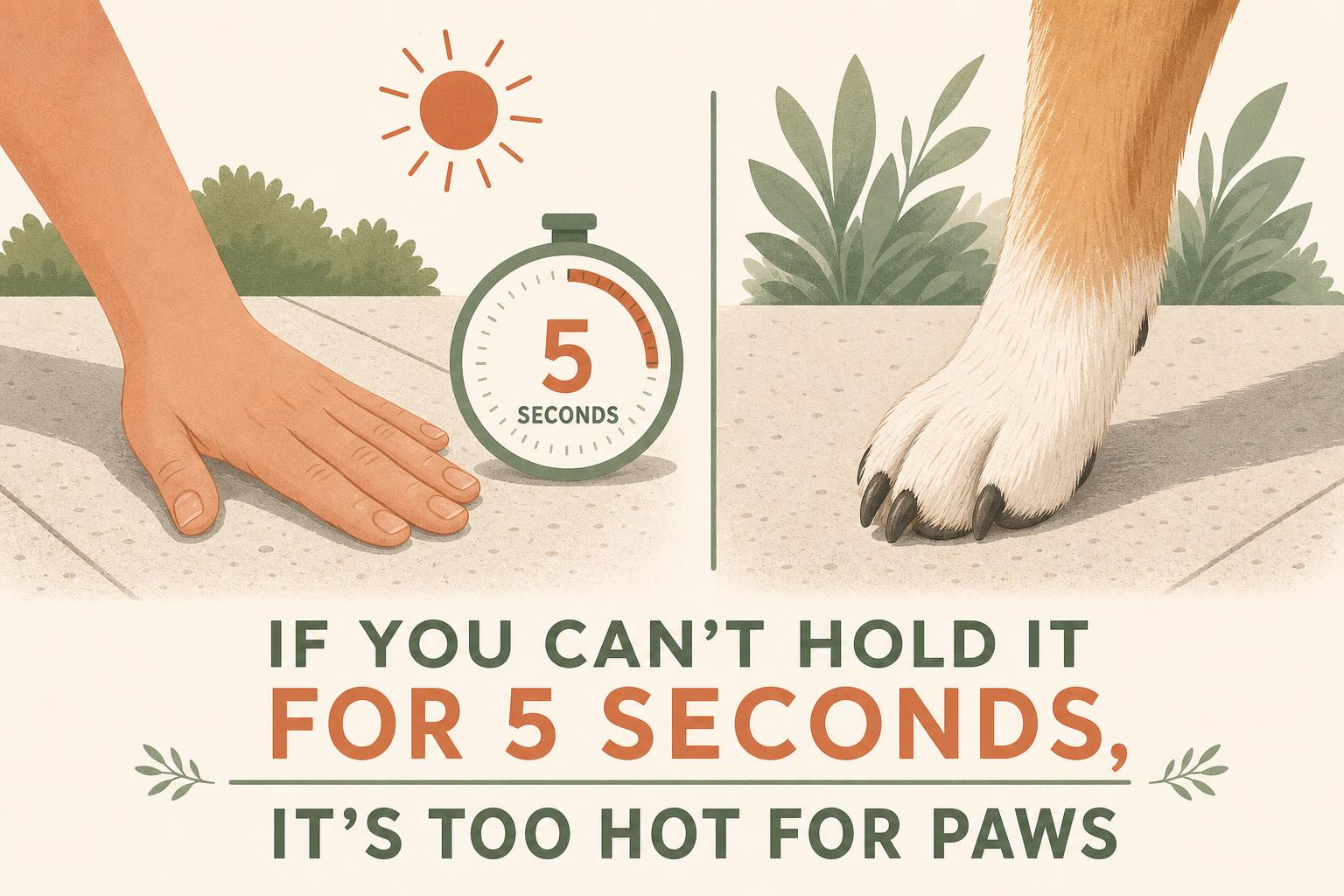
On hot days, move walks to early morning or late evening, and think "dawn or dusk". Skip strenuous activity like running or cycling together in the heat entirely. Use the pavement test before heading out: press the back of your hand to the ground for five seconds, and if you can't hold it there comfortably, it's too hot for their paws. If a dog seems to want to sleep the day away in the heat, let them, and keep them entertained indoors instead with puzzle toys, scent games or training.
Flat-faced (brachycephalic) breeds such as pugs, French bulldogs, boxers and shih tzus deserve particular care. Their airways make cooling by panting far less effective, so they're highly vulnerable to heatstroke even in fairly mild conditions. Older dogs, overweight dogs and thick-coated breeds are also at raised risk. Cooling aids like gel mats and cooling coats can help, but they should never be used to justify a walk in dangerous heat: they're comfort, not a green light.
Cats
Cats tend to manage heat better than dogs, largely because they self-regulate: they'll seek out shade, spread out on cool surfaces, and slow down of their own accord. The main job is to make sure the options are there, with plenty of shade and fresh water, and cool spots available indoors.
Two cat-specific risks are worth knowing. The first is heat traps: cats love to tuck themselves into sheds, greenhouses and outbuildings, which can heat to deadly temperatures, so always check and call before you close and lock one up. The second is sunburn. Cats burn much as we do, particularly on the ear tips and nose, and white cats are especially at risk of the skin damage that can follow. Pet-safe sunscreen on those spots helps on bright days.
Small animals
Rabbits, guinea pigs, ferrets and other small mammals are very vulnerable to heat, and because many live partly or wholly outdoors, they can be easy to overlook. They need shade that lasts all day, constant access to cool water, and good airflow without a direct draught.
Some simple, effective cooling tricks: a ceramic tile kept in the shade gives a cool surface to lie against, and a frozen water bottle wrapped in a towel placed in their area lets them choose to cool down. Fresh vegetables from the fridge add both moisture and interest. Move hutches and runs into shade, and never leave them in a spot that catches full afternoon sun.
The single most important warm-weather task for small animals is checking for flystrike, twice a day. Flystrike happens when flies lay eggs on an animal, often around a damp or soiled rear end, and the maggots that hatch cause rapid and severe damage. It's an emergency. Check the whole body, especially the back end, at least twice daily through the warm months, and keep that area clean and well groomed. This matters most for rabbits and guinea pigs but applies to other small pets too. (There's more detail in our rabbit care guide.)
Recognising heatstroke
Across species, the early signs are broadly similar and worth knowing by heart. In dogs, watch for heavy or laboured panting, excessive drooling, restlessness, bright red or unusually pale gums, weakness or wobbliness, and a rapid heartbeat. As it worsens, vomiting, diarrhoea, disorientation and collapse can follow, at which point it is a full emergency. Cats and small animals may show lethargy, breathing difficulty, drooling, or simply being unusually still and unresponsive. In any pet, the combination of heat plus a sudden change in how they seem is the signal to act.
What to do
If you think a pet is overheating, the guiding principle used by UK vets is cool first, then transport. Start cooling immediately and continue on the way to the vet.
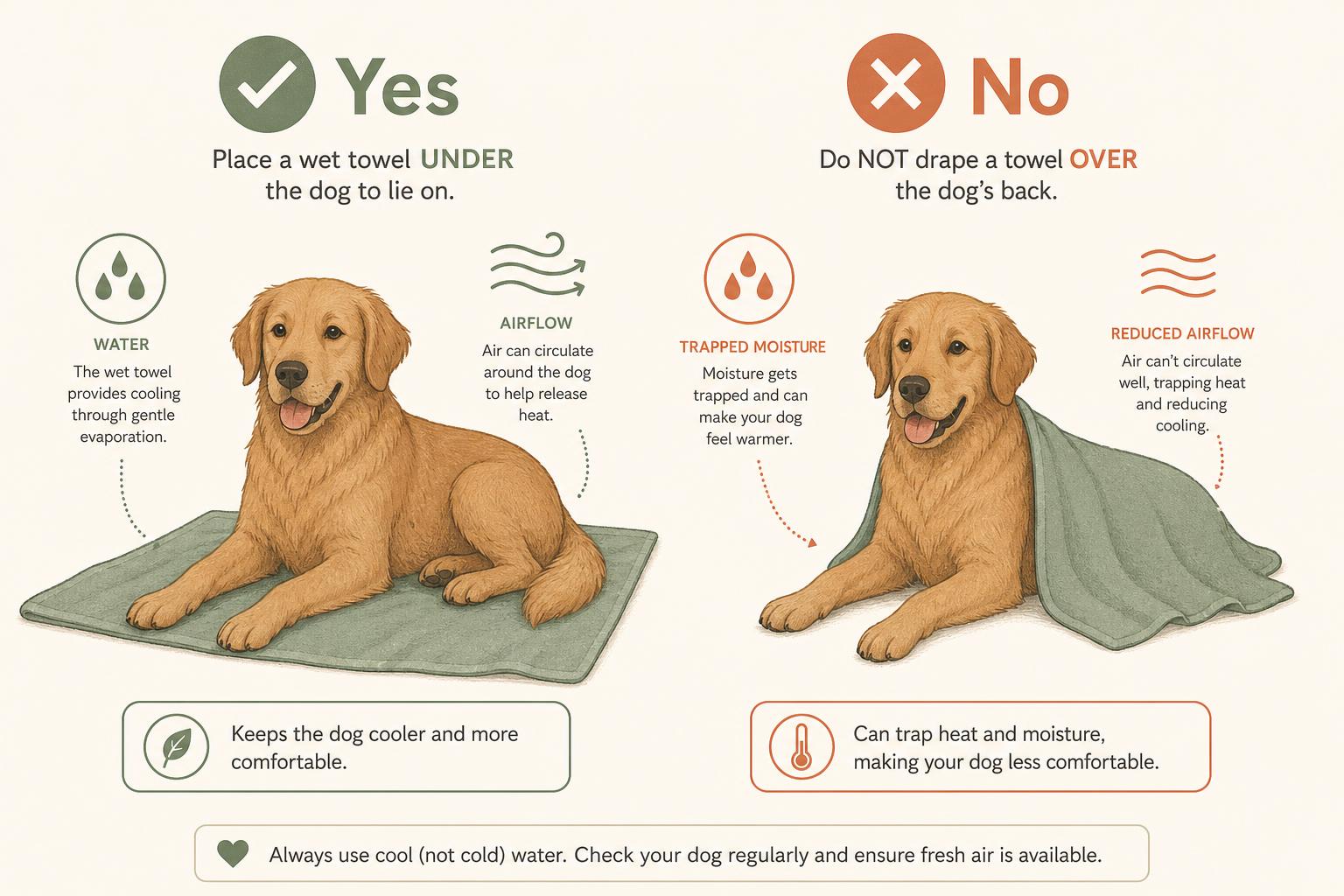
Move the animal out of the heat to a cooler, shaded or ventilated spot. Wet their fur with cool water: a hose, a bath, or wet towels all work, and cool water is fine rather than ice. If you use towels, lay them under the animal rather than over the body, since a towel draped over the top can trap heat, and re-wet them often. Get air moving over the wet coat if you can. Offer small amounts of cool water to drink if they're alert enough. And call your vet while you do all this, so they're expecting you. Heatstroke can be fatal even with treatment, so it's always a same-day veterinary matter, not a wait-and-see.
Hot cars, and the one number to know
Leaving a dog in a car on a warm day is one of the deadliest and most avoidable risks there is. When it's 22°C outside, the inside of a car, conservatory or caravan can reach a fatal 47°C within minutes, even parked in shade with windows cracked. Never do it, even briefly.
If you see a dog in a hot car showing distress, call 999. In the UK only the police have the legal power to enter a vehicle to rescue an animal, so they, not the RSPCA, are the right first call. Every minute counts.
Myths worth retiring
| The myth | The reality |
|---|---|
| "It's fine to walk my dog, I'll just go slow" | Exercise is the leading trigger of heatstroke in dogs. On hot days, skip the walk |
| "Ice cubes are dangerous for dogs" | False. Ice in the bowl, or to lick under supervision, is a safe way to cool down |
| "Drape a wet towel over my pet to cool them" | A towel over the body traps heat. Place it under them instead, and re-wet often |
| "A car in the shade with windows open is OK" | It can still reach fatal temperatures within minutes. Never leave a pet in a car |
| "Cooling mats mean I can walk in the heat" | Cooling aids are comfort, not permission. Avoid the heat in the first place |
| "Only dogs get heatstroke" | Cats, rabbits, guinea pigs and other pets are all at risk and need protection |
The Bottom Line
Heat is predictable, which makes it beatable. Give every pet lasting shade and cool water, move dog walks to dawn or dusk and skip them when it's hot, take special care with flat-faced, older and overweight animals, and check small animals twice a day for flystrike. Learn the early signs of heatstroke, and if it happens, cool first and get to a vet. For a dog in a hot car, call 999. A little planning is almost the whole game.
Guides on Burrow are researched carefully and written to be genuinely useful, but they aren't a substitute for veterinary advice. Heatstroke is a medical emergency: if you think your pet is affected, start cooling them and contact a vet straight away.
Further reading: Recognising Heatstroke in Dogs · Rabbit Care: What Rabbits Actually Need · How Much to Feed Your Dog
Want seasonal guides like this in your inbox? Join The Once-Over, our weekly note from Hazel.
Common questions