Small Pet · All · Routine
Hamster Care: What They Actually Need
Published 22 Jul 2026 · ✓ Researched
TL;DR
- Hamsters are not easy starter pets. They're nocturnal, solitary, easily stressed prey animals, and a poor match for young children hoping for a daytime playmate.
- The pet-shop cage is almost always too small. The current welfare consensus is a minimum of 100cm x 50cm of continuous, unbroken floor space, for every species.
- Deep bedding is essential, not optional. Hamsters burrow, and need at least 20cm of bedding to dig in, or they can't behave like hamsters.
- The wheel must be big enough — 28cm+ for Syrians, 25cm+ for dwarves — and solid, never barred. A too-small wheel bends the spine.
- Most hamsters live alone. Syrians must; dwarves often fall out and are safest solo. Housing them in pairs is a common, sometimes fatal, mistake.
- They live only two to three years, hide illness well, and need a specialist small-animal vet. Worth knowing before you buy.
Small, cheap, easy, perfect for a child. Almost everything the hamster is sold on turns out to be untrue.
The hamster has a reputation as the ideal beginner's pet: inexpensive, low-maintenance, and just right for a young child. It is one of the more persistent myths in pet-keeping, and one of the more harmful, because hamsters are in fact a specialist animal with specific needs that the standard pet-shop setup almost entirely fails to meet. They are nocturnal, solitary, easily stressed prey animals, and the cage they're usually sold in is too small to keep them well.
None of that means a hamster can't be a rewarding pet. It means the received wisdom is wrong, and getting it right takes a little more than the starter kit suggests. This guide sets out what hamsters actually need.
First, the hard truth about hamsters as pets
It's worth being honest at the outset, because so much depends on it. Hamsters are widely sold as the perfect first pet for a child, and they are close to the opposite.
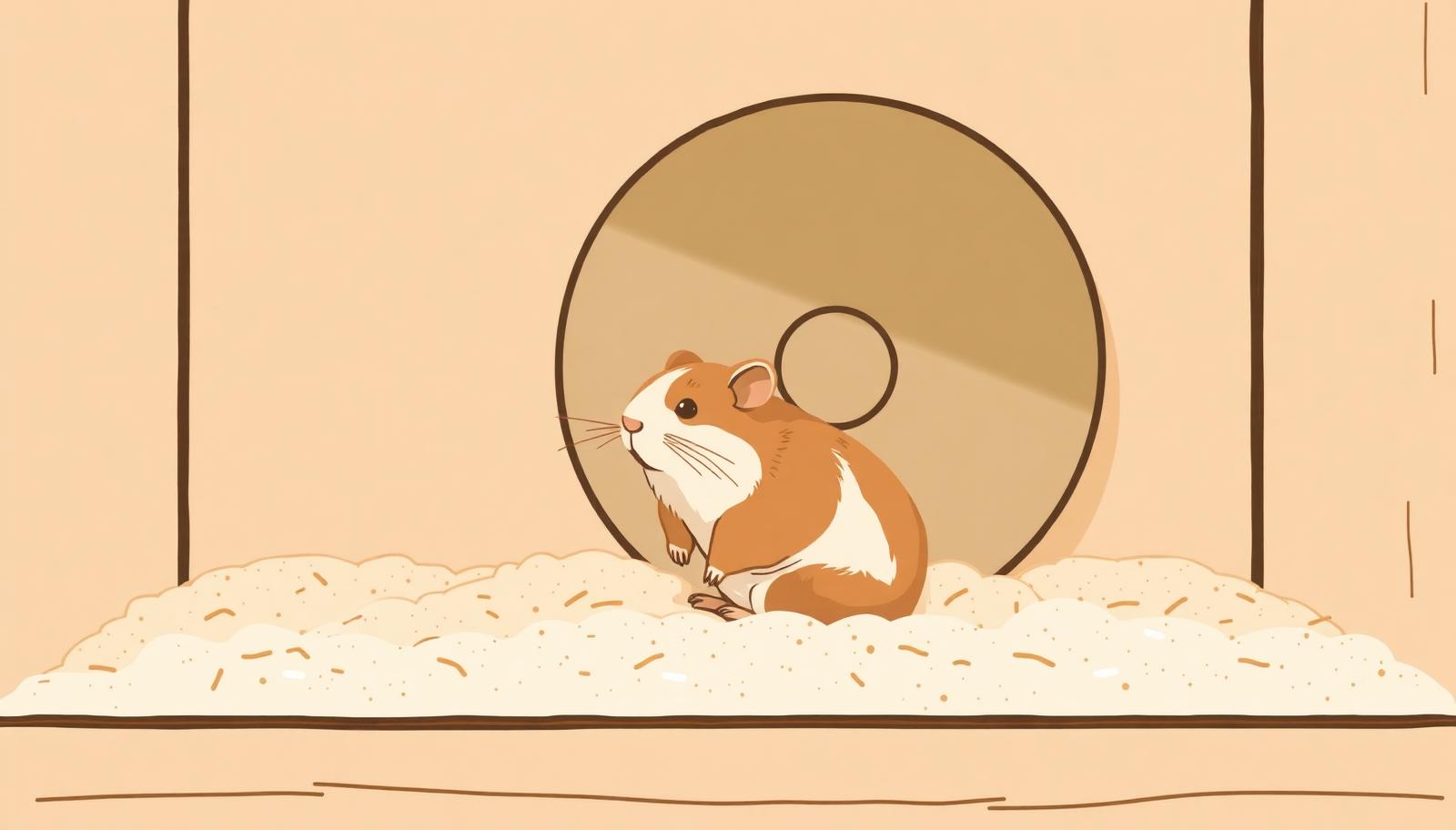
They are nocturnal. A hamster sleeps through most of the day and comes alive in the evening and overnight, which means a child hoping to play after school will find a grumpy, sleepy animal that would rather not be disturbed, and a hamster repeatedly woken to be handled is a hamster that will, quite reasonably, bite.
They are prey animals, which shapes everything about how they experience the world. Sudden movements, being loomed over, and being lifted all read as danger. Trust has to be earned slowly, and some hamsters never become keen on handling however patient you are.
They are solitary, for the most part, and easily stressed. And they are short-lived, typically two to three years, which is a hard lesson for a child who has grown attached.
None of this makes them bad pets. It makes them a considered choice for someone, often an older child or adult, who is genuinely interested in the animal on its own terms rather than as a cuddly toy. Go in understanding that, and a hamster can be a fascinating, characterful companion. Go in expecting the pet-shop fantasy and both of you will be disappointed.
Housing: where most hamster care goes wrong
If there is one area where hamster welfare fails most often, it is the cage, and the reason is simple: the cages sold in most pet shops are too small, and owners understandably assume that a cage sold for a hamster must be suitable for one.
The modern welfare consensus, reflected in the updated care guidance from Blue Cross, PDSA and Woodgreen, is that all species of hamster need a minimum of 100cm x 50cm of continuous, unbroken floor space. "Continuous" matters: this means a single open area, not several small compartments linked by tubes, and the floor space is what counts, not the addition of extra levels. Bigger is always better. An older figure of 80cm x 50cm is now generally regarded as an absolute floor rather than a target.
It's worth noting that the RSPCA, long a first port of call for new owners, previously published a minimum cage size but has removed that guidance from its website, and no longer states a minimum. Whatever the reason, the practical consequence for owners is that the clearest current figures now come from the other major welfare charities, which is why we've cited those above.
A few other housing essentials:
- Avoid barred floors and tube-based modular cages. Wire floors hurt hamster feet, and tube systems are poorly ventilated and can be stressful. A large tank, or a large barred cage with a deep solid base, is far better.
- Ventilation matters, so a fully enclosed tank needs a mesh lid.
- Position it well: somewhere warm but out of direct sun and draughts, and, given they're nocturnal, not in a bedroom where night-time wheel-running will keep you awake.
Deep bedding, and why it isn't optional
Of everything inside the enclosure, bedding is the most misunderstood. To most people it's a thin layer of substrate to soak up mess. To a hamster it's the single most important feature of the home, because hamsters are burrowers. In the wild they dig extensive tunnel systems, and the drive to burrow is a deep, essential behaviour, not a quirk.
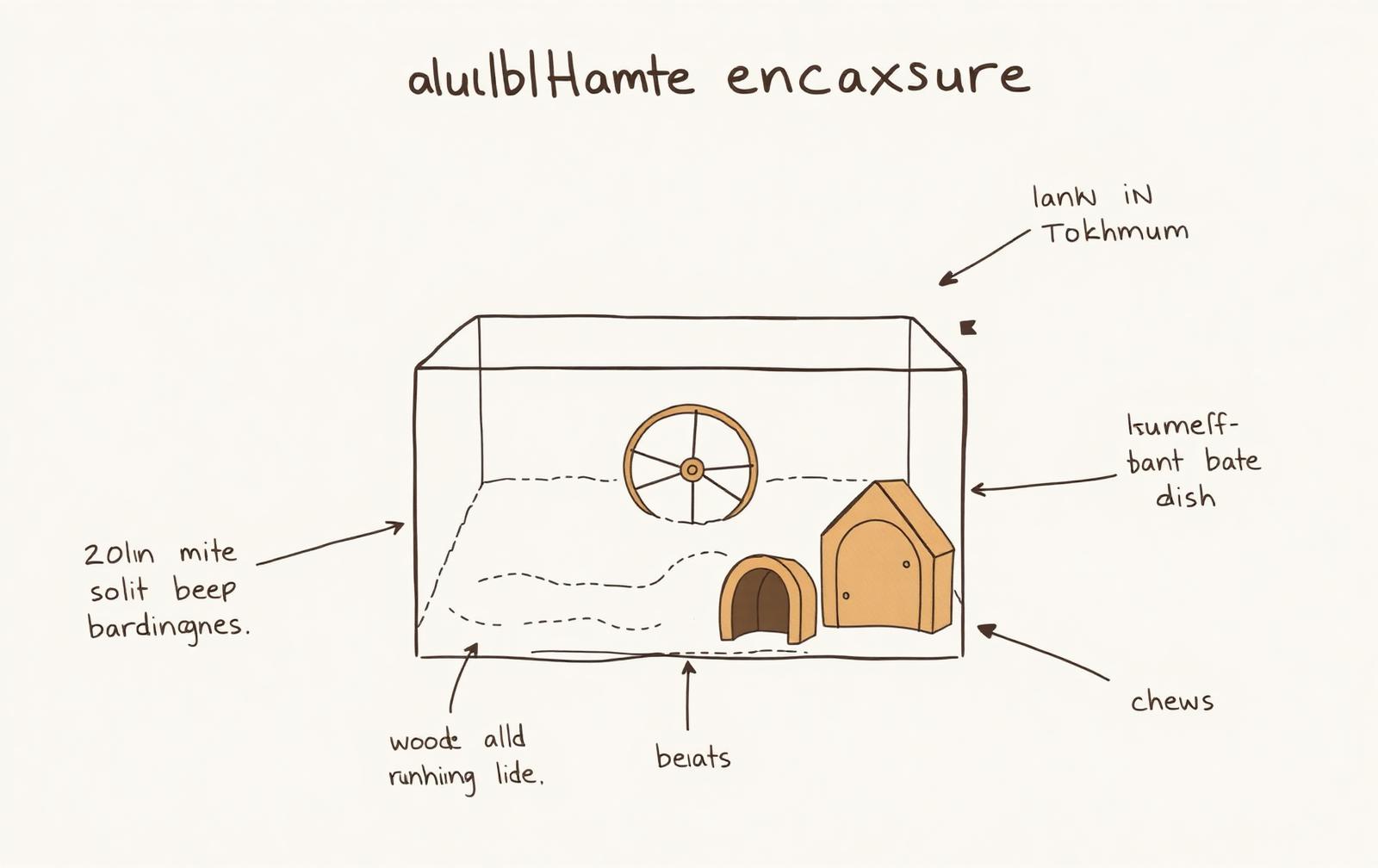
That means depth. A hamster needs at least 20cm of suitable bedding across a good part of the enclosure, deep enough to dig proper tunnels that hold their shape. This is one of the biggest differences between a hamster merely surviving and a hamster thriving, and it's impossible in a shallow pet-shop cage, which is another reason the enclosure has to be large and deep-sided.
Use safe, unscented paper-based bedding, or suitable amounts of appropriate substrate. Avoid fluffy "cotton wool" style bedding sold for nests, which can wrap around limbs and cause harm if swallowed.
The wheel, the sand bath, and the rest
The wheel. Hamsters run astonishing distances at night, and a wheel is essential, but it must be the right kind. It needs to be big enough that the hamster's back stays flat while running rather than arched, which means a diameter of at least 28cm for Syrians and larger dwarves, and 25cm for smaller dwarf species. A wheel that's too small forces the spine into a permanent curve and is a genuine welfare problem. It must also have a solid running surface, never rungs or mesh, which can trap and break legs.
A sand bath. Hamsters keep themselves clean by rolling in sand, and a dish of suitable sand (children's play sand or reptile sand that's safe and dust-free, not dusty "sand" sold as bathing dust) lets them do it. You should never bath a hamster in water.
Hides, chews and enrichment. At least one or two hides to sleep and shelter in, plenty of things to chew (their teeth grow continuously and need wearing down), tunnels, and items to explore. A bored hamster in a bare cage is a stressed hamster, and often a bar-chewing one.
Feeding
A good hamster diet is built around a quality commercial hamster mix appropriate to the species, offered as a measured amount rather than constantly topped up. Because hamsters naturally hoard food, don't be alarmed to find stashes; just check them periodically and remove anything fresh that might spoil.
Alongside the dry mix, small amounts of suitable fresh vegetables and the occasional appropriate treat add variety and interest. Introduce any new food gradually and in small quantities, since too much fresh food too quickly can upset their digestion. Fresh water should always be available, from a bottle or a shallow bowl, changed daily.
Avoid sugary treats, anything citrus, and the sticky commercial "treat sticks," which are far less good for them than their marketing suggests.
Company: most hamsters live alone
Here is another area where pet-shop advice frequently goes wrong, sometimes fatally.
Syrian hamsters are strictly solitary. In the wild they live alone and defend a territory, and two Syrians housed together will fight, often to the death. A Syrian must live by itself. This is not loneliness; it is their nature, and they are content alone.
Dwarf species are more complicated. Some dwarf hamsters can live in same-sex pairs or small groups, but many fall out as they mature, and fighting can be sudden and serious. For a first-time keeper, the safest default is to keep even dwarf hamsters singly, and certainly never to house a pair on the strength of a shop assistant's word without understanding the real risk. If you ever do keep dwarves together and see any sign of fighting, they must be separated immediately and permanently.
The takeaway: when in doubt, one hamster, one enclosure.
Handling, briefly
Taming a hamster and teaching it to be comfortable being held is a subject in its own right, and an important one, so we've given it a separate piece: How to Tame a New Hamster. The essential principle, though, belongs here too: hamsters are prey animals, being grabbed from above frightens them, and trust is built slowly over weeks, never forced. Never wake a sleeping hamster to handle it, and always handle low over a soft surface, since a startled hamster can leap from your hands.
Health and the things to watch
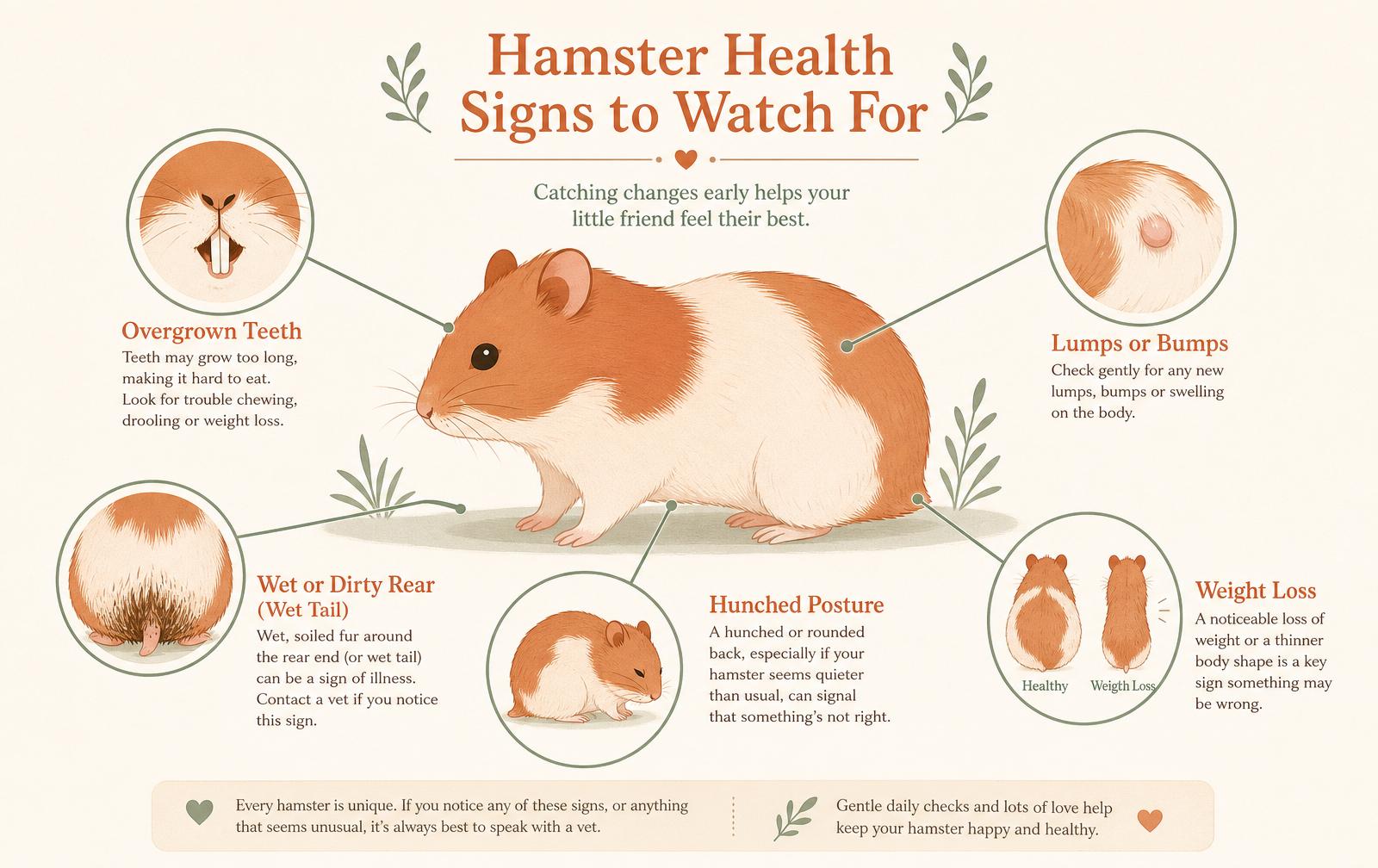
Hamsters, like other prey animals, conceal illness well, so a hamster that's visibly unwell is often quite poorly. Learn your hamster's normal, and watch for:
- Wet tail — a dampness around the rear, often with diarrhoea, lethargy and loss of appetite. It's a serious, potentially fatal illness, especially in young hamsters, and needs a vet urgently.
- Overgrown teeth — difficulty eating, drooling, or weight loss. Their teeth grow constantly, and chews help, but overgrowth needs veterinary attention.
- Lumps and skin problems, which are not uncommon, particularly in older hamsters.
- Sudden lethargy, weight loss, or a hunched posture, all of which warrant a prompt check.
Find a vet who sees small animals before you need one, since not every practice is experienced with hamsters, and their small size means problems progress quickly.
Common mistakes
| The mistake | Why it's a problem | Better approach |
|---|---|---|
| A pet-shop starter cage | Almost always far too small | Minimum 100cm x 50cm continuous floor space |
| A thin layer of bedding | Prevents burrowing, an essential behaviour | At least 20cm of deep, diggable bedding |
| A small or barred wheel | Bends the spine; rungs trap legs | Solid wheel, 28cm+ (Syrian) or 25cm+ (dwarf) |
| Housing two hamsters together | Syrians fight, often fatally; dwarves often fall out | One hamster per enclosure as the safe default |
| A hamster for a young child | Nocturnal, easily stressed, bites when woken | A considered pet for an older child or adult |
| Waking it to play in the daytime | Stresses a nocturnal animal, causes bites | Interact in the evening, on the hamster's terms |
| Water-bathing a hamster | Distressing and harmful | A sand bath for self-cleaning |
When to see a vet
Seek a small-animal vet promptly if your hamster shows any sign of wet tail (a wet rear, diarrhoea, lethargy), stops eating, loses weight, develops a lump, has difficulty with its teeth, or seems suddenly hunched and quiet. Because hamsters are small and hide illness, these things move fast, and same-day advice is often wise rather than waiting to see.
The bottom line
Hamsters are wonderful, characterful little animals badly served by their reputation as a cheap, easy, child's-first pet. Give them what they actually need — a large enclosure of at least 100cm x 50cm, deep bedding to burrow in, a properly sized solid wheel, a sand bath, the right food, and the solitude most of them prefer — and you'll have a genuinely rewarding animal to keep. Skimp on any of it, particularly the space and the bedding, and you'll have a stressed animal living a smaller life than it should. Most of what hamsters need is simply the opposite of what they're usually sold. Once you know that, the rest is straightforward.
Guides on Burrow are researched carefully and written to be genuinely useful, but they aren't a substitute for veterinary advice. Hamsters are small and hide illness well, so if something seems wrong, particularly signs of wet tail, contact a small-animal vet promptly.
Related reading: How to Tame a New Hamster · Rabbit Care: What Rabbits Actually Need · Flystrike in Rabbits, Guinea Pigs and Hamsters
Common questions