Preventive Vet Care · Rabbit · 06 Jul 2026
Rabbit Vaccinations Have Changed: What UK Owners Need to Know
By Burrow · 06 Jul 2026
TL;DR
- A highly virulent strain of RVHD2 has changed UK rabbit vaccination advice.
- Most rabbits now need protecting twice a year, not once, to cover it.
- The core diseases are myxomatosis and RVHD (in two forms, RVHD1 and RVHD2), all often fatal.
- A standard combined vaccine covers the classic three; a separate, newer vaccine adds protection against the virulent RVHD2 strain.
- Indoor rabbits need vaccinating too. These viruses travel on clothes, shoes and insects and survive a long time.
- Don't stop your rabbit's current vaccine. Talk to your vet about adding the extra protection.
If you keep rabbits, the vaccination advice you may have followed for years has quietly changed, and it's worth catching up on. The short version: because of a newer, more dangerous strain of an already deadly disease, most UK rabbits now need protecting twice a year rather than once. Many owners haven't heard yet, partly because rabbit healthcare gets far less attention than dogs' and cats' despite rabbits being one of the country's most popular pets.
This piece explains what's changed and why, without the alarm and without pretending to be a substitute for your vet. The diseases involved are serious, but the takeaway is manageable and reassuring: there is protection available, and the main job is a conversation with your practice.
The diseases, briefly
Two illnesses drive rabbit vaccination in the UK, and both are grim, which is exactly why prevention matters so much.
Myxomatosis is widespread in wild rabbits and spread by biting insects like fleas and mosquitoes, as well as by direct contact. It's usually fatal in unvaccinated rabbits, and there's no specific cure. Vaccinated rabbits that catch it tend to get a much milder illness and usually survive. Risk isn't constant across the year either — UK cases rise from late summer into autumn.
Rabbit viral haemorrhagic disease (RVHD) is, if anything, more frightening because it's so silent. It causes catastrophic internal bleeding, and it can kill so fast that many owners find a previously healthy rabbit simply dead, with no warning signs at all. It comes in two forms. RVHD1 is a swift killer; RVHD2, which has become the dominant strain in the UK since arriving in 2013, can be slightly slower but is often just as deadly, and frequently shows no visible symptoms before death. The RWAF notes that owners sometimes mistake RVHD deaths for a heart attack, fright, or in summer, heatstroke.
Crucially, these viruses are hardy and highly mobile. RVHD can persist in the environment for months and is easily carried home on shoes, clothing and objects, which is why the advice applies to indoor rabbits too.
What's actually changed
For years, the standard was a single annual vaccination: one combined jab covering myxomatosis, RVHD1 and RVHD2. That combined vaccine is still vital and still recommended.
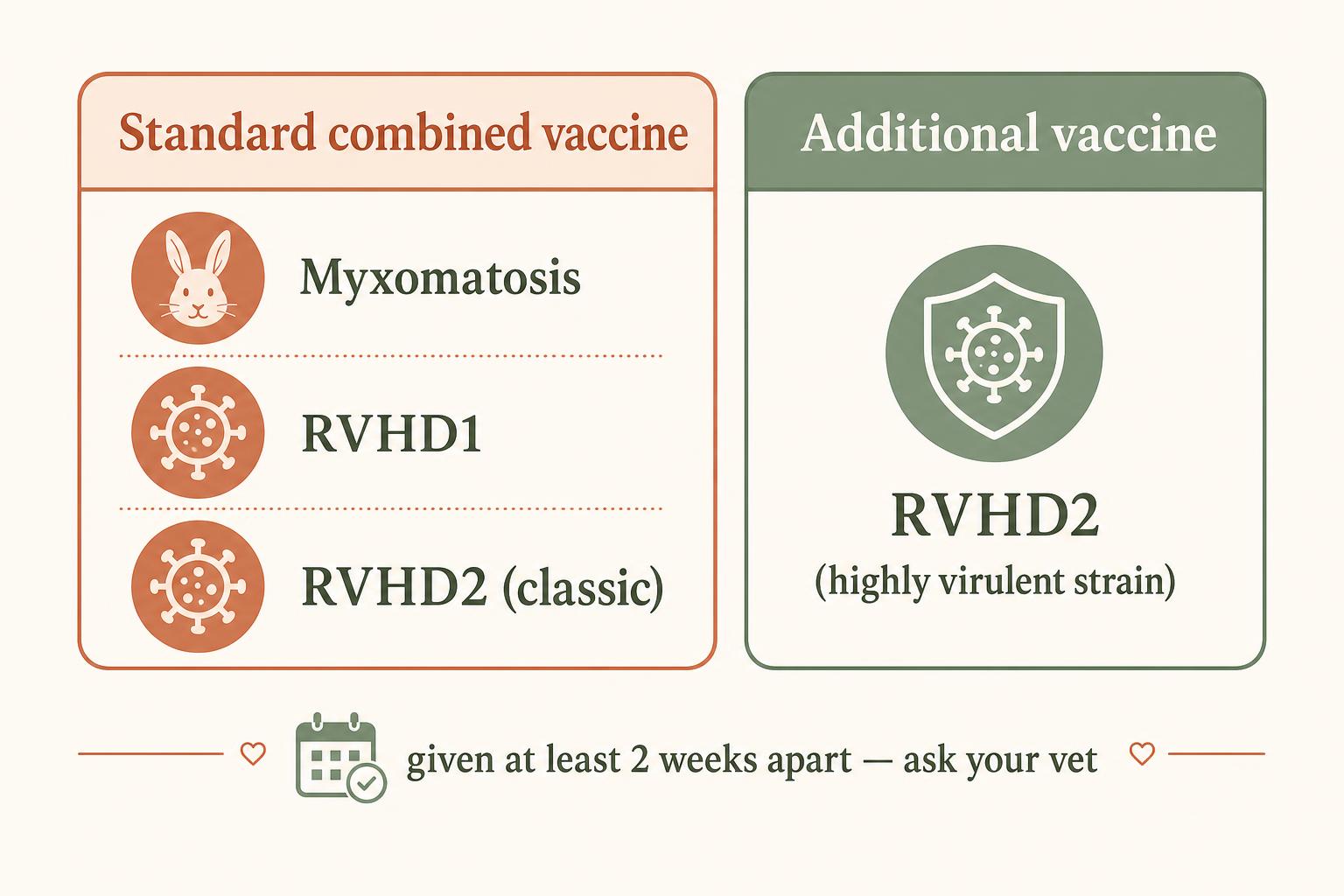
What's changed is the arrival of a highly virulent strain of RVHD2, identified across continental Europe (in France, Northern Italy, the Netherlands and elsewhere) and of serious concern to UK rabbit vets. The standard combined vaccine was not specifically licensed against this newer strain. A separate vaccine that is licensed against it has become available, and so UK rabbit-welfare guidance now recommends that many rabbits receive both: the standard combined vaccine, and the additional RVHD2 vaccine, given at least two weeks apart. In practice, that means protecting most rabbits twice a year rather than once.
What protects against what
| Disease | Standard combined vaccine | Additional RVHD2 vaccine |
|---|---|---|
| Myxomatosis | Yes | No |
| RVHD1 | Yes | No |
| RVHD2 (classic strain) | Yes | Yes |
| RVHD2 (highly virulent strain) | Not specifically licensed | Yes |
This is why both are now advised for full cover, rather than one replacing the other. The combined vaccine remains the backbone; the additional vaccine closes the gap the new strain opened.
Why you won't find a brand name here
You might expect a piece like this to tell you exactly which vaccine to ask for. It deliberately doesn't, for two reasons. First, UK welfare bodies are legally restricted from naming specific vaccine products to owners, and may only share those details with vets, so we follow the same line. Second, and more importantly, the right combination, timing and schedule genuinely depend on your individual rabbit, its age, health and circumstances. This is a decision to make with your vet, not from an article. Supply of the newer vaccine has also been variable, and protocols differ between practices, which is another reason your own vet is the right source.
If your rabbit is already vaccinated, the guidance is clear: don't stop or delay the existing vaccine while you sort this out, since it still offers the best available protection for the diseases it covers. Simply raise the additional RVHD2 vaccine at your next appointment.
A seasonal note while we're here
Summer brings a second rabbit risk worth pairing with this: flystrike, where flies lay eggs on a rabbit (often around a damp or soiled rear end) and the maggots cause rapid, severe and sometimes fatal damage within hours. Check your rabbit's whole body, especially the back end, at least twice a day in warm weather, and keep that area clean. It's covered more fully in our rabbit care guide, but it belongs in any conversation about keeping rabbits well through the summer.
The Bottom Line
Rabbit vaccination has moved from once a year to, for most rabbits, twice, because a more dangerous strain of RVHD2 now needs an additional vaccine alongside the standard combined jab. The diseases are serious and often silent, and they reach indoor rabbits too, so the protection genuinely matters. The action, though, is simple and calm: keep your rabbit's current vaccine up to date, and book a conversation with your vet about adding the extra RVHD2 cover. That single appointment is most of the job done.
This is a general guide and isn't a substitute for veterinary advice. Vaccination needs vary by individual rabbit, so speak to your vet about the right course and timing for yours. If your rabbit is unwell or has stopped eating, contact a vet straight away.
Related reading: Why Do Rabbits' Teeth Never Stop Growing?
Common questions
Frequently asked.
Keep reading
Further reading.
Want practical notes like this in your inbox? Join The Once-Over, our weekly note from Hazel.