Dog & Cat · All · Routine
The Pet Dental Care Guide
Published 06 Aug 2026 · ✓ Researched
TL;DR
- Most dogs and cats have dental disease by age three. It's the most common health problem vets see in adult pets.
- Plaque hardens into calculus in about 48 hours, after which brushing cannot shift it. That window is the whole argument for daily home care.
- The visible tartar is not the real problem. The disease that matters happens under the gumline, where you can't see it.
- Anaesthesia-free dental cleaning has been banned by the RCVS. It makes teeth look cleaner while leaving the disease untouched, and can actively make things worse.
- If brushing isn't possible, wiping with gauze every other day is the best fallback. VOHC-accepted chews and diets help as a supplement, not a replacement.
- Cats conceal oral pain particularly well. Absence of complaint is not absence of disease.
By the age of three, around 80% of dogs and somewhere between half and ninety per cent of cats already show signs of periodontal disease. It's the condition vets see more than any other in adult pets, and it's one that most owners are either doing nothing about or actively making worse with a well-intentioned shortcut that the UK's veterinary regulator has now banned outright.
The good news is that the right approach isn't complicated. It just runs counter to a few things that feel intuitive, and it starts with one fact that changes how the whole problem looks.
The one fact that changes everything: 48 hours
Most people think about dental care in terms of what teeth look like. The timing matters far more than the appearance.
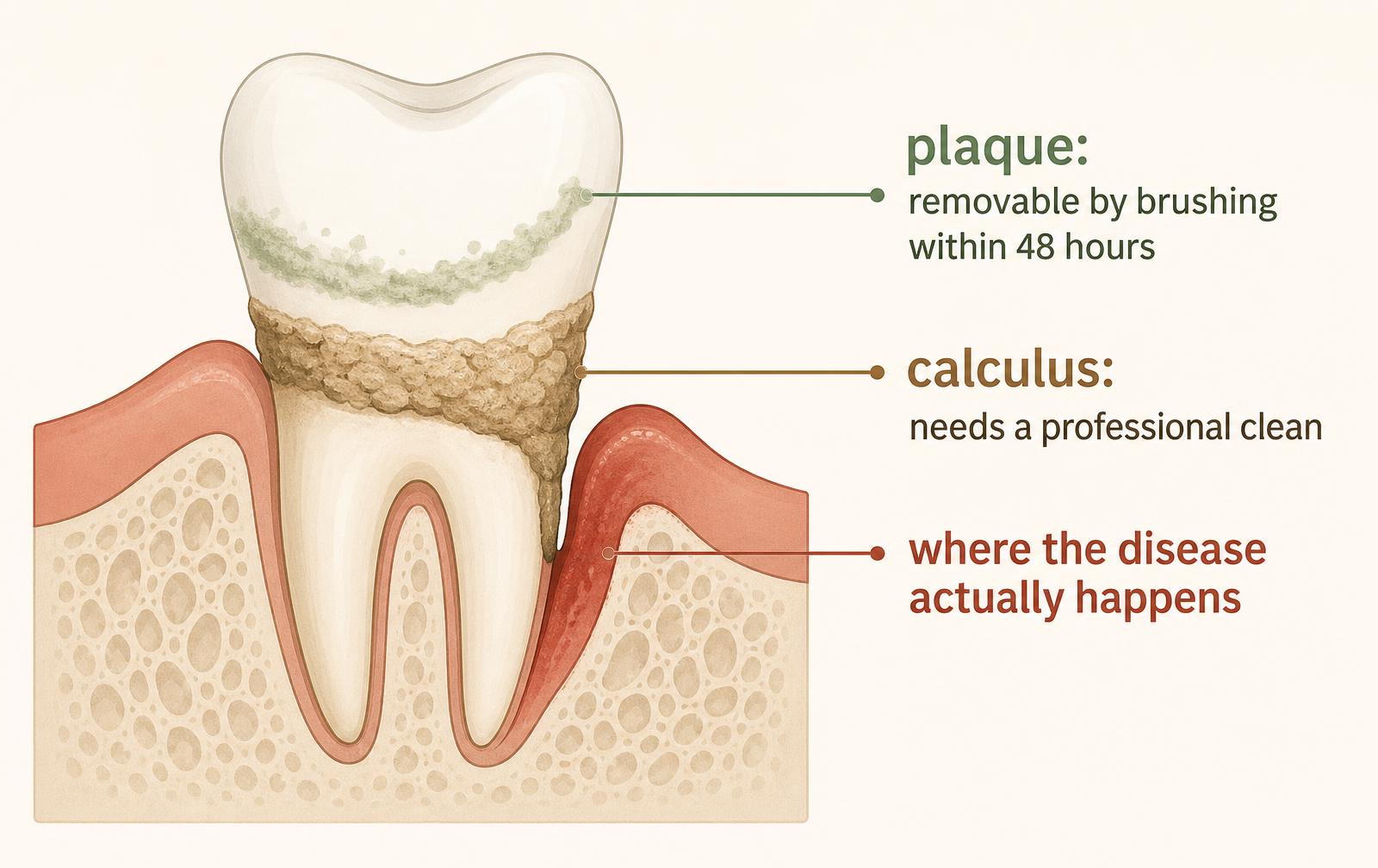
Plaque is a soft bacterial film that forms constantly on the surface of teeth. While it's soft, a toothbrush removes it easily. But plaque left in place for more than roughly 48 hours mineralises into calculus — the hard brown deposit we call tartar. Once that happens, brushing will not remove it. Only a professional clean under general anaesthetic will.
This is the whole argument for daily brushing. You're not trying to scrub away what's already there — by the time you can see the problem, it's beyond home care. You're trying to interrupt plaque before it sets. Miss the 48-hour window regularly and you spend your life brushing around a problem you can no longer reach.
The thing that fools everyone
That visible brown calculus — the thing owners point to and vets get asked about — contributes relatively little to periodontal disease itself. It looks unhealthy, and it is a reasonable sign that plaque control has been poor, but it's not really where the disease lives.
The disease happens beneath the gumline, in the pocket between tooth and gum, where you cannot see it. A mouth can look perfectly presentable while disease progresses underneath, and removing the visible deposits achieves far less than it appears to. Properly assessing a pet's dental health requires a vet, and usually X-rays under anaesthetic, because most of what matters is hidden.
The shortcut the RCVS has now banned
Anaesthesia-free dental cleaning — sometimes called conscious scaling or non-anaesthetic dentistry — involves scaling the visible surfaces of a pet's teeth while they remain awake, often offered by groomers or high-street outfits. The teeth look cleaner afterwards, which creates a convincing impression of dental care.
The Royal College of Veterinary Surgeons has now formally banned these procedures, with support from the British Veterinary Dental Association and the European Veterinary Dental College, citing serious welfare and health concerns.
The reasons follow directly from everything above. Scraping the visible surfaces of teeth while an animal is conscious cannot reach the disease under the gumline. It cannot be done thoroughly or safely with a moving, stressed animal. It damages the tooth's enamel surface, giving plaque more to cling to. And it produces a tidy-looking mouth that removes exactly the prompt an owner might otherwise have had to seek proper treatment. The result is cosmetic improvement alongside unchanged or worsening disease.
A professional dental under general anaesthetic exists for a reason. It allows the areas below the gumline to be cleaned and X-rayed, and it allows it to be done without distressing the animal. Anaesthesia carries real considerations, particularly in older pets, and those are a fair conversation to have with your vet. But the answer to that conversation is not a conscious scale.
What actually works, in order
Think of home dental care as a hierarchy. The higher up you can manage, the better, and consistency matters more than perfection.
| Approach | Evidence | Notes |
|---|---|---|
| Daily brushing with a soft pet toothbrush and enzymatic pet toothpaste | Gold standard | Removes plaque before it hardens. Never use human toothpaste — it contains ingredients unsafe for pets |
| Brushing every other day | Good | Still inside the 48-hour window, just |
| Wiping teeth with a gauze pad every other day | Reasonable fallback | The best alternative for pets that won't tolerate a brush |
| Dental diets and chews carrying the VOHC seal | Useful supplement | Mechanical abrasion reduces plaque, but doesn't replace brushing |
| Water additives carrying the VOHC seal | Modest, mixed | Easier to sustain than brushing; weaker effect |
| Bones, antlers, hard chews | Not recommended | A common cause of fractured teeth |
On products: the only independent standard worth looking for is the VOHC seal — the Veterinary Oral Health Council. It's an American body, but many products sold in the UK carry its mark, and it means the product has met a defined threshold for reducing plaque or tartar from independent data rather than simply claiming to. We don't recommend specific brands, and would treat any pet dental product making bold claims without that independent backing with polite scepticism. The same principle applies more widely — see our blog on whether pet supplements actually work.
Try this today
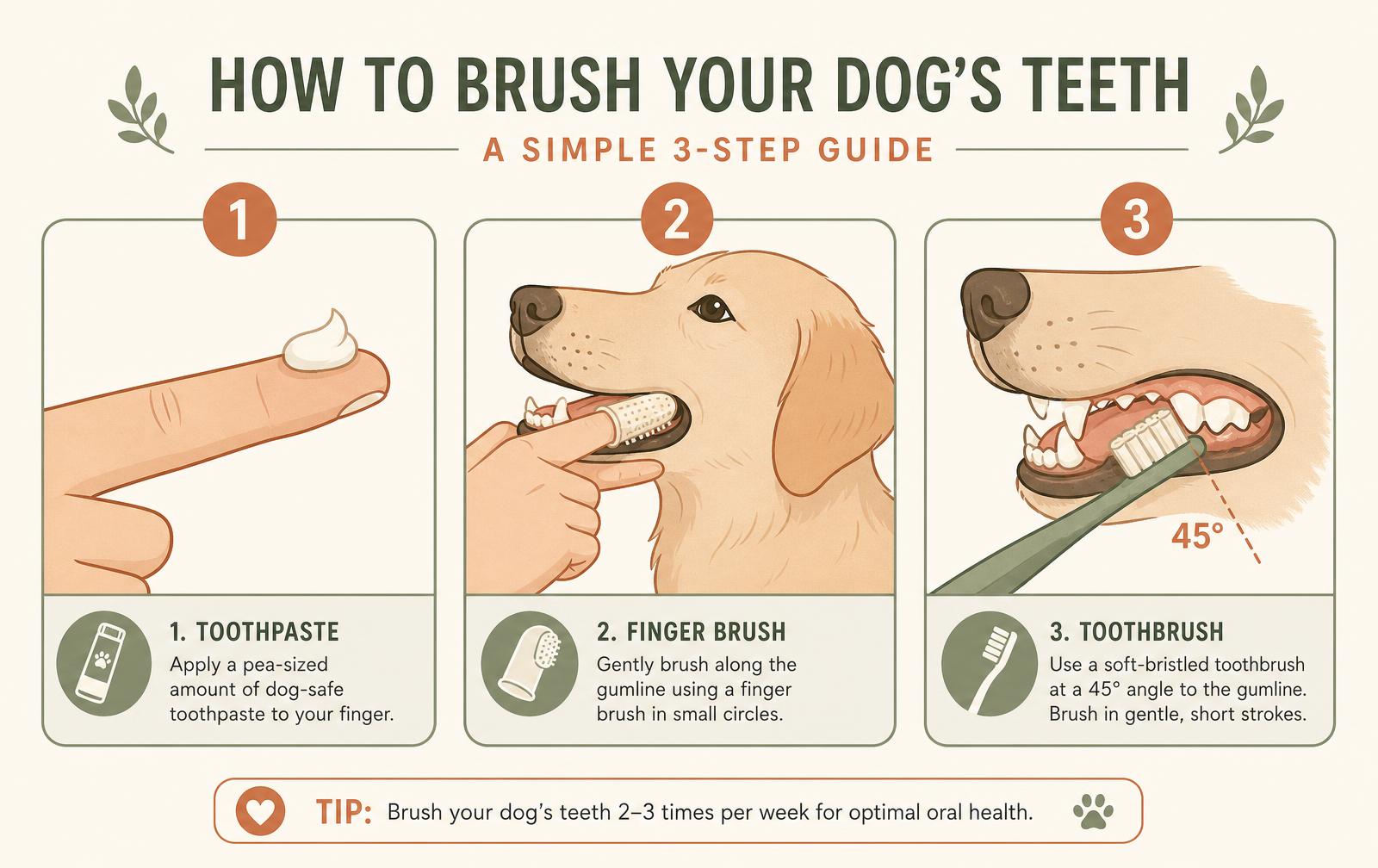
If you do nothing else after reading this, introduce your pet to toothpaste before the brush. Put a small amount of pet enzymatic toothpaste on your finger and let them lick it. Do that for a few days until it's completely normal. Then progress to rubbing a finger along the gumline. Then a finger brush. Then a soft-bristled pet toothbrush.
Most pets resist the brush only because it's unfamiliar. A fortnight of patient introduction usually resolves it, and the time invested pays off in years of effective home care. Keep sessions short, end them well, and build the habit before there's a problem rather than after.
How to actually brush
Concentrate on the outer surfaces of the teeth, particularly along the gumline, which is where plaque accumulates and where it does damage. The inner surfaces matter less and are far harder to reach — most pets won't tolerate it, and the tongue provides some natural cleaning there anyway. Keep sessions to a minute or two, use only pet toothpaste, and praise or a moment of play at the end makes the next session easier.
Cats deserve a special mention
Cats are harder on two counts. They're less tolerant of the process, and they are extraordinarily good at concealing oral pain — a survival instinct that means a cat with significant dental disease may eat normally, purr, and behave much as ever until the problem is advanced. Our blog on how cats hide illness covers that instinct in more detail.
Updated feline oral health guidelines published in 2025 by the Feline Veterinary Medical Association reinforce exactly this point, emphasising how commonly dental disease in cats is missed and how important regular professional assessment under anaesthetic is for proper diagnosis. A cat that won't tolerate brushing is not a failure — try gauze wiping, a VOHC-accepted diet or chew, and keep up regular vet checks regardless of how normal the cat seems. The absence of complaint means very little in a species built to hide discomfort.
Cats also suffer conditions dogs largely don't: tooth resorption, where the tooth structure itself breaks down, and chronic gingivostomatitis, a severe inflammatory condition. Both are painful and neither is preventable by brushing alone.
Signs worth acting on
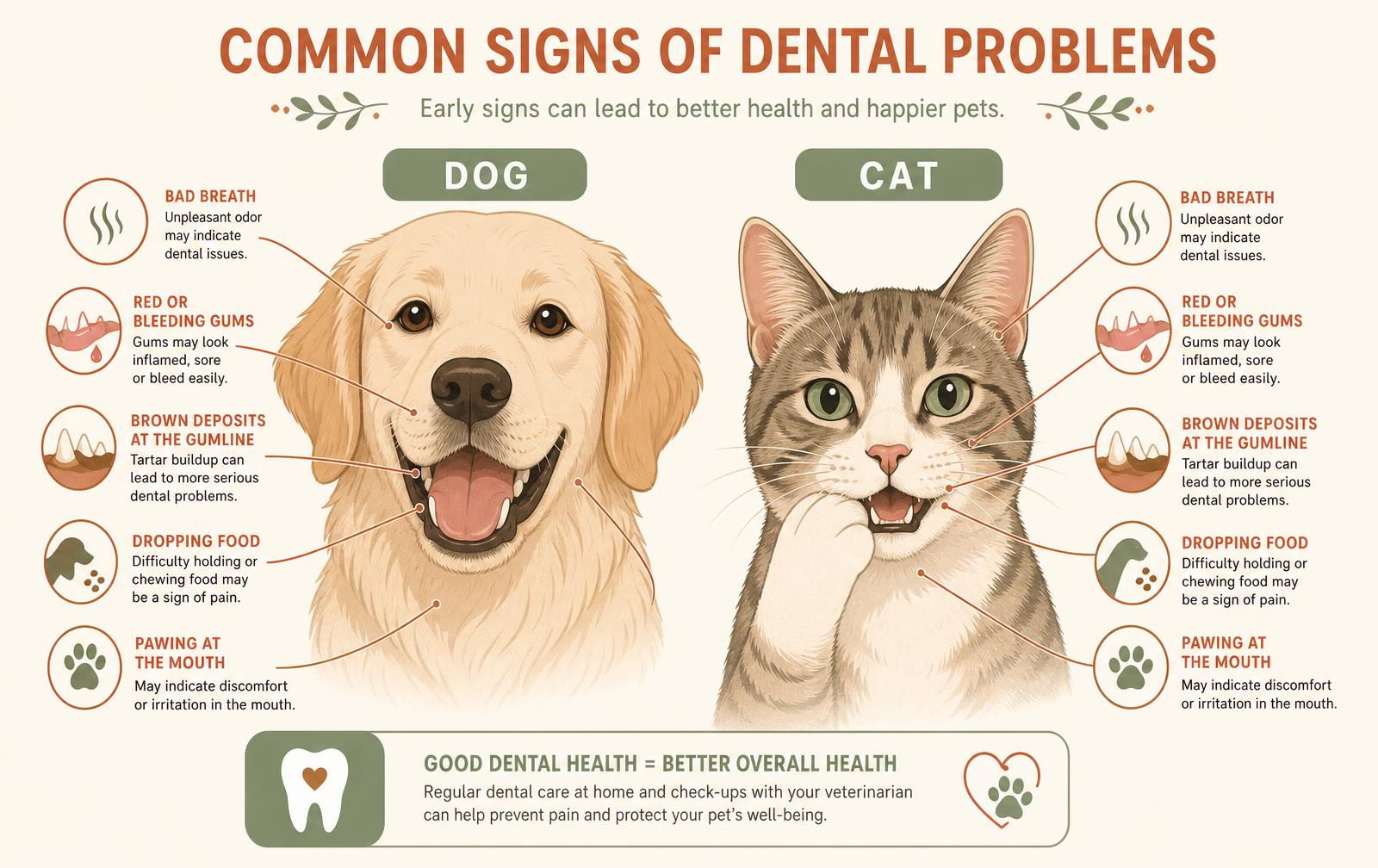
Any of these warrants a vet appointment rather than a wait-and-see:
- Bad breath, particularly if it worsens — see why your dog's bad breath isn't normal
- Red, swollen or bleeding gums
- Visible brown or yellow deposits, especially near the gumline
- Dropping food, chewing on one side, or turning away from hard food
- Pawing at the mouth or drooling
- Reluctance to have the head or face touched
- A tooth that looks discoloured, chipped or loose
While you're looking in your pet's mouth, it's worth knowing how to check gum colour too — it's a useful five-second habit for spotting other problems early.
Troubleshooting
| The problem | What's going on | What to do |
|---|---|---|
| Pet refuses the toothbrush | Introduced too fast | Go back to toothpaste on a finger, then a finger brush, over a fortnight |
| Teeth still look brown despite brushing | Existing calculus can't be brushed off | Book a professional clean; brushing prevents new plaque, not old calculus |
| Cat won't tolerate anything near its mouth | Common, and not a failure | Gauze wiping every other day, or VOHC diets and chews; keep up vet checks |
| Bad breath returns quickly after a professional clean | Plaque control has lapsed | Resume daily brushing immediately after the clean — that's when it counts most |
| Tempted by anaesthesia-free scaling | Now banned by the RCVS for good reason | Discuss anaesthetic concerns honestly with your vet instead |
When to see a vet
Book an appointment if you notice any of the signs above, if your pet has never had a dental check, or if it's been more than a year since the last one. Ask your vet to show you what a healthy mouth looks like on your particular animal — breed matters, and what's right for one dog isn't right for another. If a professional clean is recommended and you're anxious about the anaesthetic, say so. Pre-anaesthetic blood tests, careful monitoring, and modern protocols exist precisely to manage that risk, and a good vet will take the concern seriously rather than dismiss it.
The bottom line
Dental disease is nearly universal, largely invisible, genuinely painful, and mostly preventable. The single most useful thing you can do is brush daily, because plaque sets hard in about 48 hours and after that it's beyond your reach. Don't be reassured by teeth that look clean. Don't be tempted by conscious scaling — the RCVS has now banned it, and with good reason. And don't expect a cat to tell you when something hurts.
Start slowly with the brushing introduction, keep it consistent, and get a proper look from your vet at least once a year. The habits built now are the ones that matter most, because the window when they make the biggest difference is before there's anything to treat.
Guides on Burrow are researched carefully and written to be genuinely useful, but they aren't a substitute for veterinary advice. If you're concerned about your pet's teeth, mouth or eating, please speak to your vet.
Related reading: Are Dental Chews Worth It for Dogs? · Cats Are Experts at Hiding Illness · How to Check Your Dog's Gum Colour · Do Dog and Cat Supplements Actually Work?
Common questions