Preventive Vet Care · Dog · 06 Jul 2026
How to Check Your Dog's Gum Colour (and What It Tells You)
By Burrow · 06 Jul 2026
TL;DR
- Healthy dog gums are usually a moist bubblegum pink, and refill to pink within two seconds after you press and release.
- Pale, white, blue, yellow, brick-red or muddy gums are all reasons to phone the vet, often the same day.
- Some healthy breeds have pigmented gums. Find a consistent patch of pink so you know your dog's baseline.
- Gum colour is a triage tool, not a diagnosis. Read it alongside how your dog is behaving, breathing and eating.
Checking a dog's gums is one of the most useful things an owner can learn, and one of the least talked about. It takes about ten seconds, costs nothing, and gives you a real window on how your dog's circulation is doing at that moment. In an emergency, that can be the difference between calling the vet at the right time and calling too late.
This piece is deliberately practical. It covers how to check, what the colours tend to mean, and when to pick up the phone.
What you're actually looking at
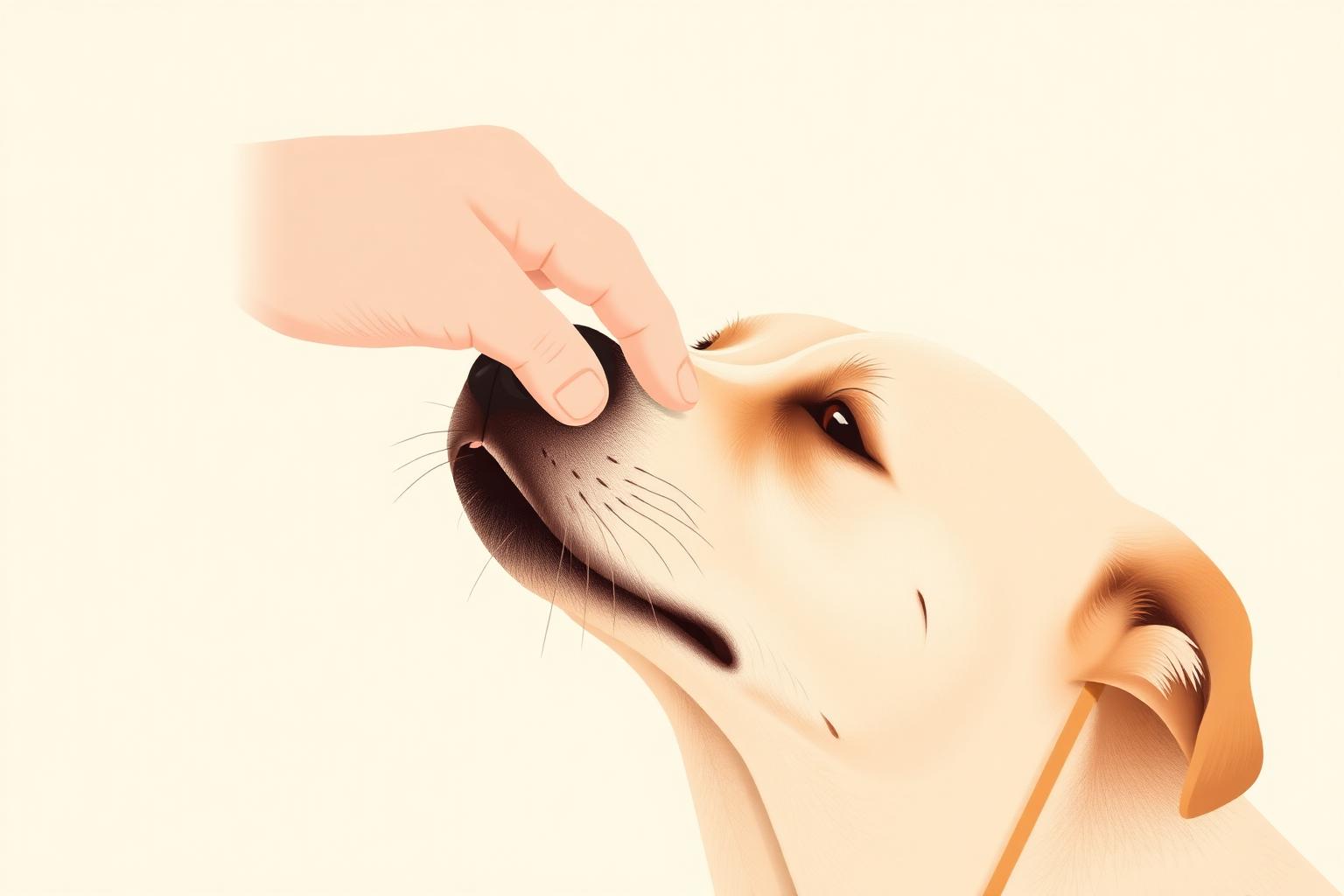
The gums are the pink tissue around the base of the teeth. They have a thin covering and a rich blood supply sitting close to the surface, which makes them a reasonable proxy for how well oxygenated blood is flowing through the small vessels of the body. That, in turn, is a rough proxy for whether the heart and lungs are getting blood where it needs to go.
The gums won't tell you what's wrong. They will often tell you whether something is, and quickly. That's exactly what makes them useful as a first check rather than a final answer.
How to check
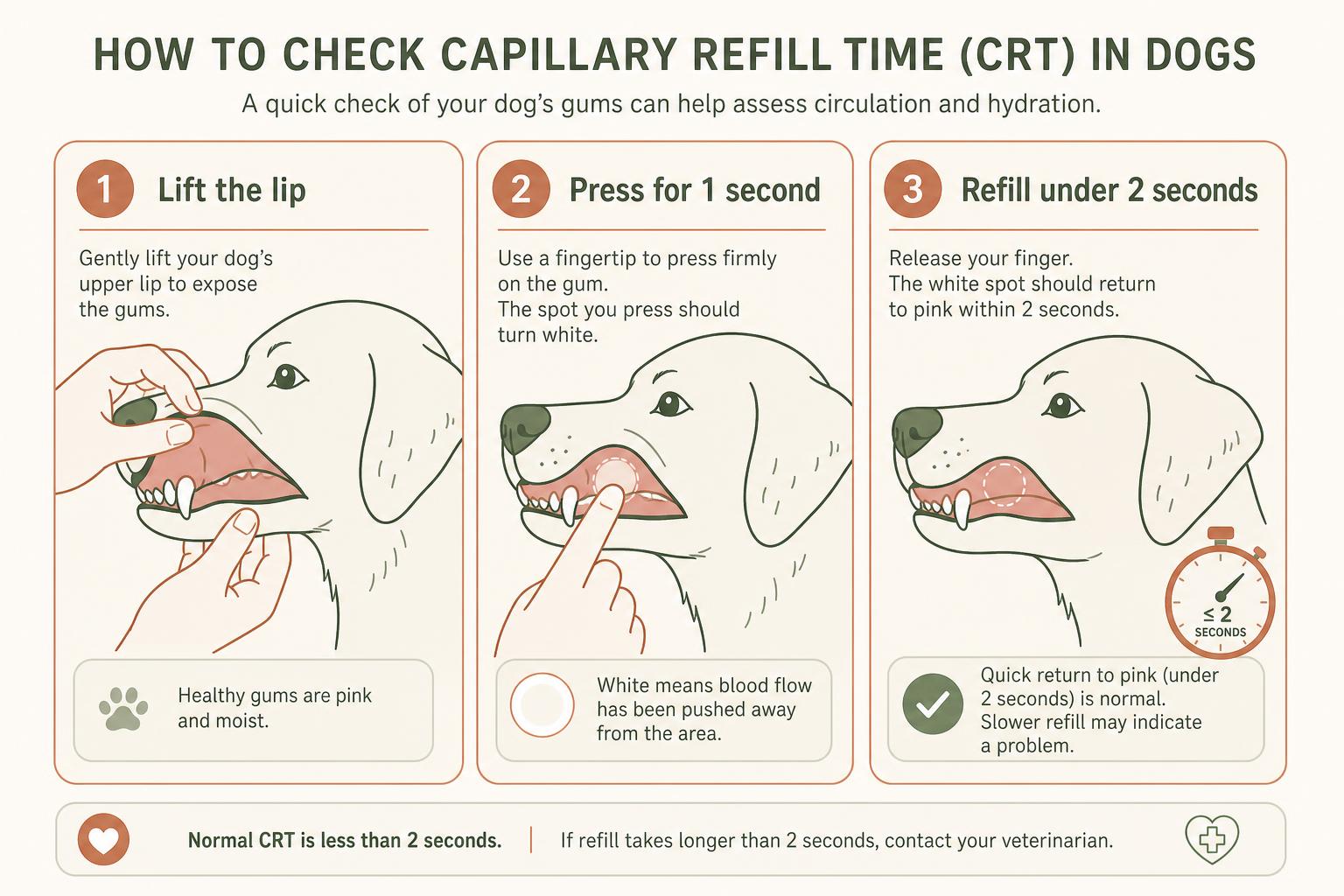
Sit or crouch beside your dog in a room with decent light. Natural daylight is best, though indoor lighting will do. Gently lift the upper lip on one side so you can see the gum above the canine tooth, and note two things.
First, colour. For most dogs, healthy gums are a bubblegum or salmon pink, and they should look moist rather than dry or tacky.
Second, capillary refill time, or CRT. Press a fingertip firmly but gently against the gum for about a second, then lift it away. The spot will blanch pale, and the colour should flood back within two seconds. Longer than that, or a spot that stays pale, is a signal worth acting on.
That's the whole check. If your dog objects to having their lip lifted, build up to it in short, rewarded sessions while they're well. You want this to be a familiar handling routine long before you need it in a worrying moment.
If your dog has pigmented gums
Some breeds, including chow chows, shar-peis, some retrievers and many mixed-breed dogs, have naturally black or patchy gums. That's not a health issue, and it doesn't stop you checking colour. It just means you check the pink areas instead. Look for a consistent patch of unpigmented gum, or use the inner surface of the lower lip, the tongue, or the pink rim just inside the lower eyelid. Whichever spot you choose, use the same one every time so you're always comparing like with like.
What the colours tend to mean
Colour is a triage tool. Any of the following is worth taking seriously, and worth a phone call, often the same day and sometimes immediately.
| Gum colour | What it can suggest | What to do |
|---|---|---|
| Bubblegum pink, CRT under 2s | Circulation doing its job | Reassuring baseline. Read alongside other signs |
| Pale pink or white | Shock, blood loss, severe anaemia, heart failure | Call now, same-hour, especially if weak or breathing fast |
| Blue or purple (cyanosis) | Blood not carrying enough oxygen | Immediate emergency, phone the vet on the way |
| Bright brick-red | Heatstroke, sepsis, some toxins | Call now. On a warm day, treat as heatstroke until told otherwise |
| Brown or muddy | Often paracetamol (acetaminophen) toxicity | Immediate emergency, tell the vet what they may have eaten |
| Yellow (jaundice) | Liver, gallbladder, or red blood cell breakdown | Vet visit the same day |
| Bleeding, sores, foul smell | Dental disease, clotting problems | Book a proper mouth exam soon |
A little more on the ones that matter most in the moment. Pale or white gums often mean blood isn't reaching where it should, whether through shock, internal blood loss you can't see, severe anaemia or heart failure. A dog with white gums, especially if also weak, cold to the touch or breathing fast, is a same-hour emergency. Blue or purple gums mean the blood isn't carrying enough oxygen, from respiratory distress, an airway obstruction or certain heart conditions, and that's an immediate emergency: phone the vet on the way, don't wait. Bright red gums with heavy panting on a warm day should be treated as heatstroke until a vet says otherwise, so move the dog somewhere cool, offer water if they'll take it, and get going.
What gum colour won't tell you
It's tempting to treat any single check as a verdict. It isn't. A calm dog with pink gums can still be brewing a serious illness that hasn't reached the circulation yet, and a frightened dog at the vet can have paler gums than usual purely from stress. The check works best as one input among several. How is your dog behaving, eating, breathing, moving? A change in gum colour matters most when it fits a wider picture, or appears alongside other symptoms.
If in doubt, phone the vet and describe what you're seeing. UK veterinary practices are used to triage calls, and it's genuinely part of what you're paying for. The PDSA and other UK sources are clear that any colour other than a healthy pink is worth a prompt call.
The Bottom Line
Learn your dog's normal gum colour while they're well, and check for a couple of seconds once a week. It takes almost no time and turns an unfamiliar skill into a familiar one. Then, in a moment you're worried, lift the lip, look at the colour, press and count to two. Trust the wider picture: gums are one signal among several, and the vet is the right call whenever those signals stop making sense.
This is a general guide and isn't a substitute for veterinary care. If your dog's gums are any colour other than a healthy pink, or you're worried about how they seem, contact your vet.
Common questions
Frequently asked.
Keep reading
Further reading.
Want practical notes like this in your inbox? Join The Once-Over, our weekly note from Hazel.