Seasonal Health · Dog · 06 Jul 2026
Recognising Heatstroke in Dogs Before It Becomes an Emergency
By Burrow · 06 Jul 2026
TL;DR
- The early signs of heatstroke are heavy panting, drooling, restlessness, and gums that look unusually red or pale.
- Flat-faced, older, overweight and thick-coated dogs are at much higher risk, even on days that don't feel extreme.
- Exercise, not just hot cars, is a leading trigger. A dog will often push past what's safe, so stopping is on us.
- If you suspect heatstroke: cool first, transport second. Start cooling immediately, then get to a vet.
- Heatstroke can be fatal even with treatment, so early signs are to act on, not wait out.
Heatstroke is one of those things most dog owners know about in the abstract and far fewer know how to spot in the moment. That gap matters, because with heat the difference between a scare and a tragedy often comes down to minutes, and to whether someone recognised the early signs and acted rather than waiting to see.
It's also a growing problem. UK vets recorded 355 suspected heatstroke incidents in pets in 2025, up 28% on the year before. Knowing what to watch for, and what to do, is genuinely one of the more useful things a dog owner can carry around in their head through the summer.
Why dogs overheat so easily
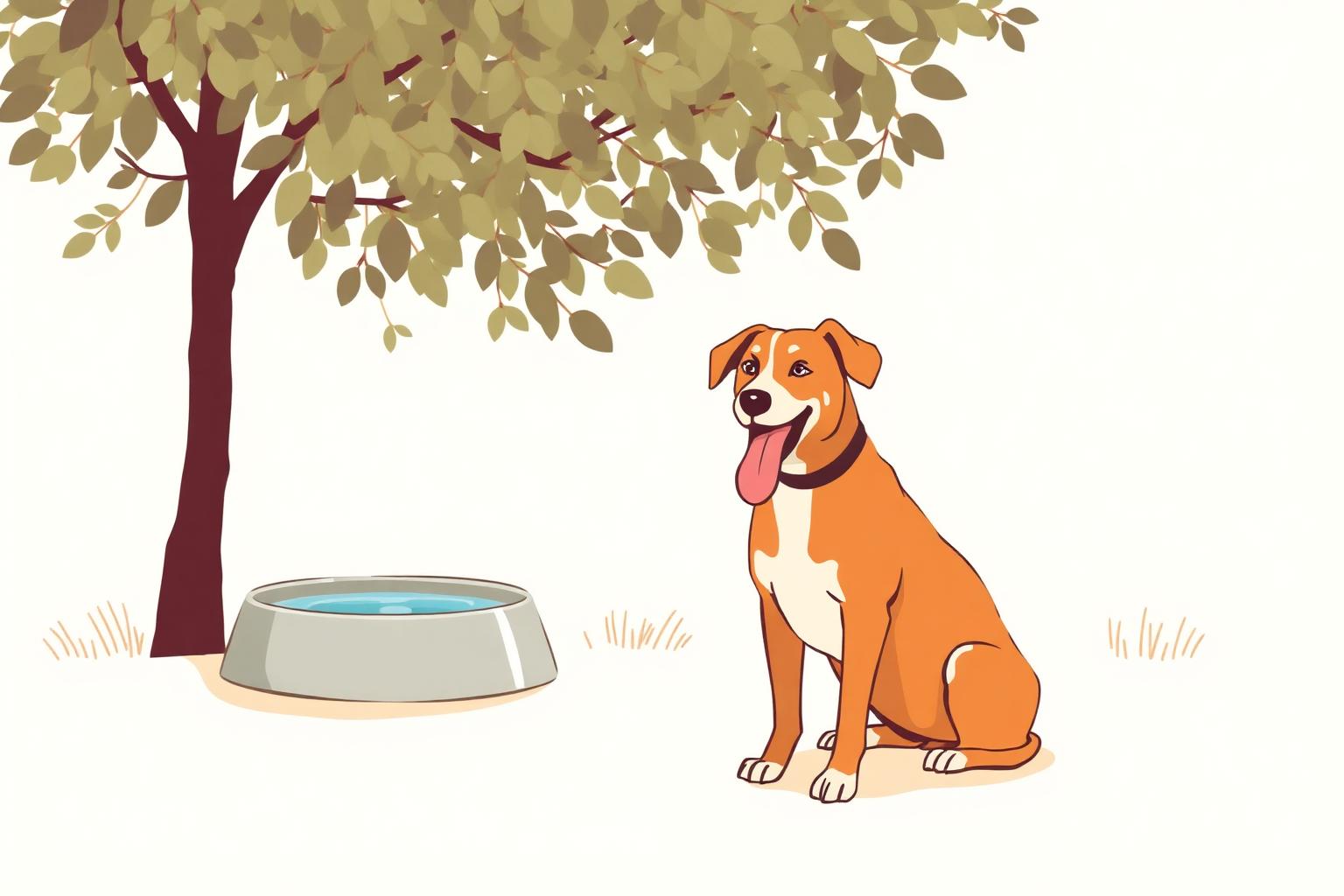
Dogs can't shed heat the way we do. They have very few sweat glands, mostly in their paw pads, so they rely almost entirely on panting to cool down. Panting works, up to a point, but it's far less effective than sweating, and when the air is hot or humid it can't keep up. Once a dog's body temperature climbs past what panting can manage, it keeps rising, and heatstroke follows.
The important consequence is that this can happen quickly, and in situations that don't look dangerous. A hot car is the notorious one, but exercise in warm weather, a garden with no shade, or simply a warm day without enough water can all be enough for the wrong dog. Which brings us to the single most under-appreciated point.
Exercise is a bigger trigger than most people realise
Ask most owners what causes heatstroke and they'll say hot cars. Those are lethal and worth taking seriously, but according to UK veterinary sources, exercise is actually the leading trigger of heatstroke in dogs. A dog out on a walk or chasing a ball will very often keep going well past the point that's safe for them, because the drive to keep up, to play, to please us, overrides their own sense of when to stop.
That places the responsibility firmly on us. On warm days, the safest choice is to move walks to early morning or late evening, think "dawn or dusk", and skip strenuous activity like running or cycling together entirely. A useful habit before heading out is the pavement test: press the back of your hand to the ground for five seconds, and if it's too hot to hold comfortably, it's too hot for their paws and probably too hot for the walk.
The signs, from early to serious
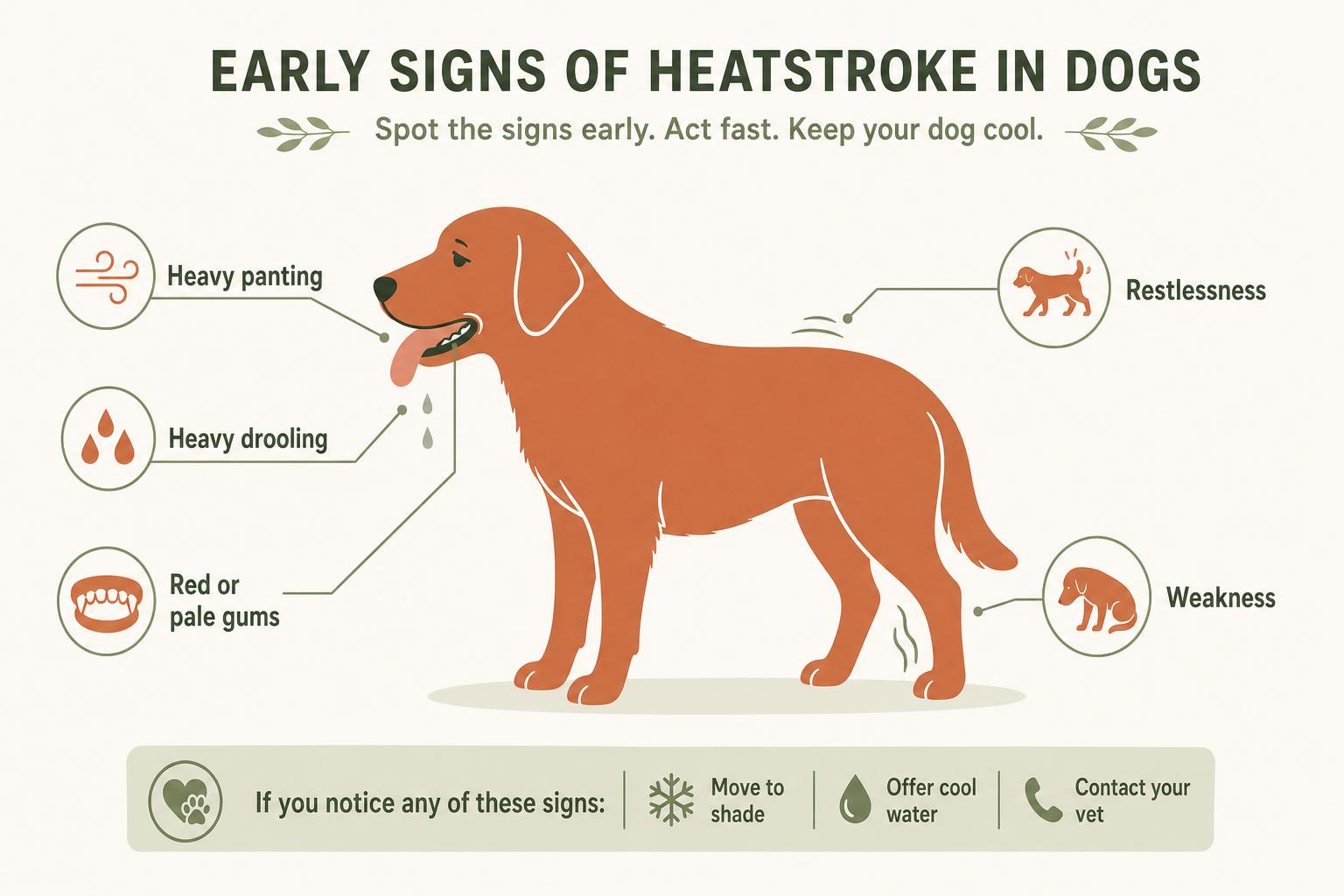
Heatstroke exists on a spectrum, and the whole point of recognising it is to catch it at the early end. The first signs worth acting on are:
- Heavy or laboured panting, more than the conditions seem to warrant
- Heavy drooling, often thicker than normal
- Restlessness, pacing, or an agitated search for shade or water
- Gums that look bright red, or conversely unusually pale
- A rapid heartbeat
- Weakness, wobbliness, or a reluctance to move
If things progress, the picture becomes more alarming: vomiting, diarrhoea, disorientation, collapse, and in severe cases seizures or unconsciousness. By this stage it is a full emergency and every second counts. The reason to know the earlier signs is precisely so you never have to see the later ones.
Which dogs are most at risk
Any dog can develop heatstroke, but some are far more vulnerable, and it's worth knowing if yours is among them.
Flat-faced, or brachycephalic, breeds are the standout group. Pugs, French bulldogs, boxers, shih tzus and similar breeds have airways that make panting much less effective, so they can overheat even in fairly mild conditions that wouldn't trouble another dog. Beyond them, older dogs and young puppies, overweight dogs, and thick-coated breeds all carry raised risk, as do dogs exercising in the heat, particularly if they aren't used to it. If your dog falls into more than one of these groups, it's worth being more cautious than the temperature alone might suggest.
What to do if you suspect heatstroke
The guiding principle used by UK vets is simple to remember: cool first, transport second. That means you start cooling the dog immediately, and keep cooling on the way to the vet, rather than treating it as one thing after another.
- Move the dog out of the heat, into shade or a cool, ventilated space.
- Wet their fur with cool water. A hose, a shower, a bath or wet towels all work, and cool water is fine, better than ice for this.
- If you use towels, place them under the dog rather than draped over the body. A towel over the top can trap heat and make things worse. Re-wet them often.
- Get air moving over the wet coat if you can, with a breeze or a fan.
- Offer small amounts of cool water to drink if the dog is alert enough, but don't force it.
- Call your vet while you do all this, so they know you're coming and can advise.
Do not wait to see whether the dog settles. Heatstroke can worsen fast, and it can be fatal even with prompt veterinary treatment, so it is always a same-day emergency.
A little prevention
Most heatstroke never needs treating because it never happens, and prevention is genuinely straightforward. Walk in the cool of the day or not at all when it's hot. Always provide shade that lasts as the sun moves, and fresh water. Never leave a dog in a car, even briefly, even in shade with the windows cracked. And take extra care with the higher-risk dogs above. There's more detail in our full guide to keeping pets cool in hot weather, but those few habits cover most of the risk.
The Bottom Line
Learn the early signs, heavy panting, drooling, restlessness, and odd gum colour, and treat them as a cue to act rather than a curiosity. Take particular care with flat-faced, older, overweight and thick-coated dogs, and remember that exercise, not just hot cars, is a leading cause. If you suspect heatstroke, cool your dog immediately and get to a vet at the same time. Caught early and cooled fast, most dogs do well. That early recognition is the whole game.
This is a general guide and isn't a substitute for veterinary care. Heatstroke is a medical emergency: if you think your dog is affected, start cooling them and contact a vet straight away.
Common questions
Frequently asked.
Keep reading
Further reading.
Want seasonal notes like this in your inbox? Join The Once-Over, our weekly note from Hazel.