Dog · Adult · Routine
How Much to Feed Your Dog: A Practical UK Guide
Published 06 Jul 2026 · ✓ Researched
TL;DR
- The feeding chart on the bag is a starting point, not an instruction. It's built on averages and tends to run generous.
- What matters far more is your dog's body condition, which you can learn to read at home in under a minute.
- Most healthy adult dogs do well on two meals a day, spaced roughly ten to twelve hours apart.
- Treats should stay under a tenth of daily calories, with meals trimmed to make room rather than piled on top.
- Check body condition monthly, weigh at the vet when you can, and adjust slowly. See a vet if weight shifts without an obvious reason.
Feeding a dog well sounds like it should be simple, and in principle it is. In practice, most of us are working from a number on the back of a bag that was never really meant for our particular dog, topping it up with treats we don't count, and adjusting by guesswork. It's no surprise that a good share of UK dogs are heavier than they should be.
The good news is that getting it right doesn't take a spreadsheet or a kitchen scale precise to the gram. It takes a reasonable starting point and the habit of checking your own dog rather than trusting the packet. This guide walks through both.
Why the number on the bag is only a start
Every bag of dog food carries a feeding guide, almost always laid out by weight: so many grams a day for a dog of ten kilos, more for twenty, and so on. It's a reasonable place to begin, and if you've no other information it's better than inventing a figure. But it has real limits worth understanding.
The chart is calculated for an average dog of a given weight, at an average activity level, in average circumstances. Your dog is a specific animal. The PDSA and other veterinary sources are clear that individual energy needs can vary by as much as half in either direction, depending on metabolism, age, how much exercise they actually get, and whether they've been neutered. Two dogs of the same weight can genuinely need very different amounts.
There's also a quieter problem. Feeding guides are set by the people selling the food, and they tend to err on the generous side. Follow them to the letter and many dogs will slowly gain weight. None of this makes the chart useless. It makes it a first estimate to be tested against the dog in front of you, rather than a rule to obey.
The thing that actually matters: body condition
If you take one idea from this guide, make it this one. The most reliable way to know whether you're feeding the right amount isn't the bag and isn't even the scale. It's body condition: the balance of fat and muscle your dog is actually carrying, which you can assess by look and feel.
Vets use a system called the Body Condition Score, a nine-point scale developed by the World Small Animal Veterinary Association. A score of four or five out of nine is ideal for most dogs. Below that is too lean, above it is heading towards overweight. You don't need to memorise the numbers to use the idea. The assessment comes down to three simple checks, sometimes called look, feel, look.
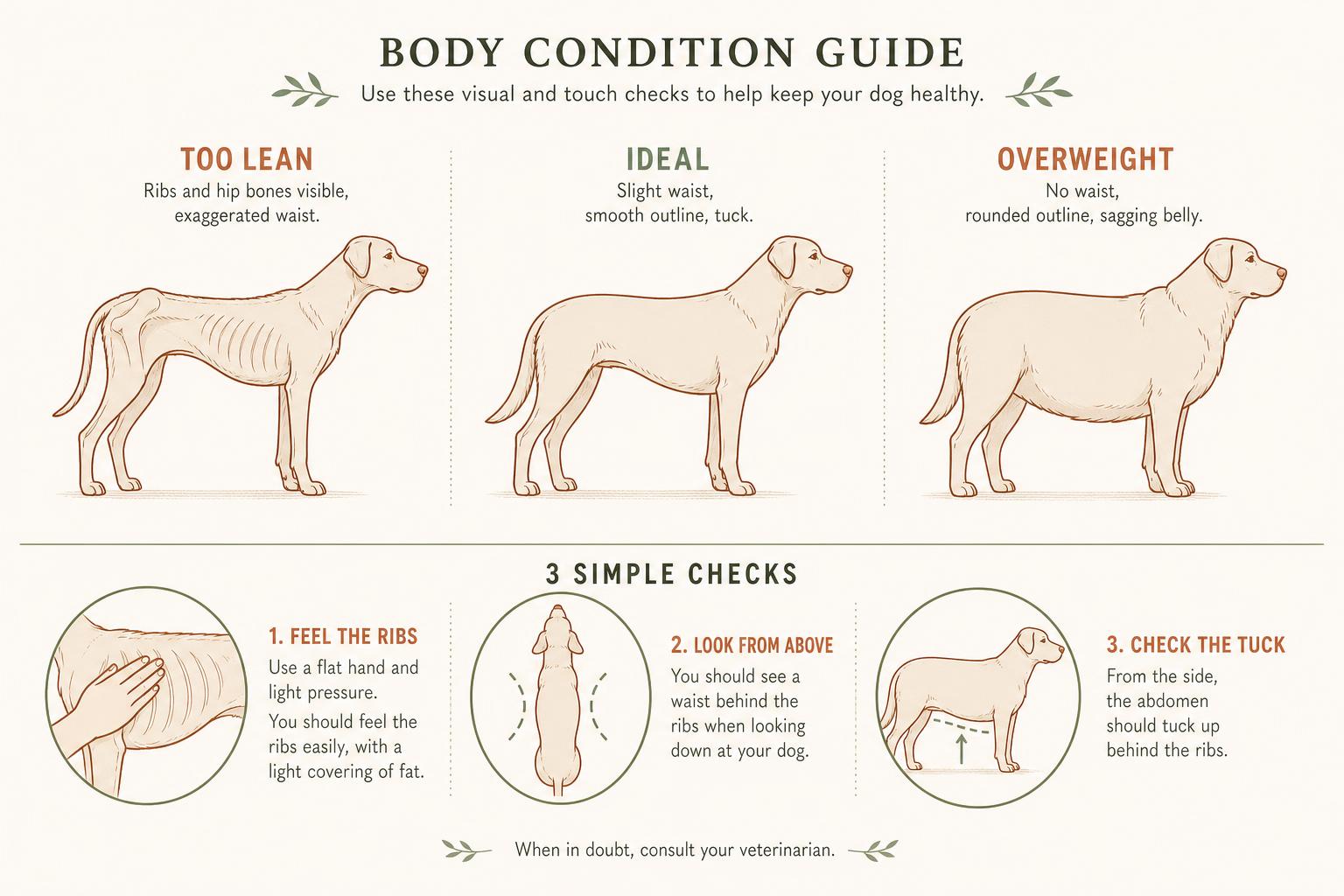
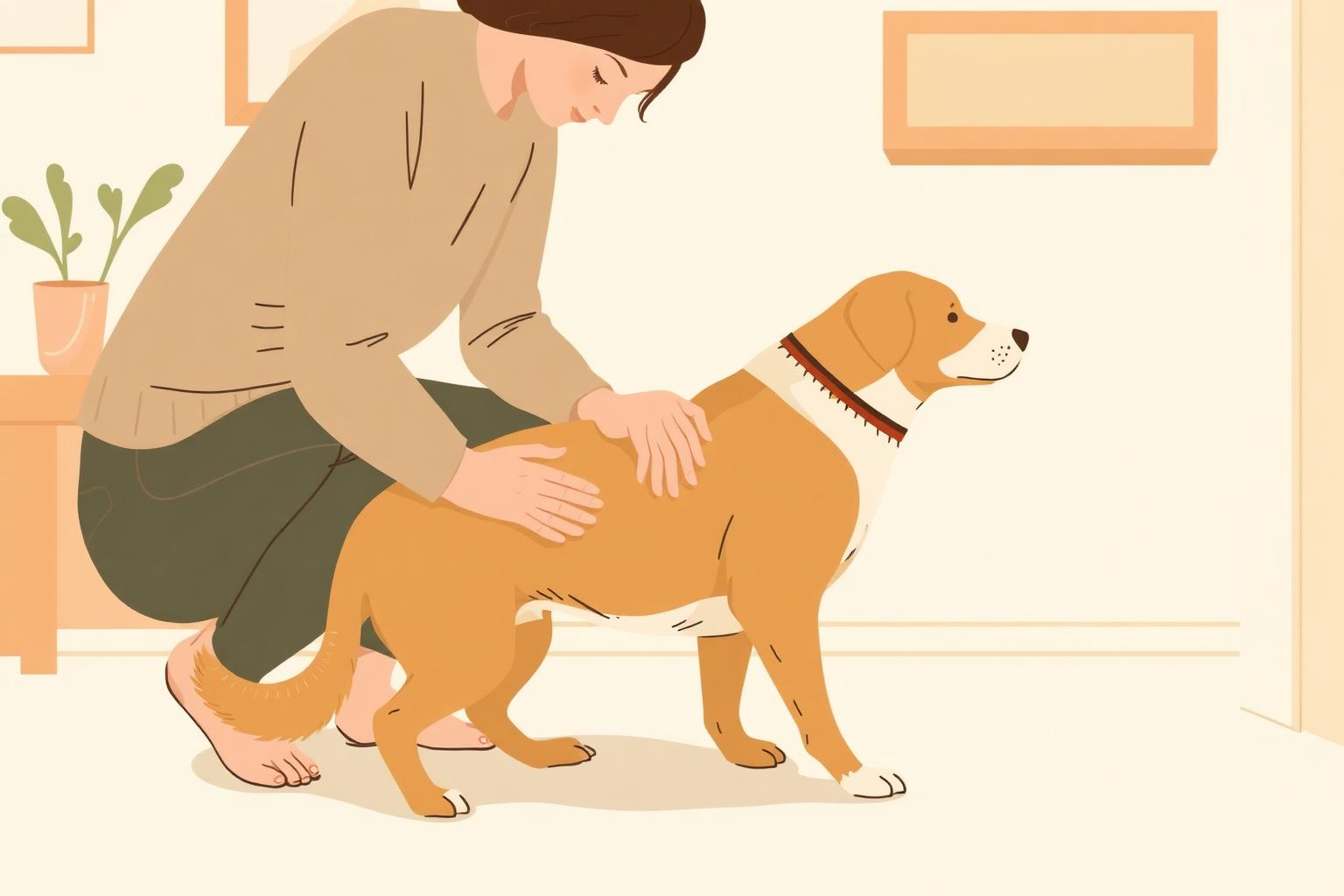
Feel the ribs. Run your hands gently along both sides of your dog's chest. On a dog in good condition you should be able to feel the ribs easily, with only a thin layer of fat over them, rather as you can feel the bones on the back of your hand. If you have to press to find them, there's too much fat. If they feel sharp and prominent with nothing over them, there's too little.
Look from above. Stand over your dog and look down. You want to see a waist: a visible narrowing behind the ribcage. A straight or bulging outline from ribs to hips suggests excess weight. An extreme hourglass with jutting hip bones suggests the opposite.
Look from the side. From side on, the belly should rise up from the bottom of the ribcage towards the back legs, a line vets call the abdominal tuck. A belly that hangs level or sags is a sign of too much weight.
One important caveat: breed changes the picture. A greyhound, whippet or other sighthound naturally carries less fat and shows ribs and a dramatic tuck as a matter of normal anatomy. What looks alarmingly thin on a Labrador is simply correct on a lurcher. If you're unsure what's right for your breed, that's exactly the sort of thing to ask your vet to show you.
A sensible starting range
With the health warnings firmly in place, it helps to have some numbers to begin from. The figures below are rough daily calorie ranges for a healthy, neutered adult dog at a stable, ideal weight and moderate activity. They are a starting point only, drawn from general veterinary guidance, and not a substitute for advice tailored to your dog, particularly if it has a health condition, is over or underweight, or works or competes.
| Dog's ideal weight | Approximate daily calories |
|---|---|
| 5 kg | 250–350 kcal |
| 10 kg | 400–600 kcal |
| 15 kg | 550–800 kcal |
| 20 kg | 700–1,000 kcal |
| 30 kg | 950–1,350 kcal |
| 40 kg | 1,200–1,700 kcal |
Notice how wide each range is. That width is the point: it reflects how much genuine variation there is between individuals. Start somewhere in the middle, then let body condition move you up or down.
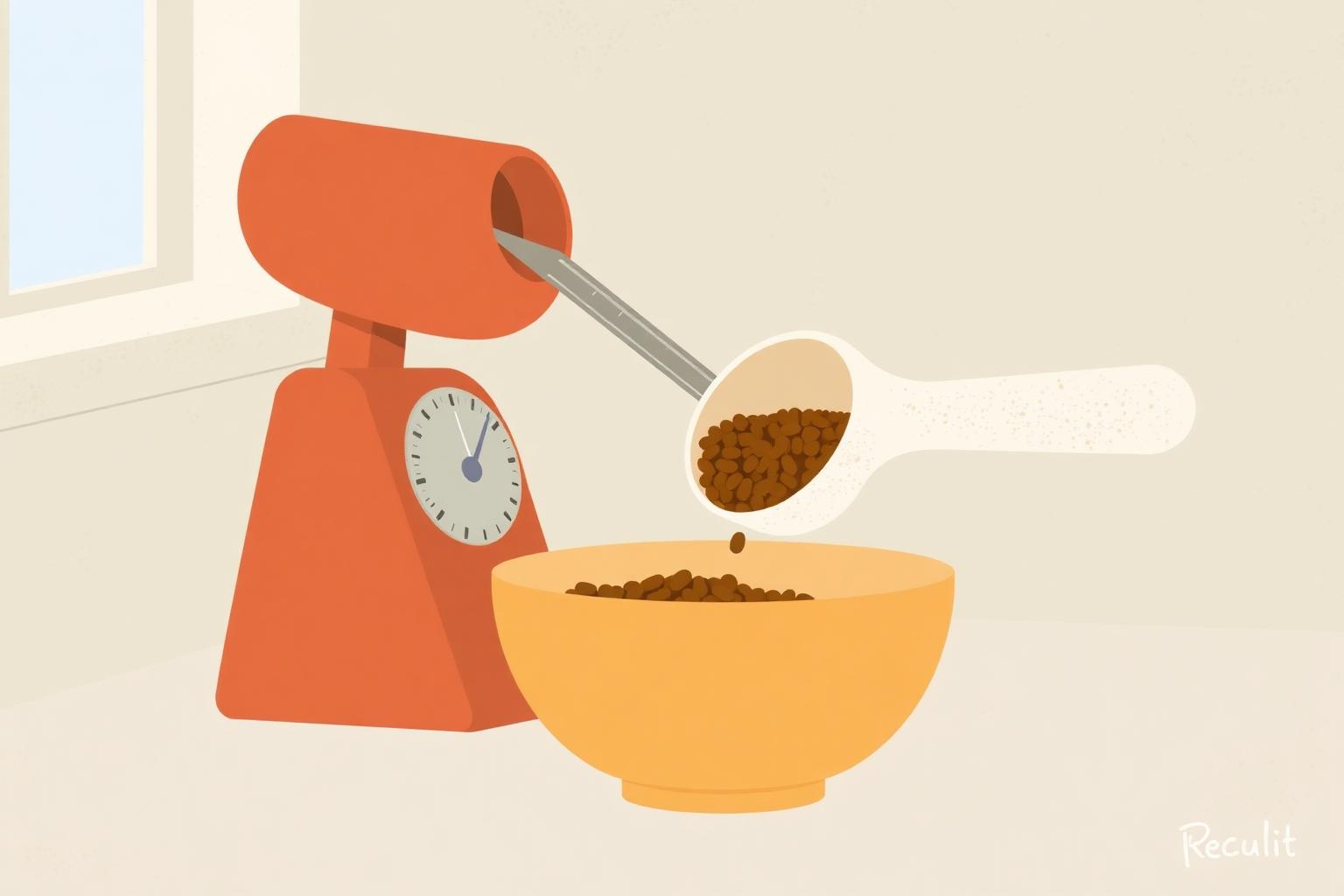
To turn calories into actual food, you need the energy content of your specific product, usually given per 100g or per cup on the packaging, since this varies a lot between brands and between wet and dry food. Divide the daily calorie figure by the food's energy density to get the amount to serve, then split it across meals.
How many meals, and when
For most adult dogs, two meals a day, roughly ten to twelve hours apart, works better than one large meal or leaving food down all day. It keeps energy steadier, and it makes a lost appetite easier to spot early, which matters because going off food is often one of the first signs something is wrong.
Puppies are different: while growing they need more frequent, smaller meals, often three or four a day early on, tapering as they mature. Some older dogs also do better on smaller, more frequent portions if their digestion has slowed. Free feeding, where a bowl is kept permanently topped up, makes overeating easy and portion control almost impossible, and is best avoided for most dogs.
Where treats fit in
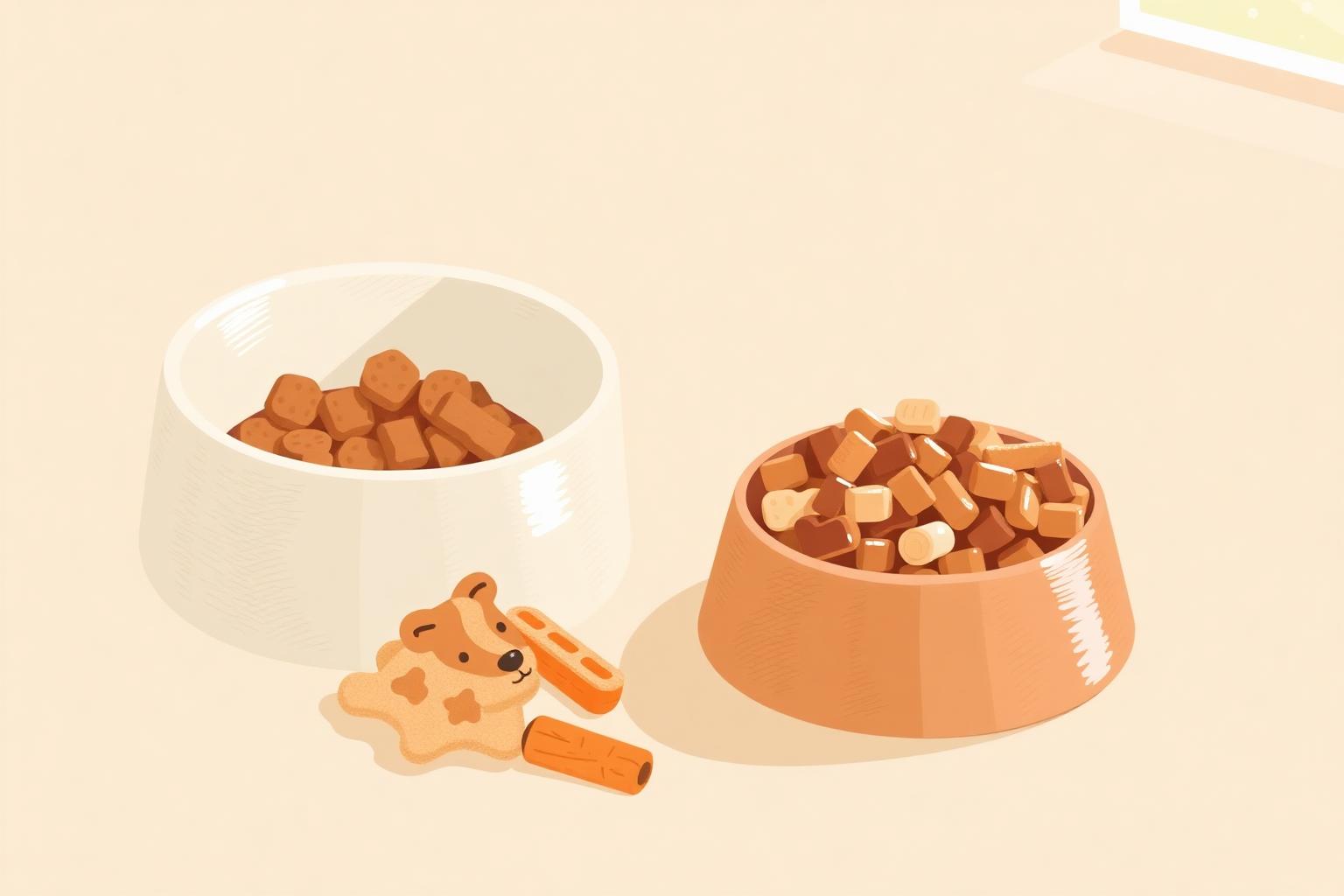
Treats are where good feeding plans quietly fall apart. A few here, a bit of cheese there, a chew in the evening, and the careful main-meal maths is undone. The rule of thumb vets use is that treats, chews and scraps should make up no more than a tenth of a dog's daily calories.
The fix isn't to stop treating, which is part of training and part of the relationship. It's to account for it: trim the main meals slightly to make room, choose lower-calorie treats where you can, and remember that to a small dog a single biscuit can be a startling share of the day's food. A stick of carrot or a piece of their own kibble counted out from the daily ration keeps the reward without the reckoning.
Adjusting over time
Feeding well is not a decision you make once. A dog's needs shift with the seasons, with age, with how much they're being walked, and with life events like neutering, which lowers energy requirements and is a common trigger for creeping weight gain.
The practical habit is simple. Check body condition roughly once a month, using the three checks above. Weigh your dog when you can, at the vet or on home scales, and keep a note, since a slow trend is much easier to see in numbers than by eye. If your dog is drifting heavier, reduce the daily amount by a modest amount, perhaps ten per cent, and reassess in a few weeks. If they're getting too lean, nudge it up the same way. Change things gradually rather than in dramatic swings.
Troubleshooting
| What you're seeing | Likely explanation | What to do |
|---|---|---|
| Slow weight gain | Overfeeding, often via uncounted treats, or reduced activity | Trim daily food modestly, count treats, reassess in a few weeks |
| Ribs becoming hard to feel | Too many calories for current activity | Reduce portions gradually, increase gentle exercise if appropriate |
| Ribs and hips very prominent | Underfeeding, or a possible health issue | Increase food gradually; see a vet if it persists or is sudden |
| Always seeming hungry | Habit or breed tendency, not necessarily need | Judge by body condition over weeks; ask a vet if appetite changed suddenly |
| Sudden appetite loss | Possible illness, dental pain, or stress | Contact a vet, especially if it lasts beyond a day or comes with other signs |
| Weight gain after neutering | Lower energy needs post-op | Reduce portions slightly and monitor condition |
When to involve a vet
General guidance takes you a long way, but some situations call for professional input. Speak to a vet if your dog's weight is changing without an obvious reason, if you're unsure how to score their condition or what's normal for their breed, if they have a health condition that affects diet, or if you're thinking about a significant change such as a prescription or home-prepared diet. Sudden loss of appetite, particularly alongside other signs like lethargy or vomiting, is always worth a call rather than a wait.
The bottom line
Start with the feeding guide on the bag, then stop trusting it and start reading your dog. Feel the ribs, look for a waist from above and a tuck from the side, and let what you find move the portions up or down. Keep treats under a tenth of the day's calories, feed two measured meals for most adult dogs, check condition monthly, and adjust slowly. The bag gives you a number. Your dog gives you the answer.
Guides on Burrow are researched carefully and written to be genuinely useful, but they aren't a substitute for veterinary advice. If you're worried about your dog's weight, appetite or health, your vet is the right person to ask.
Further reading: How to Read Your Dog's Body Language · Recognising Heatstroke in Dogs
Want guides like this in your inbox? Join The Once-Over, our weekly note from Hazel.
Common questions