Preventive Vet Care · Dog · 06 Aug 2026
Why Your Dog's Bad Breath Isn't Normal
By Burrow · 06 Aug 2026
TL;DR
- Bad breath in dogs is not normal. It is not an inevitable part of having a dog and not an age-related change. It's a symptom.
- The most common cause is dental disease — periodontal disease, gum infection, tooth abscesses. By age three, around 80% of dogs already have some degree of it.
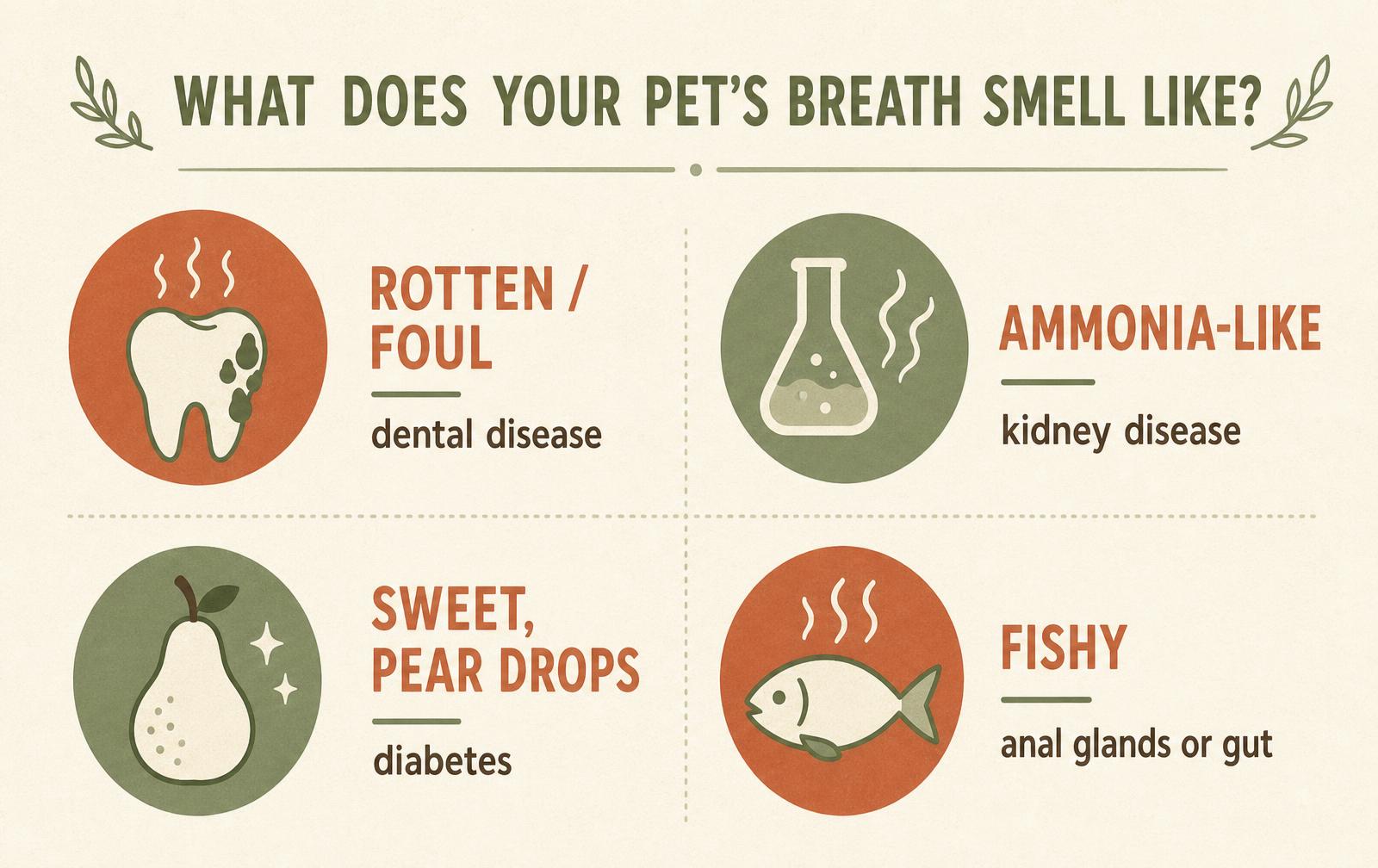
- The smell itself carries diagnostic information. Ammonia-like breath suggests kidney disease. Sweet breath, like pear drops or nail varnish remover, can indicate diabetes.
- Other causes include liver disease, oral tumours, foreign bodies, and diabetes. Bad breath is sometimes the first noticeable sign of a systemic illness.
- The one exception: puppy breath during teething can be temporarily off-putting and usually resolves on its own.
- Any persistent bad breath warrants a vet appointment. It's rarely just a smell.
Most owners assume it's just part of having a dog. Vets say it isn't — and that the smell is usually telling you something specific.
"Dog breath" has become such a familiar phrase that most of us treat it as an inevitability. A dog's mouth smells, you learn to live with it, and the idea that it might mean something rarely crosses your mind. That assumption is one of the most common reasons dental and systemic disease in dogs goes unnoticed until it's advanced.
Bad breath in dogs — halitosis, to use the clinical term — is not a normal feature of having a dog, not a natural smell, and not a sign of ageing. It's a symptom, and it's one that vets say always warrants attention. More usefully, the particular way it smells can point directly at the cause.

Why the assumption is so widespread
The "dog breath" stereotype is so embedded in how we talk about dogs that it feels factual. Dogs have smelly mouths. Some more than others. You get used to it.
The clinical picture is quite different. Halitosis in dogs is not considered a normal finding, or an age-related change. A dog's breath should not have a strong or unpleasant odour. A mild, neutral smell — perhaps faintly of whatever they last ate — is fine. A persistent bad smell is not, and the distinction matters because that smell is almost always coming from somewhere specific, as the PDSA sets out.
The most common cause
The most frequent cause of halitosis in dogs is periodontal disease — the infection and inflammation of the tissues around the teeth driven by bacterial plaque and calculus accumulation. By the time that bacteria has built up enough to produce a noticeable odour, the disease underneath it is usually well established, as the UC Davis School of Veterinary Medicine notes.
This is why bad breath is worth taking seriously even when a dog seems otherwise fine. The mouth doesn't have to hurt visibly for significant disease to be present. Dogs mask oral pain well — they continue eating, playing and behaving normally — and by the time a dog is obviously reluctant to eat or pawing at its mouth, things have often progressed considerably. The smell frequently gets there first.
Small breeds are worth a particular mention. They're at higher risk of gum disease than larger dogs because their teeth are proportionally more crowded, which creates more sites for plaque to accumulate and less room to clean effectively. If you have a small breed, the bar for taking bad breath seriously should be even lower. Our Pet Dental Care Guide covers what actually works at home, and why the visible tartar isn't the real problem.
What the smell is telling you
Here's the part most owners don't know. The character of the smell — how it smells rather than just that it smells — can be a meaningful diagnostic clue.
Rotten or foul-smelling breath is the classic presentation of dental disease: infected gums, a tooth root abscess, or decaying tissue in the mouth. This is the most common picture.
Ammonia-like breath, similar to bleach or urine, is a flag for kidney disease. When the kidneys aren't working properly, toxins and waste products build up in the body and are excreted through the breath. This smell is distinctive and worth acting on promptly rather than putting off.
Sweet breath, like pear drops or nail varnish remover, can indicate diabetes. The sweetish smell comes from ketones, chemicals that build up when the body is breaking down fat for energy rather than glucose. Increased thirst, increased urination, and weight loss alongside sweet breath is a picture that needs same-day veterinary attention.
Fishy breath may point to anal gland issues, where a dog has licked that area, or to certain gut problems. Less urgent in isolation, but worth investigating if persistent.
Very foul, sweet-rotten breath alongside yellowing of the eyes, skin or gums, loss of appetite and weight loss can suggest liver disease.
Other causes worth knowing
Beyond dental disease and the systemic conditions above, a few other causes are worth being aware of.
Oral foreign bodies — dogs chew things they shouldn't, and something lodged between teeth or under the gumline will smell as it decomposes. A sudden onset of very bad breath, particularly in a dog that's been chewing something, is worth a vet check.
Oral tumours can cause halitosis as tissue breaks down. This is less common, but bad breath alongside a lump in the mouth or altered eating is something to have assessed without delay.
Lip fold infections occur in breeds with heavy facial skin folds, where trapped moisture creates a chronic source of infection and smell.
The one exception: puppy breath
Puppies sometimes have temporarily unpleasant breath during teething, as adult teeth push through and milk teeth fall out, causing gum inflammation and a faintly metallic or unusual smell. This is self-limiting and resolves as the adult teeth settle. It's the one type of bad dog breath that can genuinely be waited out.
Try this: get into the habit of occasionally smelling your dog's breath — not at close range during an enthusiastic greeting, but as a deliberate brief check a few times a year. Learn what your dog's normal smells like when they're healthy, so that a change registers as a change. The earlier bad breath prompts a vet visit, the less advanced the underlying cause is likely to be.
When to see a vet
Any persistent bad breath in a dog warrants a vet appointment. Not eventually — when you get around to it — but as something to book. This is true even if the dog otherwise seems well, because the conditions most likely to cause it are often asymptomatic in their early stages.
Contact your vet promptly if the breath smells of ammonia or is sweet like nail varnish remover, if bad breath is accompanied by increased thirst or urination, weight loss, lethargy, or yellowing of the eyes or gums, or if there's a sudden onset of very strong bad breath. If you're checking the mouth anyway, our piece on how to check your dog's gum colour is a useful companion.
The bottom line
Bad breath in dogs is information, not an inevitability. The smell points to something specific, most often dental disease but sometimes to conditions elsewhere in the body, and acting on it early means catching whatever it's pointing at before it's well established. If your dog's breath is consistently unpleasant, that's a vet conversation, not something to wait out.
This is general guidance and not veterinary advice. If your dog has persistent bad breath, please speak to your vet.
Common questions
Frequently asked.
Keep reading
Further reading.
Want plain-English notes on pet health and the things that affect it? Join The Once-Over, our weekly note from Hazel.