Research · Cat · 11 Sept 2026
When Does a Cat Actually Start Getting Old? The 7-Year Study
By Burrow · 11 Sept 2026
TL;DR
- Researchers followed 209 pet cats for up to seven years, examining them every six months. Median life expectancy in this cohort was 15.2 years.
- Body condition and muscle condition in middle age were associated with mortality risk. That doesn't prove changing them extends life, but both can be monitored.
- Muscle condition was already declining by around seven, before the later fall in bodyweight and body condition.
- Dental disease and orthopaedic abnormalities were extremely common during follow-up.
- The researchers concluded that strategies to support healthy ageing should begin from middle age rather than waiting for old age.
- For owners, that means knowing your cat's weight and muscle condition, watching mobility and having regular veterinary examinations while it still appears healthy.
A seven-year study of 209 cats has answered a more useful question than when a cat becomes “senior”: when should we start doing things differently? The answer is around middle age — while most cats still seem entirely well.
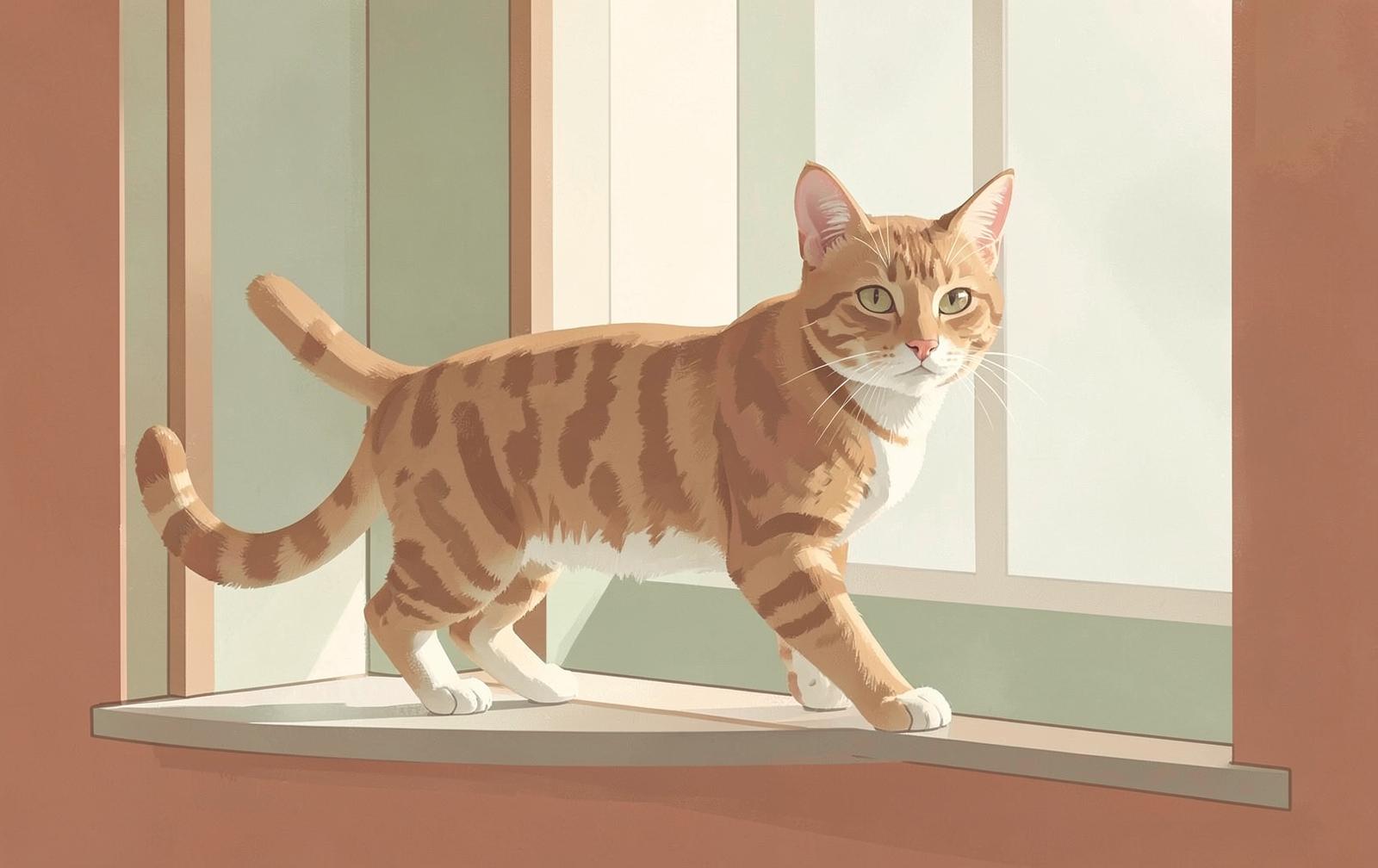
A seven-year-old cat rarely looks old. It may still jump onto the same windowsill, race upstairs and behave much as it did at four. Yet new research suggests this is precisely when paying closer attention to how a cat is ageing starts to become useful.
Researchers at the University of Liverpool followed 209 pet cats, examining them every six months for up to seven years. Median life expectancy in this particular cohort was 15.2 years. The study identified several factors associated with mortality, and two of them — body condition and muscle condition in middle age — are also things owners and vets can monitor and, in many cases, influence. A companion study from the same project adds an important detail: muscle condition was already declining by around seven, before the more obvious later decline in bodyweight.
The practical message isn't that seven-year-old cats are old. It's that healthy ageing starts before they look old.
What the study did differently
Most research into older cats gives us a snapshot: examine a group of animals at one point and record what is wrong with them. The Cat Prospective Ageing and Welfare Study did something more useful. Researchers enrolled ordinary client-owned cats in middle age and repeatedly examined them as they got older. Across the seven-year cohort report there were 1,241 examinations, with cats followed for a median of 4.4 years and some for as long as seven.
That matters because ageing is about change. A single weight tells you something. A sequence of weights over several years tells you whether a cat is gradually losing weight. The same applies to muscle, mobility and clinical findings. And one of those patterns stood out.
The finding worth acting on
A companion analysis examined bodyweight, body condition and muscle condition across 1,231 examinations of cats aged 6.7 to 16.4 years.
Bodyweight changed relatively little during early middle age — on average it rose slightly between around seven and ten before falling later. Muscle condition behaved differently. The study's trajectory was already declining at the lower end of its age range, around seven, and continued to decline as cats aged. Because the cats were not studied from kittenhood, the research cannot tell us the exact age at which that process begins.
That is particularly useful because muscle loss and weight loss aren't the same thing. A cat can lose muscle while maintaining a similar number on the scales, particularly if body fat changes at the same time. To an owner seeing that animal every day, the change can be almost invisible.
The mortality analysis then found that muscle condition in middle age was associated with subsequent mortality risk, as was body condition. That is an association, not proof that preventing muscle loss will make a cat live longer. But it gives owners and vets something useful to monitor considerably earlier than most of us think of a cat as elderly.
What else happened as the cats aged
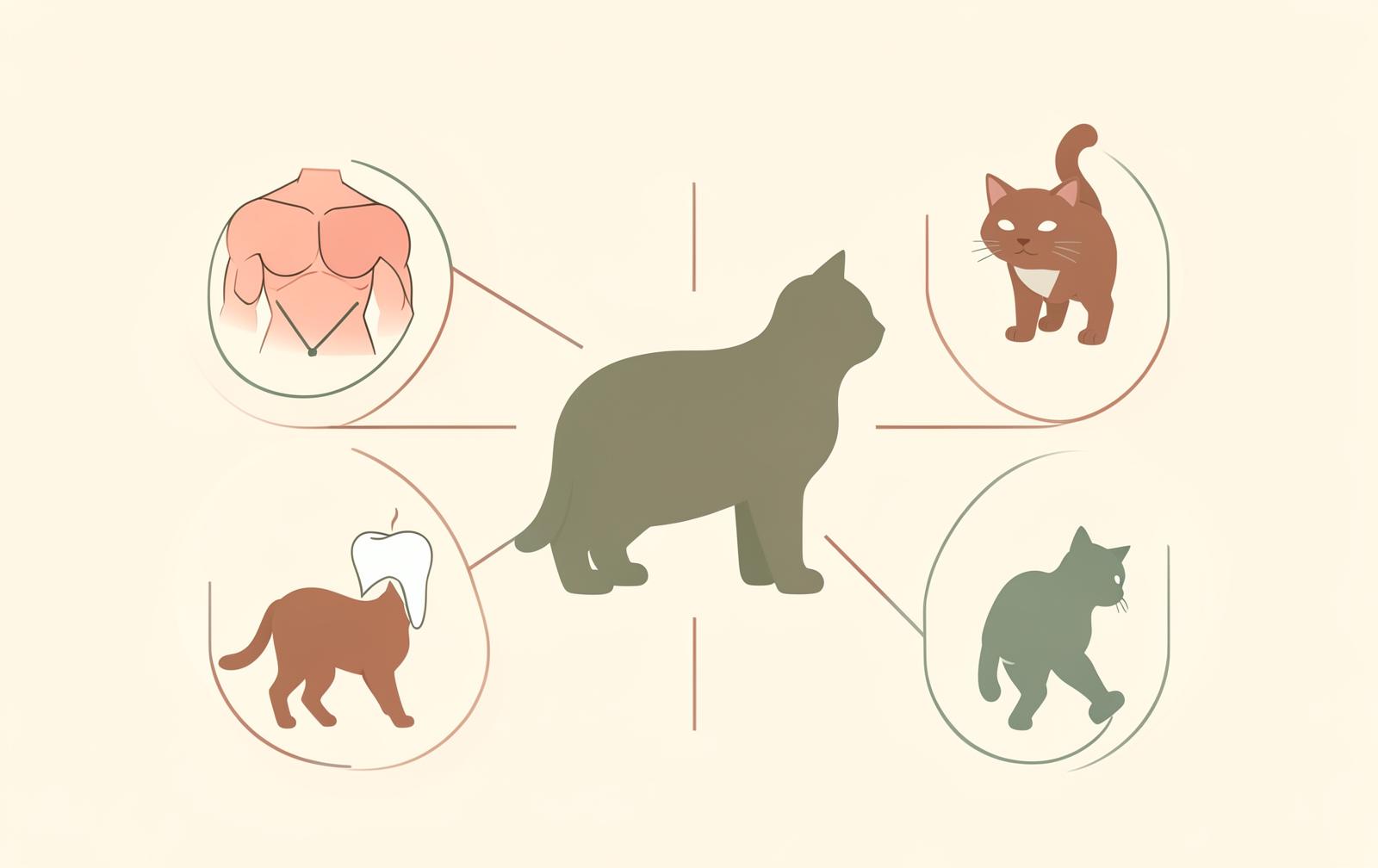
The repeated veterinary examinations also revealed how common apparently ordinary clinical findings become during a cat's later years. At some point across the follow-up period, 84% of cats had dental disease recorded, 82% had an abnormality on orthopaedic examination and 59% had a heart murmur detected.
Those figures need context. They describe findings occurring at some point during years of repeated examinations; they don't mean 84% of every middle-aged cat population has dental disease today. But they illustrate why regular examination becomes increasingly valuable.
Dental disease. Cats can conceal oral discomfort remarkably well and may continue eating despite painful dental disease. Earlier identification gives owners and vets the opportunity to assess and treat dental problems before they progress further. The Pet Dental Care Guide · The Cat Behaviour Guide explains what owners can realistically do at home.
Joint changes. Orthopaedic disease can be even easier to miss, because cats with joint pain don't necessarily limp. They may stop jumping onto the highest surface, hesitate before using stairs, groom less thoroughly or sleep somewhere easier to reach. Those changes are easily dismissed as getting older. Sometimes they're signs of discomfort that can be managed.
Heart murmurs. A murmur isn't a diagnosis of heart disease. Some require further investigation; others may have less clinical significance. The important point is that it is something a vet can detect during an examination before an owner would necessarily know anything had changed.
The useful lesson isn't that ageing cats inevitably become ill. It's that regular examinations increasingly find things an owner cannot easily see at home — the same reason older-cat health screening can be valuable.
What you can actually do
The researchers concluded that strategies intended to support healthy ageing should begin from middle age. That doesn't require turning a healthy seven-year-old into a medical project. It means establishing a few useful habits.
Know your cat's weight. Gradual change is difficult to recognise visually. Recording weight gives you something objective to compare.
Learn its muscle condition. Ask your vet to show you how muscle condition is assessed around the spine, shoulders and hips. It is different from body condition, which primarily assesses fat.
Keep it moving. Regular play, climbing and normal movement help maintain function. If a cat becomes stiff, the answer may be to make movement more accessible — providing an intermediate step to a favourite sleeping place, for instance — rather than accepting that it no longer goes there.
Maintain an appropriate body condition. Both excess weight and becoming too thin deserve attention. Weight loss in cats should be managed carefully and with veterinary guidance rather than through abrupt dietary restriction.
Look after the teeth. The prevalence of dental findings in this cohort makes regular oral examination particularly worthwhile.
Have your cat examined regularly. From around seven, a routine examination provides something that becomes increasingly valuable with age: a baseline.
Don't concentrate on the scales alone
This may be the most practically useful part of the research. Owners often use weight as shorthand for condition. But an ageing cat can maintain its weight while its body composition changes — which means a cat weighing 4.5kg at ten isn't necessarily in the same physical condition as it was when it weighed 4.5kg at seven.
Feel matters too. Veterinary muscle-condition scoring assesses areas including the spine, shoulder blades, skull and pelvis to determine whether lean tissue is being lost.
Nutrition is part of maintaining that tissue, but there isn't one senior diet suitable for every older cat. Requirements can change substantially if a cat develops kidney disease, obesity or another medical condition, so don't restrict protein simply because a cat is getting older without discussing its diet with your vet.
The more immediate lesson is simpler: don't wait for obvious weight loss before noticing that your cat's body is changing.
Why starting earlier helps
The conventional model of feline ageing is surprisingly binary. You have an adult cat. Then, at some point around ten or eleven, it becomes a senior cat and you start thinking differently about its health. Biology isn't that tidy, and the Liverpool research suggests some of the changes worth monitoring are already underway during middle age.
That's not bad news. It gives owners time. A seven-year-old cat may have the best part of another decade ahead of it — median life expectancy in this cohort was 15.2 years, and individual cats can of course live considerably longer or shorter lives.
The aim isn't simply longevity. It is preserving muscle, mobility, comfort and function for as much of that second decade as possible.
Try this today
Weigh your cat and write down the result with today's date. Then gently run your hands over its spine, shoulders and hips. Don't worry if you aren't sure what you're feeling yet.
At its next appointment, ask your vet: can you show me how to assess my cat's muscle condition? Once you know what normal feels like for your cat, checking occasionally at home becomes much more useful. You aren't looking for disease. You're creating a baseline against which future change can be recognised.
The bottom line
The most useful finding from this research isn't an age at which a cat officially becomes old. It's that some of the changes worth watching begin while a cat still looks middle-aged and healthy.
Muscle condition was already declining at the youngest ages studied. Body and muscle condition in middle age were associated with subsequent mortality. And repeated examinations frequently detected dental, orthopaedic and other clinical findings as the cats aged. None of that proves a particular intervention will make your cat live longer. It does tell us when paying closer attention becomes worthwhile.
Around seven, know your cat's weight. Learn what its muscle condition feels like. Watch how it moves. Keep its teeth checked. And establish a veterinary baseline while it still seems completely well.
A seven-year-old cat isn't suddenly old. But how it enters its second decade may start being shaped earlier than most owners realise.
Burrow provides evidence-led pet health information and does not replace veterinary diagnosis or treatment. If you notice unexplained weight loss, muscle loss, reduced mobility or another persistent change in your cat, speak to your vet.
Related reading: Your Older Cat Looks Healthy. But Is It? · Cats Are Experts at Hiding Illness · The Pet Dental Care Guide · The Cat Behaviour Guide
Common questions
Frequently asked.
Keep reading
Further reading.
Want calm, evidence-led notes on new pet health research? Join The Once-Over, our weekly note from Hazel.