Nutrition · Cat · 13 Nov 2026
Does Your Cat Need More Food in Winter?
By Burrow · 13 Nov 2026
TL;DR
- **Most indoor cats don't need more.** PDSA's vets advise that colder weather shouldn't change how much you feed a pet with a warm bed to curl up in.
- **Cats spending a lot of time outside may.** Cornell University's Feline Health Center says outdoor cats burn more calories keeping warm and may need a little more food to avoid losing weight.
- **Cats in one study ate more in winter.** In a four-year colony study, free-fed cats ate about 15% less in summer than in winter, while their weight stayed stable.
- **Judge by the cat, not the appetite.** Weight and body condition tell you more than enthusiasm at the bowl.
- **Unexplained changes need a vet.** Eating more while losing weight can point to conditions such as an overactive thyroid or diabetes, and continuing weight loss should never simply be met with more food.
Your cat may seem hungrier when the temperature drops, but winter doesn't automatically mean bigger meals. What matters is how much time your cat spends outdoors, how active it is and whether it is keeping a healthy weight, and an appetite that changes for no obvious reason may be worth a vet's attention.
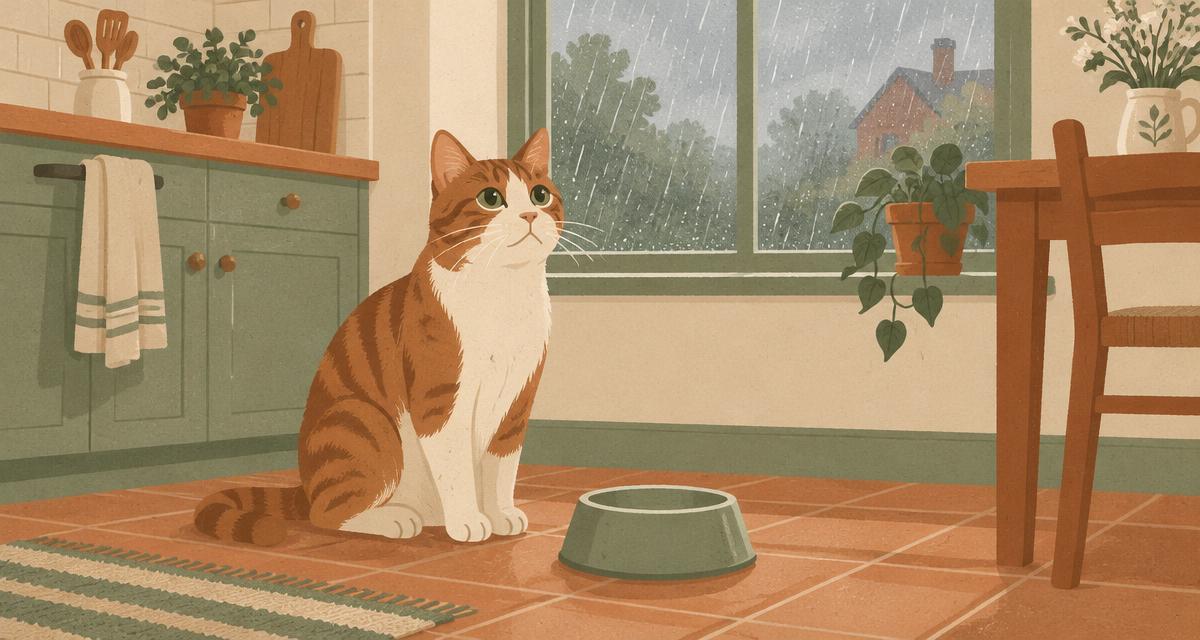
Many owners notice that their cat becomes noticeably keener on mealtimes as November arrives, appearing in the kitchen earlier and lingering by the bowl for longer. There is some research suggesting cats really can eat more in winter, but whether yours needs a bigger portion depends far less on the calendar than on how it spends its days. A cat that passes the afternoon beside a radiator has quite different needs from one that spends hours outside on cold, wet nights, and for a good number of indoor cats, extra food in winter simply becomes extra weight by spring.
Why cats may seem hungrier in winter
There is some evidence that cats' appetites shift with the seasons. A four-year study published in PLOS ONE in 2014 followed 38 adult cats in a research colony in southern France, which could help themselves to food from microchip-operated feeders and had outdoor access all year round. The cats ate the least in summer and the most from late autumn through winter, with intake in summer about 15% lower than in winter. Despite that seasonal difference in food intake, the cats maintained a relatively stable bodyweight. The researchers suggested that changes in temperature and daylight might help explain the pattern, although the study could not establish precisely why the cats ate more in winter.
The study has important limits. It was carried out in a managed colony rather than ordinary households, in a mild climate, with cats allowed to eat as much as they wanted, and indoor-only cats were not studied. It is also more than a decade old, and several authors had commercial links to Royal Canin: three were employees of the company, which also funded the senior author's university post. It is useful evidence of seasonal variation, not a feeding recommendation for every pet cat.
Hunger can have other explanations too. PDSA lists a colder environment than usual, for example in winter, among the possible reasons a cat may seem hungrier, and notes in its feeding guide that bored cats tend to eat too much. But PDSA's list of causes also includes several medical conditions, which is why a change in appetite should not automatically be met with a bigger bowl.
Indoor cats: usually no change needed
For a cat living mostly indoors in a heated home, the cold outside makes little difference to the energy it uses. PDSA's vets advise that colder weather is not something that should change how much you feed your pet, and that as long as it has a warm bed to curl up in, it will be fine without extra winter weight gain.
PDSA recommends basing portions on the food you use, your cat's weight, age, activity level and any medical issues, and weighing portions rather than estimating them. Play and toys are also a better answer than extra food for a cat that seems restless or food-focused indoors.
Outdoor cats: a little more may help
Cats that spend a lot of time outside are a different case. Cornell University's Feline Health Center notes that cats burn more calories to stay warm in winter, so feeding them a bit more than in warmer months will help them avoid losing weight. Cornell's advice is aimed at cats spending an appreciable amount of time outdoors. A cat that pops into the garden for twenty minutes is in a very different position from one spending long periods outside in the cold, and Cornell's first advice is to keep cats indoors where possible.
For cats that do go out, Cornell also recommends access to shelter from cold, wind and rain, with suitable bedding such as straw, and taking steps to stop water freezing. A cat that cannot get warm or find unfrozen water will struggle whatever it is fed.
How much extra?
There is no reliable rule for how much more to feed an outdoor cat in winter. Cornell says simply "a bit more", and the right amount depends on the cat, how long it spends outside, its coat, its age and the weather. The 15% figure from the colony study describes what a group of free-fed cats chose to eat, not a target for a pet cat.
If your outdoor cat is healthy and keeping its weight on becomes harder during cold weather, a modest increase in food may be appropriate, made gradually and checked against its weight. But unexplained or continuing weight loss warrants a veterinary check rather than simply increasing portions, because weight loss can be a sign of illness at any time of year.
Let weight and body condition decide
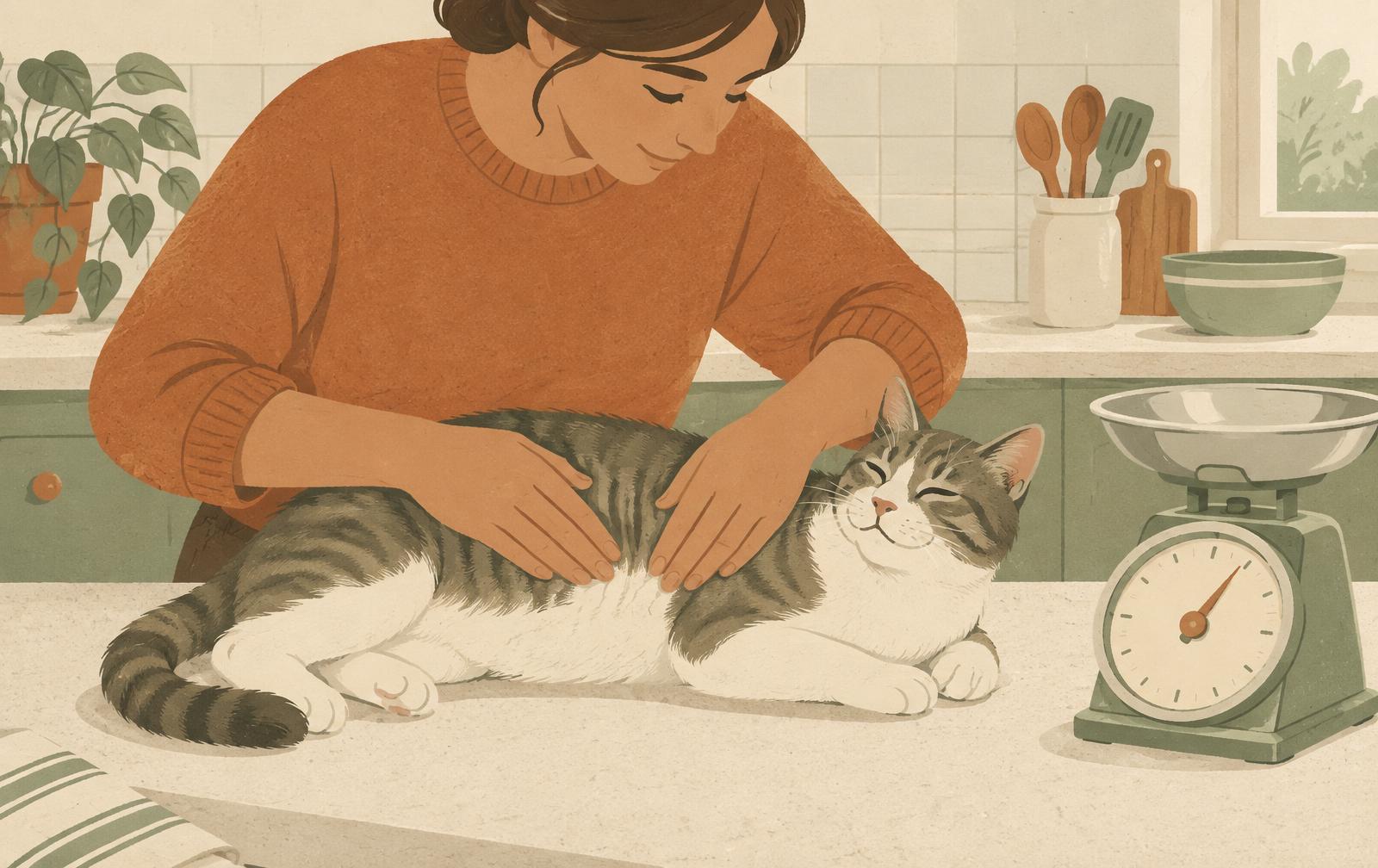
Appetite is an unreliable guide to how much a cat needs. A better guide is what is happening to its body. PDSA advises checking your cat's shape every few weeks, and its body condition guide describes a cat in ideal condition as having a smooth, tucked-in waist, ribs, backbone and hips that can be felt but are not prominent, and an abdominal fat pad that is only just visible. PDSA suggests running your hands over your cat's sides, where the ribs should be easy to feel, feeling under the tummy, which should go in rather than bulge out, and looking from the side and from above for a waist.
Weight and shape are not the whole picture in older cats, which can lose muscle before their weight begins to fall, as we explain in our article on the seven-year ageing study. Your vet or veterinary nurse can show you how to assess your own cat.
Weighing your cat every few weeks over the winter, on the same scales at the same time of day, gives you a clear picture. If the weight is steady and the body condition is good, the current portions are right, whatever your cat's appetite suggests. If your cat is gaining excess weight, ask your vet about adjusting its daily food rather than making sudden cuts. PDSA advises against big or sudden changes to a cat's diet.
When hunger is a sign of illness
A noticeable increase in appetite is not always about the weather. PDSA lists an overactive thyroid gland (hyperthyroidism), diabetes, worms and some medicines, such as steroids and anti-seizure drugs, among the more common causes of a cat eating more than usual. If your cat's eating habits have changed from what is normal for it, PDSA advises that there may be an underlying medical issue, and recommends speaking to your vet before changing how much you feed.
The combination to take most seriously is a cat that is eating more but losing weight. Neither cold weather nor ordinary greed explains that, and it should always be checked by a vet. The same applies if increased hunger comes with drinking more, weeing more, vomiting, diarrhoea or a change in behaviour.
Try this today
Weigh your cat, ideally on the same scales at the same time of day, and write the figure down. Run your hands along its sides and under its tummy, and look from above for a waist. Check that you are weighing its food rather than estimating portions. If your cat goes outside for long periods, make sure it has somewhere dry and sheltered to retreat to and water that will not freeze. Then weigh it again in three or four weeks. If its weight is steady, there is no need to change anything. If it is eating more and losing weight, book a vet appointment.
The Bottom Line
Winter does not mean bigger meals for every cat. Most indoor cats in warm homes need the same portions all year, and feeding them more can lead to weight gain. Cats that spend long periods outdoors may need a little extra to stay in condition, along with shelter and water that won't freeze. Cats in one study ate more in the colder months, but appetite alone is a poor guide. Let your cat's weight and body condition decide, change portions gradually, and see a vet if your cat is eating more for no clear reason or losing weight, rather than simply filling the bowl.
This article is for general information and does not replace veterinary advice. If your cat's appetite or weight changes, or you are unsure how much to feed, speak to your vet or veterinary nurse.
Common questions
Frequently asked.
References
Sources.
- PDSA. Vet Q&A: How much should I feed my dog or cat? 11 December 2020.
pdsa.org.uk - PDSA. Why is my cat always hungry?
pdsa.org.uk - PDSA. Food and fitness for a healthy cat. January 2015.
pdsa.org.uk - Cornell University College of Veterinary Medicine, Cornell Feline Health Center. Cold weather tips for cats.
vet.cornell.edu - Serisier S, Feugier A, Delmotte S, Biourge V, German AJ. Seasonal variation in the voluntary food intake of domesticated cats (Felis catus). PLOS ONE. 2014;9(4):e96071.
doi.org - University of Liverpool. Cats found to eat more in the winter. 29 May 2014.
news.liverpool.ac.uk
Keep reading
Further reading.
Want plain-English notes on feeding your pet well? Join The Once-Over, our weekly note from Hazel.