Seasonal Health · Dog · 17 Sept 2026
Are Conkers and Acorns Poisonous to Dogs?
By Burrow · 17 Sept 2026
TL;DR
- Conkers contain aesculin, a toxin found throughout the horse chestnut tree including the leaves and bark.
- Acorns contain tannic acid, though this may not be the only compound responsible for oak toxicity.
- Severe poisoning in dogs is very uncommon from either, and outcomes are generally good.
- In UK poison service data, around one in four dogs exposed to acorns and around one in three exposed to conkers developed no signs at all.
- Obstruction is the exception. Both are hard and conkers in particular are large enough to cause a blockage or lodge in the throat — this is where cases turn serious.
- Treatment is largely supportive. For conkers, activated charcoal is generally avoided, as it may increase the risk of constipation.
- Don't induce vomiting at home. An unchewed conker can lodge in the oesophagus on the way back up.
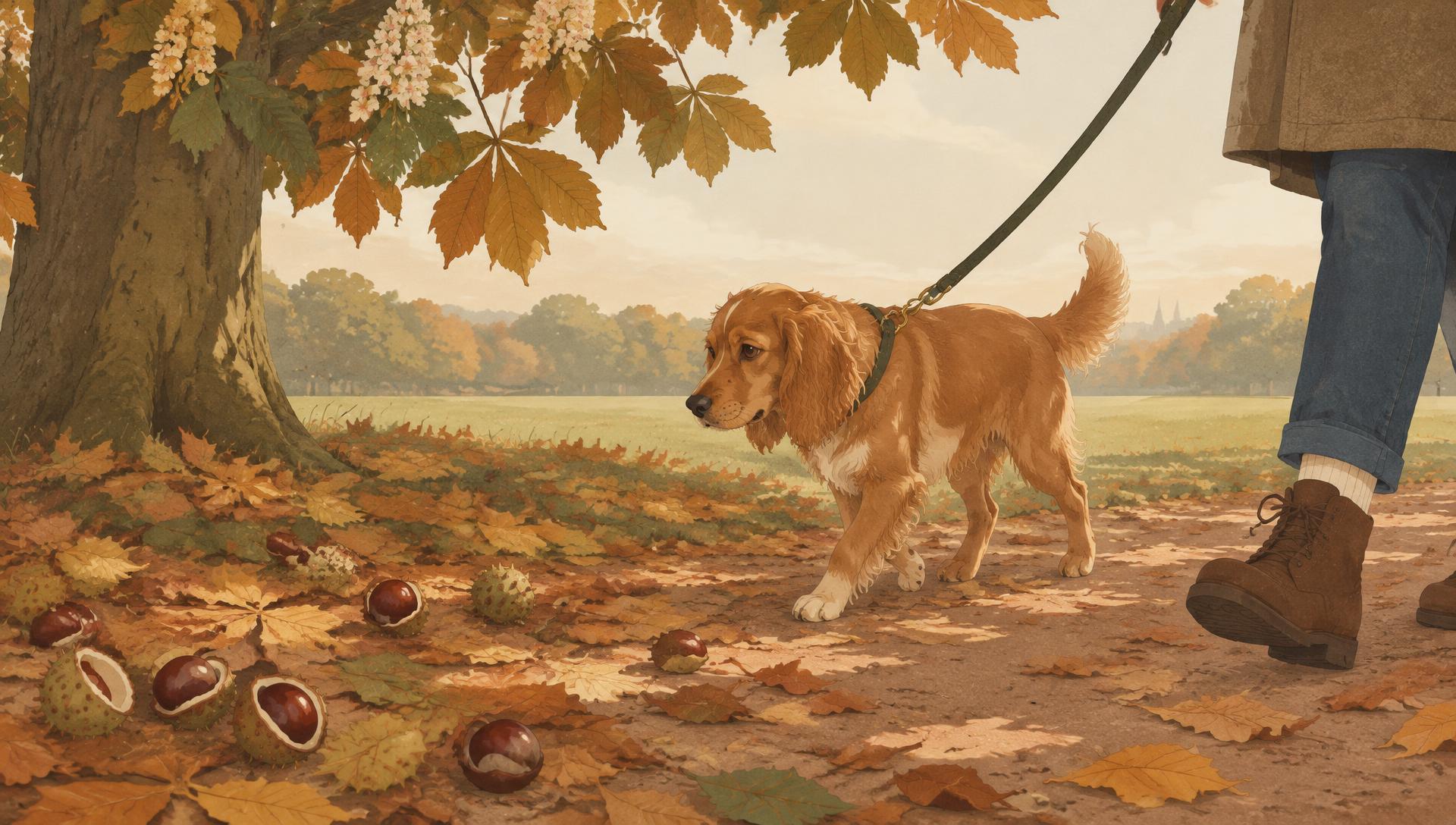
They're covering parks and pavements again. Both can make dogs ill — but severe poisoning is uncommon, and sometimes the bigger concern is simply what happens when a dog swallows one whole.
Horse chestnuts and oaks are dropping their seeds, which means conkers and acorns are suddenly at exactly the height a dog investigates the world. Search for advice and you'll find plenty of it, much of it alarming.
The UK poison service data are more reassuring than the coverage suggests. In cases reported to the Veterinary Poisons Information Service, around one in four dogs exposed to acorns and around one in three exposed to conkers developed no clinical signs at all. Severe poisoning in dogs from either is very uncommon, and outcomes are generally good — with one important exception, which is when something causes an obstruction.
That's the more useful way to think about this. Not as a poisoning emergency waiting to happen, but as a seasonal thing worth managing sensibly, where the physical risk sometimes matters more than the chemical one.
What's in them
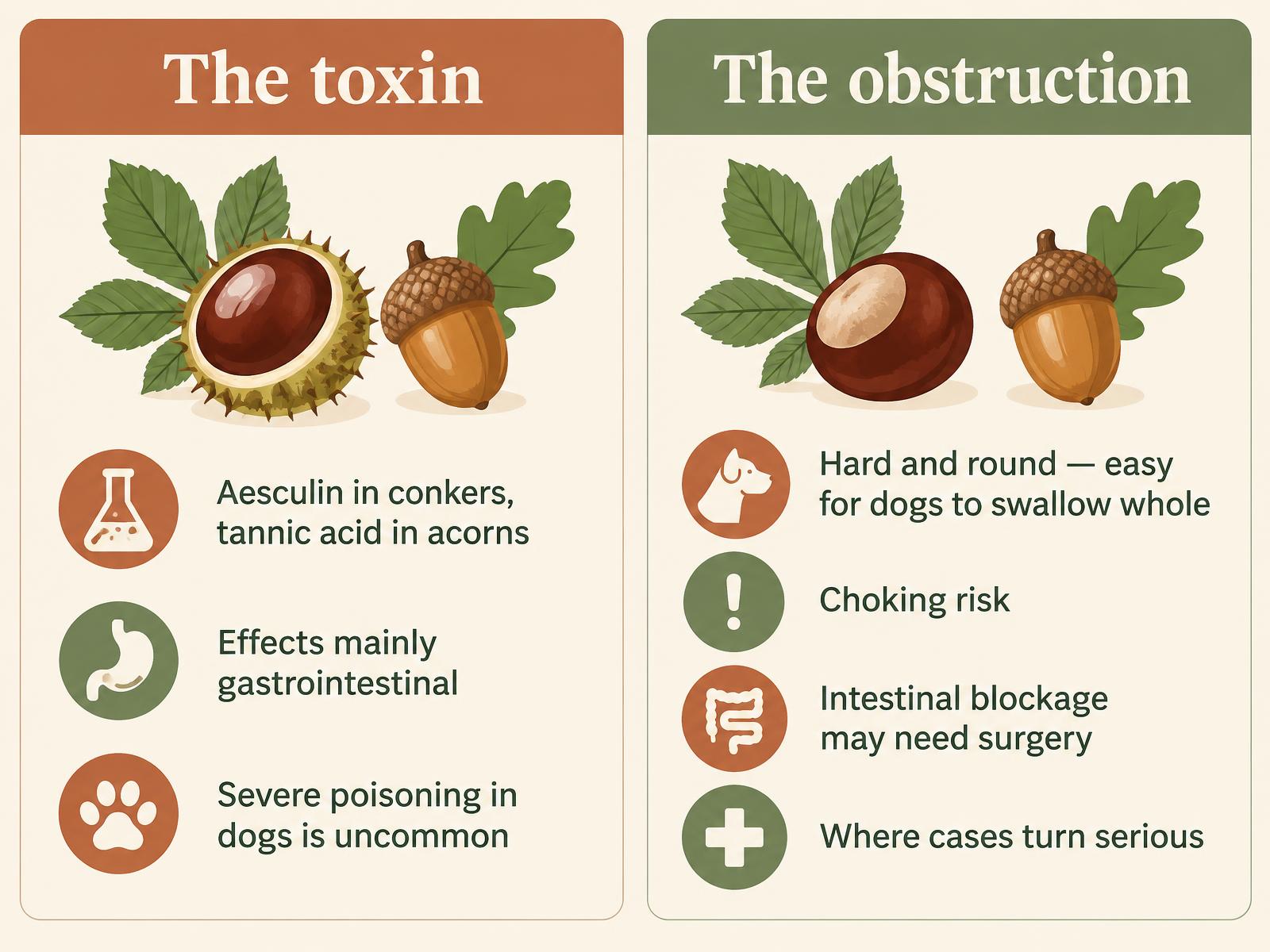
Conkers are the seeds of the horse chestnut. They contain aesculin, which is present throughout the tree — the leaves and bark as well as the seeds. A dog that chews fallen branches or leaves is exposed to the same compound.
Acorns come from oak trees and contain tannic acid. The Veterinary Poisons Information Service notes that tannic acid may not be the only substance responsible for oak toxicity, which is a useful reminder that this is less well characterised than the confident tone of most online advice suggests.
In both cases, the effects most commonly reported in dogs are gastrointestinal — an upset stomach rather than anything more dramatic. Liver or kidney damage has been reported after substantial or chronic acorn ingestion, but it's more commonly seen in horses and ruminants than in dogs, and it isn't what an owner should expect from an ordinary exposure on a walk.
The risk that gets less attention
For many dogs the more immediate problem isn't the toxin at all.
Conkers are large, hard and roughly spherical — close to an ideal shape for lodging somewhere inconvenient. They present a genuine choking hazard, particularly for medium and smaller dogs, and swallowed whole they can cause an intestinal obstruction requiring surgery. Acorns carry a similar risk, especially where several have been eaten by a small dog.
This is the scenario where cases stop being straightforward. VPIS describes outcomes as generally good except where obstruction occurs — which tells you where the real attention belongs.
It also changes the practical advice. An owner who knows their dog has swallowed something toxic might reasonably think about making it sick. With conkers, that instinct can cause harm, because an unchewed conker can lodge in the oesophagus on its way back up. That's a decision for a vet, not for a kitchen.
The signs to watch for
Illness can develop within hours of a dog eating conkers or acorns. What's most commonly seen is gastrointestinal upset:
- Vomiting, sometimes with blood
- Diarrhoea
- Abdominal pain or discomfort
- Drooling
- Reduced appetite
- Lethargy or restlessness
Signs that suggest a possible obstruction — repeated unproductive retching, a painful or distended abdomen, complete loss of appetite, or a dog that seems markedly unwell — need prompt veterinary attention rather than monitoring at home.
The amount eaten and the size of the dog both matter. A Labrador that picks up a single acorn is in a different position from a terrier that has worked through a handful.
What to do if your dog eats one
Remove anything still in the mouth, if you can do so safely.
Note roughly how many and when. An estimate is genuinely useful, as is your dog's approximate weight.
Call your vet for advice, even if your dog seems fine. That's the right step regardless of how likely illness is, because your vet can weigh the specifics — size of dog, quantity eaten, whether obstruction is a concern.
Don't induce vomiting yourself. Beyond the general risks of home remedies, an unchewed conker can lodge in the oesophagus if brought back up.
Treatment in most small animal cases is essentially supportive — fluids, anti-sickness medication, monitoring. Activated charcoal, which is used in many poisoning cases, is generally avoided with conkers because it may increase the risk of constipation. Where an obstruction is suspected, imaging and potentially surgery may be needed.
Prevention on autumn walks
None of this means avoiding the woods for two months. A few adjustments cover most of it.
Know your trees. If your regular route goes under oaks or horse chestnuts, that's where attention is needed. Many owners walk the same route for years without registering what's overhead.
Lead in the high-risk spots. Not for the whole walk — just under and around the trees that are actively dropping.
Don't throw them. Conkers are tempting to kick or throw, and a dog that has learned they're a game will pick them up when you're not looking.
Teach a reliable "leave it". The single most useful thing across every seasonal hazard, and worth the training time.
Clear the garden if you have an oak or horse chestnut and your dog is the sort to investigate.
Try this today
Look up on your usual walk. Work out where the oaks and horse chestnuts actually are on the routes you take most often — most people genuinely don't know, and it takes one walk to find out. Those are the spots where a lead makes sense for the next few weeks.
The bottom line
Conkers and acorns can make dogs ill, and the internet tends to make that sound more frightening than the UK poison service data suggest. Severe poisoning in dogs is very uncommon, outcomes are generally good, and a meaningful proportion of exposures produce no signs at all.
What that coverage tends to miss is the separate risk — that a hard, round seed swallowed whole can cause a blockage, and that this is where cases genuinely turn serious.
So the sensible version is neither panic nor dismissal. Know which trees you walk under, lead where the seeds are falling, don't turn conkers into a game, and if your dog swallows one, ring the vet for advice rather than waiting to see what happens.
This is general information and not veterinary advice. If you think your dog has eaten conkers or acorns, contact your vet or Animal PoisonLine on 01202 509000 for advice. If your dog is repeatedly retching, has a painful abdomen or seems markedly unwell, seek veterinary attention promptly.
Related reading: Would You Know If the Water Your Dog Swims In Is Toxic? · Your Dog Ate a Grape. What Happens Next? · Harvest Mites in Dogs and Cats
Common questions
Frequently asked.
Keep reading
Further reading.
Want plain-English notes on seasonal pet hazards and the things that affect your dog's health? Join The Once-Over, our weekly note from Hazel.