Behaviour · Cat · 06 Aug 2026
Can Cats Get Depressed? What to Look For and What to Do
By Burrow · 06 Aug 2026
TL;DR
- Cats can experience depressive-like states, particularly following loss, significant change, boredom, or chronic unmet needs.
- The signs look identical to illness. A vet check to rule out a medical cause must always come first, before assuming the issue is behavioural.
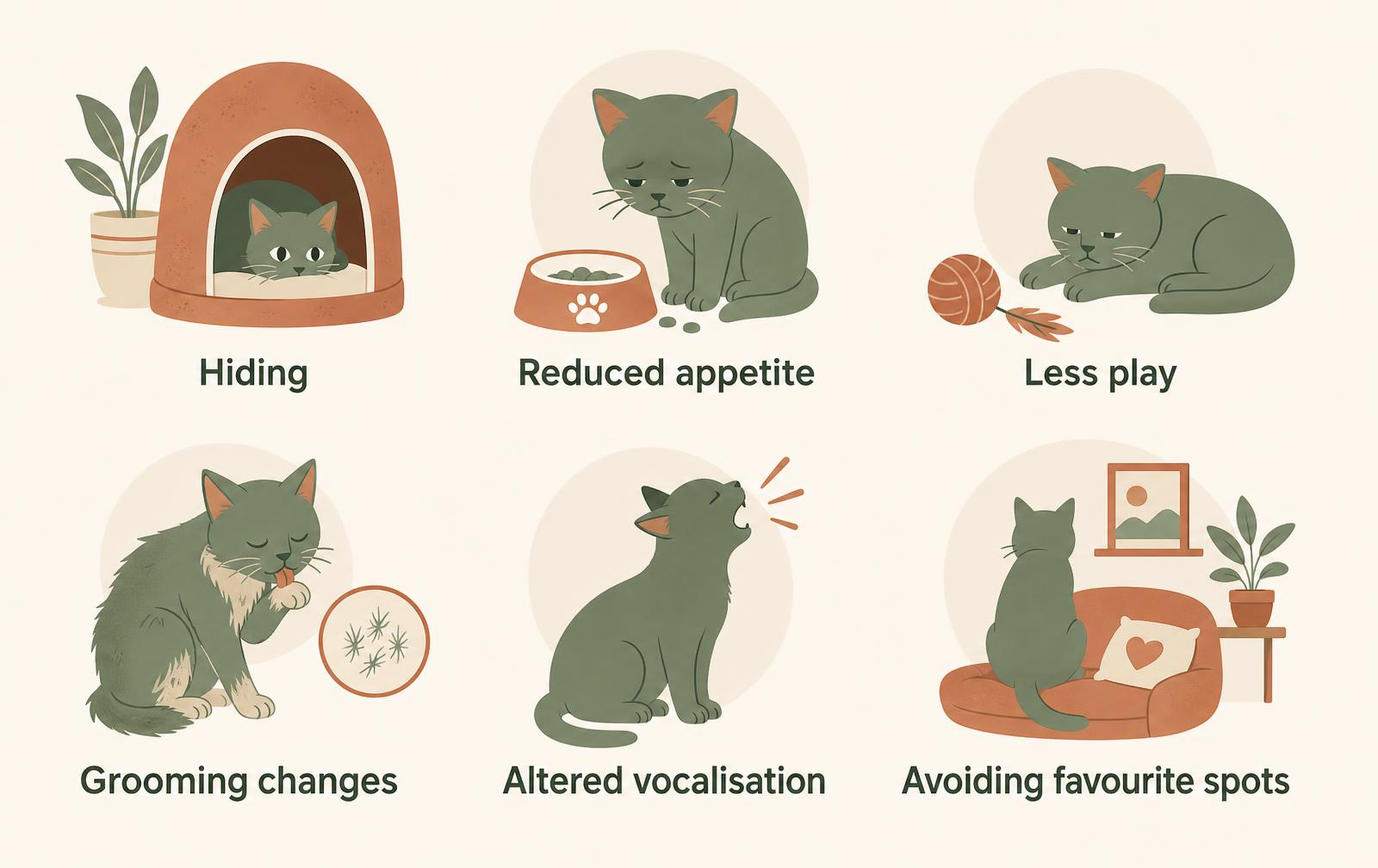
- Common signs: hiding more than usual, reduced appetite, less interest in play, changes in grooming, altered vocalisation, avoiding favourite spots.
- Common causes: loss of a companion (animal or human), house move, a new pet or baby, change in routine, boredom, chronic pain.
- What helps: routine, enrichment, companionship where appropriate, pheromone diffusers, and time. In some cases, medication prescribed by a vet.
- If in doubt, see a vet. A cat that seems low is a cat worth checking over.
A cat that hides, stops eating, and seems to have lost interest in everything looks like a depressed cat. It might also look like a sick one. That distinction matters enormously.
Cats can experience depressive-like states — that much is now well accepted by veterinary behaviourists. A significant life change, a loss, prolonged boredom, or an unmet need can all produce a cat that withdraws, loses its appetite, stops grooming, and seems, for want of a better word, sad.
But here is the complication that trips up most owners: the signs of a low mood in a cat look almost identical to the signs of physical illness. A cat hiding under the bed after a house move might be anxious and unsettled. The same cat, after no obvious change, might have kidney disease, dental pain, or hyperthyroidism. The behaviour is indistinguishable from the outside. Which is why the most important thing to know about cat depression is not what the signs are, but what to do first when you see them.
The thing most people get wrong first
When a cat starts hiding, eating less, and seeming flat, the natural response is to look for an emotional cause. Has anything changed? Is the cat lonely? Is it grieving? These are worth asking, but they shouldn't be the first question.
Depression and physical illness produce the same picture in a cat. Kidney disease, dental pain, hyperthyroidism, anaemia, chronic infections, and arthritis can all make a cat withdrawn, less interested in food and play, quieter, and more likely to hide. Cats mask pain and illness well — as we've written about elsewhere — and the early signs of serious illness can look exactly like a mood change.
This is why every vet will say the same thing: if your cat's behaviour changes significantly and persistently, the first step is a check-up, not an enrichment strategy. Treating pain or illness often resolves the behaviour completely. Assuming it's emotional and buying a new toy does not treat kidney disease.
What depressive-like states in cats actually look like
With medical causes ruled out or treated, here are the signs that point towards a genuine low mood state in a cat.
Hiding more than usual. Retreating to spaces they don't normally use, or spending much more time in quiet spots, away from the household's activity.
Reduced appetite. Eating less than usual, showing less interest in food, or in some cases going off food almost entirely. In cats, a loss of appetite lasting more than a day or two is always worth taking seriously in its own right.
Less interest in play. Ignoring toys that previously interested them, not responding to invitations to interact, seeming generally disengaged.
Changes in grooming. Either grooming less, resulting in a dull or matted coat, or over-grooming as a sign of stress — obsessive attention to one area until the fur thins.
Altered vocalisation. A normally chatty cat going quiet, or a quiet cat becoming vocal or distressed-sounding.
Avoiding favourite spots. No longer using the perch, the sunny patch, the chair they claimed. This can be particularly telling when there's no obvious physical reason for the change.
Changes in social behaviour. Less head-rubbing, less seeking contact, stopped greeting at the door. Alternatively, becoming clingier than usual, which can also be a stress response.
Common causes
When a cat's low mood has a behavioural rather than medical root, it tends to trace back to one of a handful of things.
Loss. Cats form genuine attachments, and the death of a companion animal or a human family member can produce real grief. This is one of the clearest triggers, and signs may appear within days of the loss and persist for weeks.
Significant change. Moving house, a major renovation, a new baby, a new partner, a change in the owner's routine, or any other disruption to the cat's established world can unsettle them considerably. Cats are creatures of habit and territorial security, and disruption of either can produce withdrawal.
A new pet. Introducing another cat or a dog into a household can be significantly stressful, particularly if the introduction isn't managed carefully. A resident cat that feels its territory has been invaded may become withdrawn and subdued.
Boredom and under-stimulation. Indoor cats in particular can become flat and disengaged if their environment doesn't give them enough to do. Cats need to hunt, climb, explore and play — an environment that doesn't allow for any of that is an environment that can produce a low mood over time. Long stretches alone can compound it, which is worth reading about in how long you can leave a cat or small pet alone.
Chronic pain or an underlying condition that has been treated. Sometimes a cat's mood improves once a physical problem is resolved, which is itself a clue that the illness was more of a factor than it seemed.
What actually helps
Once physical causes have been ruled out or treated, there are things that genuinely make a difference.
Maintain routine. Feeding at consistent times, keeping familiar furniture in familiar places, predictable daily patterns — all of these help a cat feel secure. Routine is one of the most underrated tools for feline wellbeing.
Enrichment. Puzzle feeders, climbing structures, window perches, opportunities to watch birds or movement outside. For indoor cats particularly, an environment that allows them to express natural behaviours makes a meaningful difference over time.
Careful companionship. For a cat that seems lonely, another cat isn't always the solution — it can make things worse if introduced poorly. But increased quality time and gentle interaction from the owner can help. Let the cat set the pace.
Feliway and pheromone diffusers. Synthetic feline facial pheromones have a reasonable evidence base for reducing stress-related behaviour in cats, and are widely recommended by vets for cats going through changes or showing signs of anxiety. They're not a cure but can take the edge off.
Medication. In some cases, where low mood is significant and persistent, a vet may recommend medication — anti-anxiety drugs or antidepressants designed for cats. This is a conversation to have with your vet rather than something to manage at home, but it is a legitimate option for a cat that isn't responding to environmental changes.
Time. For a cat grieving a companion or adjusting to a change, time is often the main ingredient. Most cats do come through depressive episodes, particularly when the cause is identified and addressed.
When to go back to the vet
If your cat has been checked over and a physical cause ruled out, but things aren't improving after a few weeks of consistent enrichment and routine, go back. A persistent low mood in a cat is worth a second look, either to catch something that was missed the first time, or to discuss whether medication is appropriate.
The bottom line
Cats can experience genuine low mood states that look a great deal like human depression. The signs — hiding, reduced appetite, less interest in life — are real and worth taking seriously. But they look identical to the signs of illness, which is why the first step is always a vet check rather than an enrichment plan. Rule out physical causes first. Then, with those addressed or excluded, consistent routine, a richer environment, careful companionship, and time do most of the work for most cats.
This is general guidance and not veterinary advice. If your cat's behaviour has changed significantly, please speak to your vet.
Related reading: The Cat Behaviour Guide
Common questions
Frequently asked.
Keep reading
Further reading.
Want plain-English notes on pet health and the things that affect it? Join The Once-Over, our weekly note from Hazel.