Explainer · Cat · 16 Jul 2026
Cat Hairballs: What's Normal and When to Worry
By Burrow · 16 Jul 2026
TL;DR
- A hairball is a wad of swallowed fur (a trichobezoar), a normal by-product of a cat's diligent grooming.
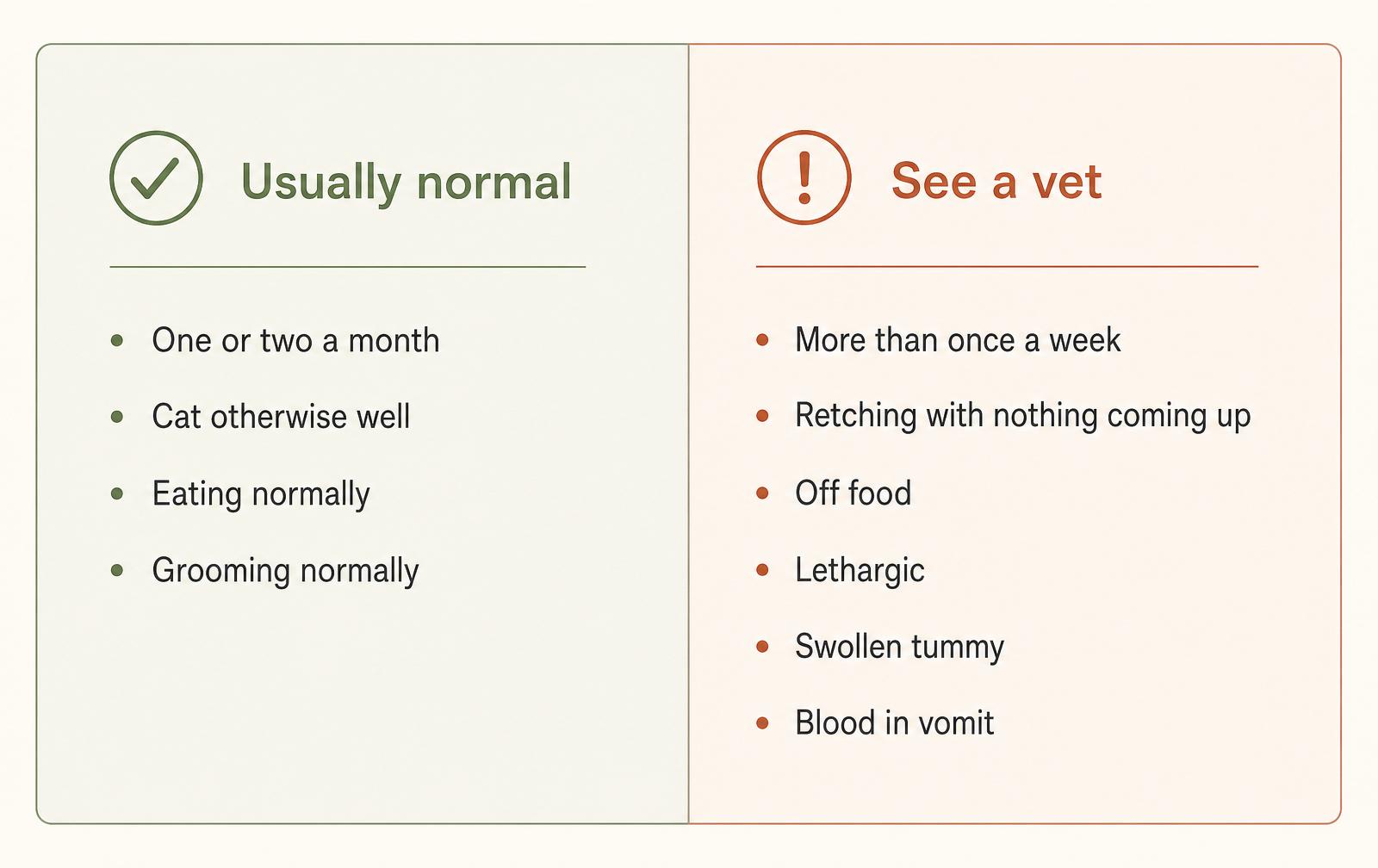
- Once or twice a month is normal. Roughly one every week or two is nothing to worry about.
- More than once a week usually isn't a hairball problem at all. It more often points to over-grooming or a digestive issue underneath.
- The real emergency sign is unproductive retching: repeatedly trying to bring one up with nothing coming. That can mean a blockage.
- Also see a vet for: lethargy, going off food for more than a day, constipation, a swollen hard tummy, or blood in the vomit.
- Never give human laxatives — some are toxic to cats. Regular brushing is the single most effective prevention.
Everyone knows cats get hairballs. Far fewer know that a cat getting them often usually has a problem that has nothing to do with fur.
The occasional hairball is one of the more familiar, and less charming, parts of living with a cat. It's easy to file the whole business under "just something cats do" and think no more of it. Mostly, that's right. But the frequency is where the useful information hides, because a cat bringing up hairballs regularly is often telling you about a problem underneath, and "he's always been a bit sicky" is exactly the kind of thing that gets a real issue overlooked.
What a hairball actually is
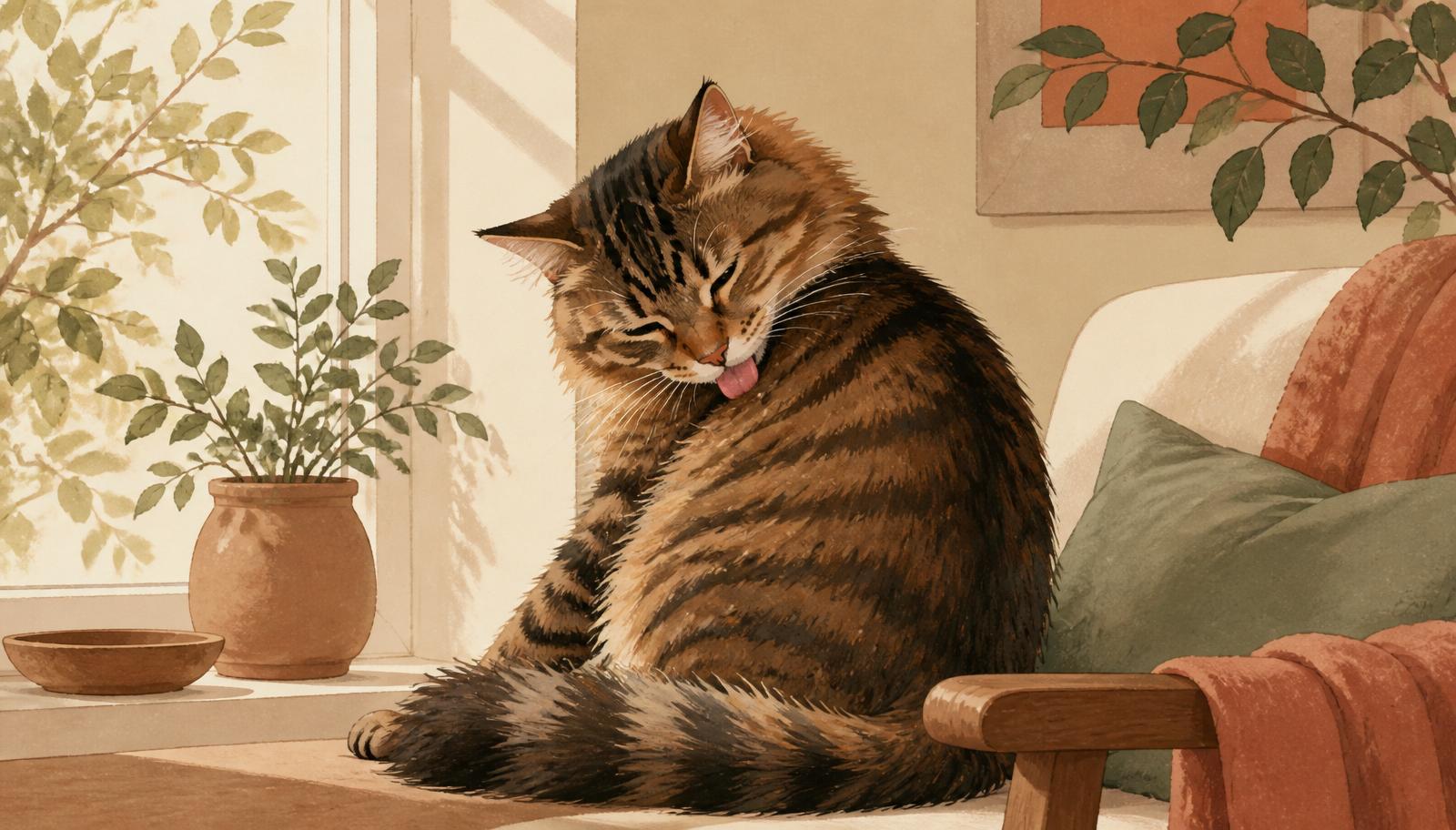
Watch a cat groom and you're watching the cause. A cat's tongue is covered in tiny backward-facing barbs, which is what gives it that sandpaper feel and what makes it such an effective comb. Those barbs catch loose hairs and, because they point backwards, there's nowhere for the hair to go but down the throat and into the stomach.
Most of that swallowed fur passes harmlessly through the digestive tract and leaves in the stool. Some of it stays behind in the stomach, tangles on itself, binds with saliva and digestive fluid, and eventually comes back up. That's a hairball, or to give it its proper name, a trichobezoar.
One small myth worth correcting: despite the name, hairballs aren't round. They're usually cylindrical, cigar or sausage-shaped, moulded by the narrow food pipe on the way up. So the thing you find on the rug looks less like a ball and more like a damp, matted tube. Unpleasant, but in itself, normal.
What's normal
Here is the reassuring part. For most cats, an occasional hairball is simply the price of being fastidiously clean, and no cause for concern at all.
The rough guide vets use is one or two a month, or one every couple of weeks. The Cornell Feline Health Center puts it plainly: a cat bringing up a hairball once every week or two is nothing to worry about. Long-haired cats and any cat during a heavy shedding season will naturally be at the higher end, and that's fine too. If your cat produces the odd hairball, grooms normally, eats well and is otherwise themselves, there's nothing to fix.
When it isn't just a hairball
This is the part most people don't know, and it's the reason this piece exists.
Frequent hairballs are usually not a hairball problem. If a cat is bringing them up more than about once a week, or retching regularly, the fur is often a symptom rather than the cause, and the real issue sits underneath. Two explanations are common.
The first is over-grooming. A cat that grooms excessively swallows far more hair than usual, and cats over-groom for reasons worth finding: stress or anxiety, skin allergies, parasites, or pain in a particular area they're compulsively licking. In other words, the hairballs can be the visible end of an invisible problem, which ties into something we've written about elsewhere: cats are experts at hiding illness, and a change in grooming is one of the few tells they give.
The second is a digestive issue. Conditions that slow the movement of the gut, or inflammatory bowel disease, mean hair that should pass through simply doesn't, and accumulates instead. In these cats the hairballs are a downstream sign of a gastrointestinal condition that itself needs treating.
The practical takeaway: a cat who has "always had hairballs" a lot may not have a fur problem at all. It's worth a conversation with your vet rather than a lifetime of hairball paste papering over something treatable.
The red flags
Some signs mean a hairball has stopped being a nuisance and become a genuine concern. The most important one is counterintuitive.
Unproductive retching. A cat repeatedly hunching, extending the neck and retching but bringing nothing up is the sign to act on. It can mean a hairball has become too large to pass, either stuck on the way up or, more seriously, lodged further down where it can cause a life-threatening intestinal blockage. This is not a wait-and-see situation.
Alongside it, contact your vet promptly if your cat shows any of the following, particularly in combination:
- Lethargy, or seeming generally unwell
- Loss of appetite lasting more than a day
- Constipation, or straining with little result
- A swollen, hard or distended tummy
- Blood in the vomit, or repeated vomiting more than once or twice a week
- Obvious distress or discomfort during or after retching
A true blockage may need to be removed by endoscopy or surgery, and outcomes are far better when it's caught early, which is the whole reason not to dismiss persistent retching as "just a hairball."
How to reduce them
For the ordinary, occasional hairball, a few simple measures genuinely help.
Brushing is the single most effective thing you can do. Every hair you remove with a brush is one your cat doesn't swallow. Long-haired cats benefit from daily grooming; short-haired cats from a regular going-over, especially during shedding season. Most cats, introduced gently, come to enjoy it.
Keep them well hydrated, which helps things move through the gut. A wet-food element to the diet and multiple fresh water sources can help. Water fountains suit some cats, but controlled studies don't show a universal advantage.
Consider a hairball-control diet if hairballs are a recurring nuisance. These are higher in fibre, designed to move swallowed hair through the system rather than let it accumulate. Your vet can advise whether one suits your cat.
Address any over-grooming at the source. If your cat is grooming excessively, the lasting fix isn't managing the hairballs, it's finding and treating the reason, whether that's stress, an itch, or discomfort.
One firm warning: never give your cat a human laxative or hairball remedy meant for people. Several are toxic to cats. Use only products your vet recommends or approves.
The bottom line
An occasional hairball is normal, and nothing more than the by-product of a clean, well-groomed cat. One or two a month, in a cat who is otherwise well, needs no action beyond a regular brush and clearing up after them.
What deserves attention is frequency and effort. A cat bringing up hairballs often, or retching repeatedly with nothing to show for it, is usually not describing a fur problem but pointing at something underneath — whether over-grooming with a cause worth finding, or a digestive issue worth treating. Brush regularly, keep them hydrated, never reach for a human laxative, and treat persistent retching as the red flag it is.
This is general information, not veterinary advice. If your cat is retching repeatedly without producing anything, is off their food, lethargic, or has a swollen abdomen, contact your vet promptly.
Common questions
Frequently asked.
Keep reading
Further reading.
Want plain-English notes on pet health and the things that affect it? Join The Once-Over, our weekly note from Hazel.