Preventive Vet Care · Cat · 05 Oct 2026
When Should You Worm a Kitten?
By Burrow · 05 Oct 2026
TL;DR
- **Treatment starts at two to three weeks old.** European parasite guidance says three weeks and the Merck Veterinary Manual says two. Either way, it begins long before a kitten goes to a new home.
- **Early doses are repeated every fortnight.** ESCCAP continues until two weeks after weaning. Merck continues to 12 weeks of age.
- **What follows is where guidance differs.** Merck advises monthly treatment to six months. ESCCAP advises it where there is an ongoing increased risk.
- **The mother is treated too.** Both sources say nursing queens should be wormed alongside their kittens.
- **Fresh faeces are not immediately infective.** Roundworm eggs take weeks to develop, which is why emptying the litter tray daily matters.
- **A roundworm treatment may not cover tapeworm.** The common cat tapeworm comes from swallowing fleas, so flea control is part of the picture.
Earlier than most new owners expect, and more than once. The major veterinary sources agree on that much, though not on exactly when treatment starts or how long each stage lasts.
Most people who bring home a kitten are handed a vaccination card and a vague instruction to keep up with worming. The detail matters more than that suggests. Roundworm is the parasite that kitten programmes are built around, it is common, and a kitten can be carrying it within weeks of birth. Two major veterinary sources, the European Scientific Counsel Companion Animal Parasites (ESCCAP) and the Merck Veterinary Manual, agree that treatment should start early and be repeated. They do not give identical programmes, and the differences are worth understanding.
Kittens are not born with worms, but they get them early
The roundworm of cats is Toxocara cati, a cream-coloured worm that lives in the small intestine and grows to between 3 and 10 cm. Puppies can be infected with their own roundworm before birth, across the placenta. Kittens cannot. ESCCAP and Merck agree on that, and it is the reason kitten programmes begin slightly later than puppy ones.
Where the two sources differ is on what happens next. ESCCAP describes the queen's milk as the route by which infection passes to kittens. Merck is more cautious, stating that transmission through milk appears to occur only when a queen picks up infection late in pregnancy, and that the route plays a minor role overall. Kittens also become infected the way adult cats do, by swallowing eggs from a contaminated environment. For an owner the disagreement changes little, because both authorities recommend early, repeated treatment for kittens and there is no practical way to know which ones are infected.
What the guidance says, and where it differs
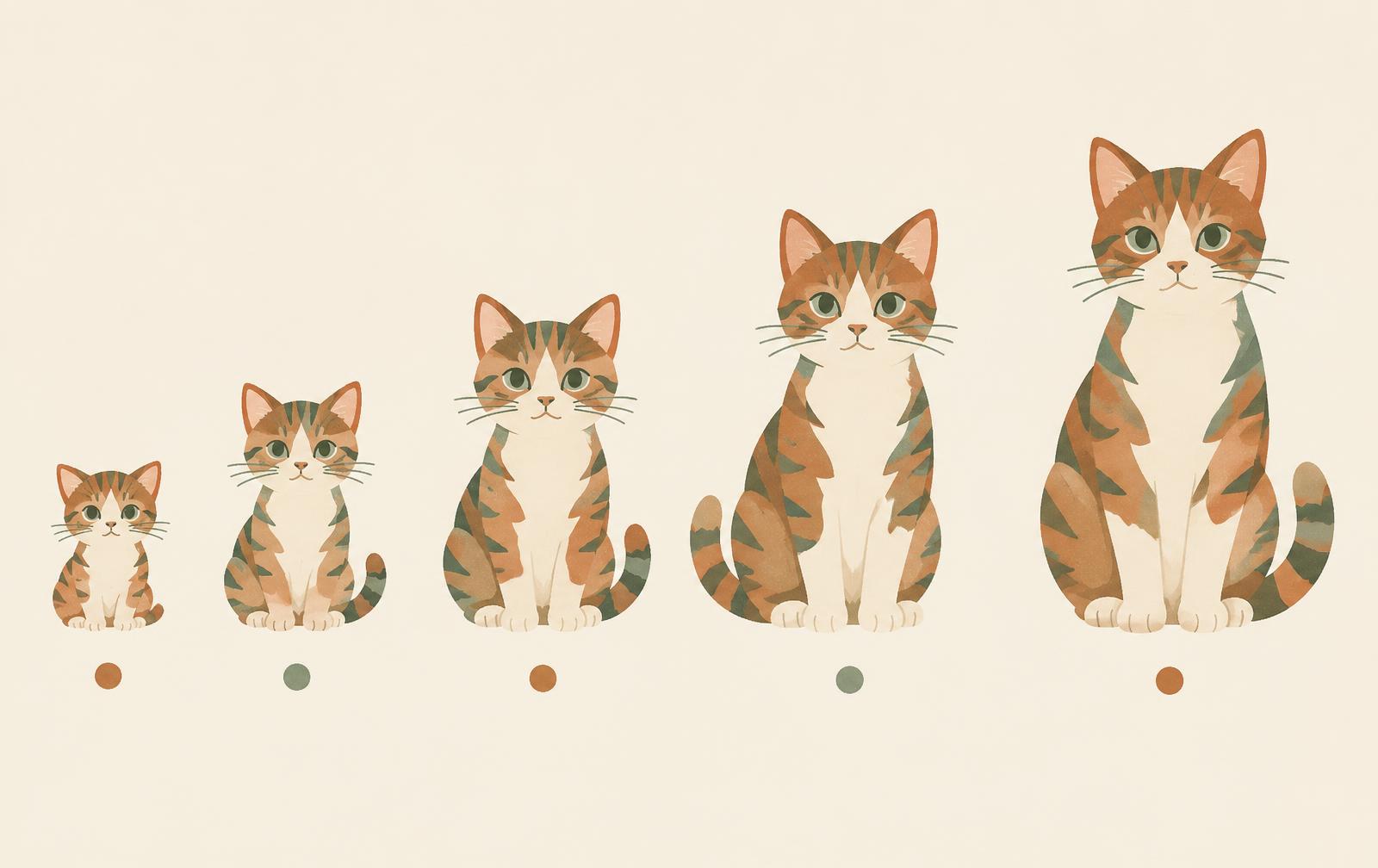
ESCCAP advises treating kittens from three weeks of age and repeating every fortnight until two weeks after weaning. After that it recommends monthly treatment until six months of age where there is an ongoing increased risk of infection. Merck sets out a fixed programme: treatment at two weeks, then every two weeks to 12 weeks of age, then monthly to six months.
The differences are therefore a week at the start, a few weeks in how long fortnightly dosing lasts, and whether the monthly stage applies to every kitten or to those at higher risk. Which version a practice follows, and how a kitten's risk is judged, is a conversation to have with your vet. Both sources say the nursing queen should be treated at the same times as her kittens, and ESCCAP explains that she may develop an egg-shedding infection herself during this period. Whichever programme is followed, several of the early doses fall before a kitten is rehomed, so a new owner inherits it partway through.
Why kitten worming has to be repeated
Two things make a single treatment inadequate for a young kitten. The first is the drugs. Merck notes that many of the products used against roundworm in cats kill only the adult parasites, and advises that when such a drug is used to treat an infected cat it should be given twice, 10 to 14 days apart. Worms at an earlier stage of development can survive a dose and mature afterwards. Products differ in this respect, which is one reason the choice of product belongs with a vet.
The second is reinfection. A litter shares a small space with its mother and with each other's faeces, and roundworm eggs are tough. ESCCAP states that they remain infective in the environment for years. A kitten successfully treated for worms can be exposed again in a contaminated environment, so repeated treatment through the period of highest exposure makes sense whatever product is used.
What roundworm looks like in a kitten
Often it looks like nothing at all. Merck describes roundworm infections as frequently causing no visible signs, which is why treatment is routine and not triggered by symptoms. When signs do appear, the first is usually poor growth and loss of condition. Affected kittens may have a dull coat and a pot-bellied look, may pass diarrhoea containing mucus, and may vomit worms or pass them in their faeces. In the early stage of infection, larvae migrating through the lungs can cause coughing.
A kitten that is vomiting worms, has a swollen belly, is failing to grow or seems unwell needs to see a vet, not simply another dose from the cupboard. A heavy burden in a very young animal is a different situation from routine prevention.
The litter tray matters more than you would think
Toxocara cati can infect people, which is the second reason kittens are treated so early. According to ESCCAP, people are infected by accidentally swallowing infective eggs from the environment or, less often, by eating undercooked meat. Merck notes that most human infections cause no symptoms, but that migrating larvae can occasionally cause illness and, rarely, settle in the eye and impair vision. Young children are the usual concern, because of how they play and how often their hands go to their mouths.
The useful detail is timing. Eggs passed in faeces are not infective straight away, and ESCCAP says they become so after several weeks in the environment. Prompt removal therefore greatly reduces the chance that eggs shed in faeces will develop to the infective stage. It does nothing about eggs already in soil or dust, which Merck notes stick to many surfaces, so handwashing after cleaning the tray and after children have played outdoors still matters.
A roundworm treatment may not cover tapeworm
The common tapeworm of cats, Dipylidium caninum, has nothing to do with the mother. Cats acquire it by swallowing infected fleas while grooming, and owners usually notice it as small pale segments around the tail or in the faeces. Merck's drug tables show that several roundworm treatments have no activity against this tapeworm, and it will keep returning for as long as the kitten has fleas. Ask your vet whether the product your kitten is on covers both, and treat fleas as part of the same job.
What if you don't know your kitten's worming history?
This is common. A breeder says a kitten "has been wormed" but gives no dates or product name, or a rescue kitten arrives with no history at all. An assurance without dates is not a record. The safest course is not to guess, and not to work out your own programme from the stages described above. Tell your vet practice that the history is unknown, give the kitten's age, and let them weigh the kitten and decide where to start.
After six months
Worming does not stop at six months, but it stops being a kitten programme. ESCCAP recommends that adult cats are treated at least four times a year, or have faeces tested at least four times a year and are treated when positive. It recommends monthly treatment for cats at higher risk: those that hunt, roam freely or eat raw diets, and those living with small children or anyone who is immunosuppressed. A 2016 study of 131 domestic cats in urban Lancashire found roundworm eggs in the faeces of 34 of them, or 26%. That is one sample from one area, but it shows that adult cats carry the worm too.
Try this today
Find out exactly what your kitten has already had. Ask the breeder or rescue for the date and product name of every worming dose, and write them on the vaccination card. If you do not have a recent, accurate weight, ask your vet practice to weigh your kitten before the next treatment is chosen, because doses are set by weight and a growing kitten outgrows its last one quickly. Do not estimate a weight or calculate a dose yourself.
The Bottom Line
Kitten worming starts remarkably early. Major veterinary sources put the first treatment at two to three weeks and recommend repeated fortnightly treatment through the early weeks, although they differ on how long that lasts and on whether monthly treatment afterwards is for every kitten or for those at higher risk. Treatment is repeated because some products do not kill immature worms and because reinfection is easy. If you are unsure where your kitten is in that sequence, the dates of its previous doses are the first thing to find out, and your vet is the person to set what comes next.
This article is for general information and does not replace veterinary advice. Always use a product licensed for your kitten's age and weight, and contact your vet if your kitten is unwell, losing weight, has a swollen abdomen or is passing or vomiting worms.
Common questions
Frequently asked.
References
Sources.
- European Scientific Counsel Companion Animal Parasites (ESCCAP). Toxocara infection in dogs and cats. Fact Sheet 7.
https://www.esccap.org/uploads/docs/eekw6v76_1295_ESCCAP_FS7_Toxocara_Fact_Sheet_English_v4.pdf - Peregrine AS. Roundworms in Small Animals. Merck Veterinary Manual. Reviewed July 2023, updated July 2026.
https://www.merckvetmanual.com/digestive-system/gastrointestinal-parasites-of-small-animals/roundworms-in-small-animals - Merck Veterinary Manual. Gastrointestinal Parasites of Cats (pet owner version).
https://merckvetmanual.com/cat-owners/digestive-disorders-of-cats/gastrointestinal-parasites-of-cats - Wright I, Stafford K, Coles G. The prevalence of intestinal nematodes in cats and dogs from Lancashire, north-west England. Journal of Small Animal Practice. 2016;57(8):393–395.
https://onlinelibrary.wiley.com/doi/10.1111/jsap.12478
Keep reading
Further reading.
Want calm, evidence-led notes on parasites, prevention and caring for a new kitten? Join The Once-Over, our weekly note from Hazel.