Research · Dog · 11 Sept 2026
Is Librela Safe? Why the Experts Don't Agree
By Burrow · 11 Sept 2026
TL;DR
- Librela is a monthly injection for osteoarthritis pain in dogs. Its active ingredient, bedinvetmab, blocks nerve growth factor, or NGF.
- A safety signal has been raised concerning serious musculoskeletal events, including unusually rapid joint deterioration.
- The most widely cited analysis is disputed. Spontaneous adverse-event reports cannot establish comparative risk without reliable treatment denominators.
- In February 2026, the VMD concluded that Librela's overall benefit-risk balance remained positive based on the evidence available at that time.
- The warnings have also strengthened. In May, the VMD added four very rare musculoskeletal events after assessing increasing multi-source evidence of a causal association with those events.
- What remains uncertain is the size and mechanism of the risk.
- Do not stop Librela yourself. The useful question is whether it is helping your dog and whether any new clinical changes need reviewing.
A widely used arthritis injection, a contested safety signal, and a regulator that has both strengthened the warnings and maintained that the benefits still outweigh the risks. Here's how to make sense of it.
If your dog has arthritis, there is a reasonable chance Librela has been discussed. Since its introduction it has become widely used for canine osteoarthritis pain, and many dogs appear to derive meaningful benefit from it.
There is also a genuine and unresolved argument about its safety — one that has produced alarming headlines, methodological disputes in the peer-reviewed literature, and repeated changes to the official product information. Owners looking for a simple answer tend to find either reassurance or alarm. The real position is more complicated, and more useful.
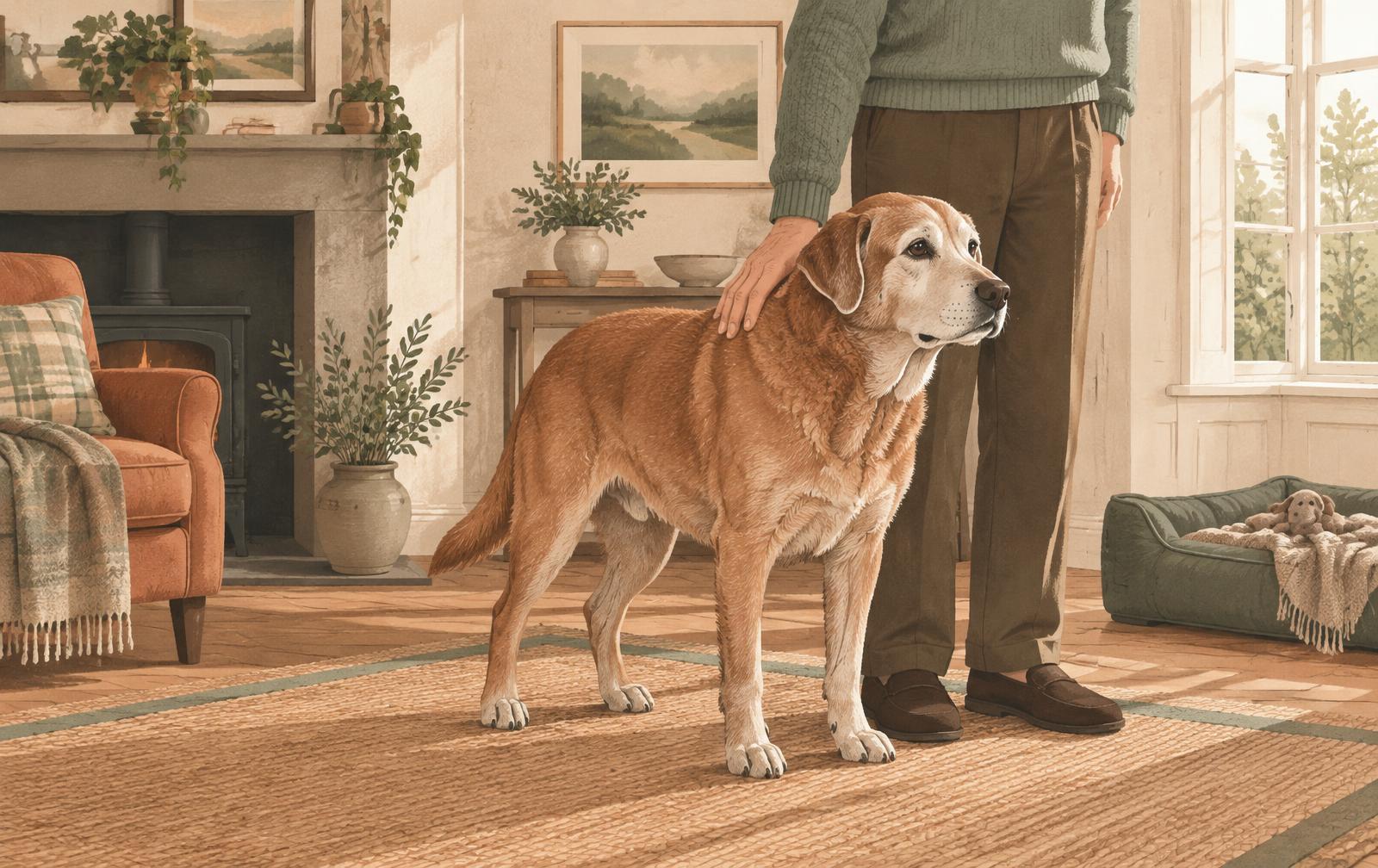
What Librela is and how it works
Librela is the brand name for bedinvetmab, a monoclonal antibody given by injection for pain associated with osteoarthritis in dogs. It works differently from traditional anti-inflammatory drugs: bedinvetmab binds to nerve growth factor, or NGF, which plays an important role in pain signalling. By reducing that signalling, Librela can make movement more comfortable.
It does not repair an arthritic joint. That distinction matters, because osteoarthritis is a structural disease as well as a pain problem. A dog may feel substantially better while the underlying joint remains abnormal.
That is one reason researchers have become interested in what happens to some dogs after NGF inhibition. One hypothesis is that effective pain relief allows a dog to load an already compromised joint more heavily. Researchers are also investigating whether NGF inhibition could have other effects on joint tissues. The mechanism is not established.
The safety signal
The concern has both a biological precedent and a growing veterinary literature behind it.
Anti-NGF drugs were previously studied for osteoarthritis pain in humans, where a small number of patients developed rapidly progressive osteoarthritis — joint deterioration occurring much faster than expected. That human experience does not prove the same syndrome occurs in dogs, but it provided a reason to watch carefully.
The paper that brought the issue to wide attention was published by Farrell and colleagues in Frontiers in Veterinary Science in May 2025. Using European pharmacovigilance data, the authors reported that several musculoskeletal adverse-event categories — including ligament and tendon injury, polyarthritis, fractures, musculoskeletal neoplasia and septic arthritis — appeared roughly nine times more frequently in reports involving Librela than in reports involving six comparator arthritis drugs combined. They also assembled a case series of 19 dogs with serious joint-related events while receiving Librela. An 18-member expert panel reviewed those selected cases and concluded there was strong suspicion of a causal association with accelerated joint destruction.
Those findings attracted understandable attention. But they do not mean a dog receiving Librela is nine times more likely to experience those problems. That is where the methodological dispute begins.
Why the headline figures are disputed
Spontaneous adverse-event databases are useful because they can reveal patterns that clinical trials were too small to detect. But they have a fundamental limitation: they record reports, not true incidence rates.
If one drug has many more adverse-event reports than another, that does not automatically mean it is more dangerous. You also need to know how many animals received each drug, how long they were exposed, whether the patient groups were comparable, whether media attention affected reporting, and whether one medicine was simply used more often.
A. C. Lloyd of the University of Glasgow criticised the Farrell analysis on those grounds and argued that its method did not constitute a valid disproportionality analysis. A separate commentary from the manufacturer's pharmacovigilance team also disputed the methodology. The independent criticism matters: the “nine times” figure should not be presented as a risk ratio for an individual dog.
The 19-dog case series also has limits. The dogs were selected because clinicians already suspected a causal link, several were receiving other pain medicines, and there was no control group. A case series can highlight a pattern, but it cannot establish how often similar deterioration would have occurred in comparable dogs with severe osteoarthritis that did not receive Librela.
So the signal remains important. The size of the risk does not follow cleanly from the original numbers.

Where the UK regulator stands
This is where the story became more significant.
In February 2026, the UK Veterinary Medicines Directorate completed an in-depth assessment of selected adverse events reported with Librela. The review included death, arthritis with faster-than-expected progression and human exposure, and also considered reports involving lack of efficacy, recumbency, muscle weakness, tremor and lameness.
The VMD concluded that Librela's overall benefit-risk balance remained positive based on the data available at that time. That means the regulator did not conclude that the medicine should be withdrawn, or that its risks outweighed its benefits for most dogs when used as authorised. The VMD also made clear that surveillance was continuing and additional adverse events were being assessed.
But that was not the end of the regulatory response. In January 2026, product information was updated to add paresis, paralysis and immune-mediated polyarthritis as very rare adverse events, with further precautions for dogs with certain immune-mediated conditions. Then in May 2026, four additional very rare musculoskeletal events were added: joint swelling, joint pain, bone and joint disorder, and soft-tissue ossification. The accompanying wording describes new bone formation affecting structures around the joint after repeated administration.
Subsequently, in an August 2026 Freedom of Information response, the VMD explained that the May update followed its assessment of “increasing multi-source evidence of a causal association between Librela and these events.” The words “these events” are important: the statement applies to the four musculoskeletal terms added in May, not every adverse event ever reported after Librela.
That is the key regulatory position in this story. The regulator has said both that the overall benefit-risk balance remains positive and that there is increasing evidence of a causal association with certain rare musculoskeletal events. Those positions are not contradictory.
Holding both facts at the same time
A medicine can cause a genuine adverse effect and still remain worth using overall. That depends on three things: how serious the adverse effect is, how often it occurs, and how substantial the benefit is.
For dogs living with chronic osteoarthritis pain, effective pain relief can make a major difference to mobility, sleep, activity and quality of life. The regulatory position is therefore not that the concerns are imaginary. It is that the available evidence does not show that the risks outweigh the benefits for most treated dogs.
What remains less certain is how often these serious musculoskeletal events occur and exactly what biological mechanism lies behind them. The current UK product information classifies the newly listed events as very rare, meaning fewer than one in 10,000 treated animals, including isolated reports. That is useful context — but it should not be read as a perfect prospective estimate of an individual dog's risk. Pharmacovigilance frequencies are derived from reporting systems that can under-report, over-report or shift as awareness changes. The true incidence is still not known with the precision owners would reasonably want.
What about rapidly progressive osteoarthritis?
This remains one of the most contested parts of the debate.
Veterinary researchers have continued to publish concerns about rapidly progressive arthritic changes in dogs treated with anti-NGF monoclonal antibodies. The radiographic changes described in some reports include joint collapse, bone erosion, instability, subluxation and extensive new bone formation developing over unusually short periods.
But there is an important distinction. The VMD's causal language applies to the specific musculoskeletal events added to the product information. It does not mean that a defined canine syndrome identical to human rapidly progressive osteoarthritis has been conclusively established. The VMD notes that there is no agreed veterinary definition, and the pattern reported in dogs is not necessarily identical to what was seen in human anti-NGF trials.
So the most accurate position is this: there is increasing regulatory evidence linking Librela with certain musculoskeletal adverse events, while the exact relationship with a defined syndrome of rapidly progressive joint destruction remains incompletely characterised.
Why gradual exercise still matters
There is also a practical issue separate from the causal debate.
A dog that has been moving less because movement hurts may become considerably more active once pain relief works. That is often exactly what owners are hoping for. But pain relief does not make an arthritic joint structurally normal.
The current product information therefore advises that dogs unable to exercise properly before treatment because of their condition should have exercise increased gradually over a few weeks to prevent overexercise. That does not prove that increased loading causes the serious events under investigation. It is sensible management of a dog whose pain may improve faster than its underlying joint disease.
What this means if your dog is on Librela
Nothing in this article is a reason to stop a prescribed medicine yourself. Stopping effective pain relief can leave an arthritic dog uncomfortable and less mobile.
The useful question is whether Librela is helping your particular dog, and whether anything has changed clinically since treatment began. If your dog is moving more comfortably, sleeping better and showing improved function without new concerning signs, that is valuable information. If your dog develops a sudden or marked decline in mobility, new weakness, instability, significant joint swelling or pain, or another substantial change after treatment, contact your vet. That may or may not be related to Librela, but it deserves assessment.
The product information also says that if a dog with no or limited initial response does not show a better response after a second dose one month later, the veterinary surgeon should consider alternatives. This wording sits within guidance about uncommon anti-drug antibodies that may reduce efficacy; it is not an instruction for owners to change treatment themselves.
The decision is therefore not simply Librela or no Librela. It involves how much pain relief the dog is gaining, the severity of the underlying arthritis, other medical conditions, alternative pain-control options, any new clinical changes, and the uncertainty surrounding rare adverse events. Different dogs may reasonably end up with different treatment decisions. Our Joint Health Guide covers the wider treatment and management options.
Try this today
If your dog receives Librela, write down what its mobility was like before treatment began and what it is like now. Think in specific terms: how easily it gets up, how far it walks comfortably, whether it manages stairs, whether it plays, whether it sleeps comfortably, and whether its recovery after exercise has changed. A short video of your dog walking can also be useful — it gives your vet something more objective than a general impression of “better” or “worse”.
The aim is not to search obsessively for side effects. It is to know whether the treatment is doing what you want it to do.
The bottom line
Librela's safety cannot honestly be reduced to safe or dangerous.
A real safety signal exists. The most widely cited analysis behind the controversy has important methodological limitations and should not be read as proving that Librela multiplies an individual dog's risk of serious joint injury. At the same time, the UK regulator has gone beyond simply acknowledging reports — it has updated the product information and said that its May changes followed increasing multi-source evidence of a causal association with four specific musculoskeletal events. It has also maintained that the overall benefit-risk balance remains positive based on the evidence available.
That is the position owners need to hold onto. Librela can provide meaningful pain relief. It can also carry uncommon or very rare risks that are still being defined. What remains uncertain is not whether there is any safety signal at all, but how large the risk is, which dogs are most vulnerable, and exactly how these events develop.
If your dog is doing well, that is not a reason for alarm. If your dog deteriorates in a way that seems unusual or unexpectedly rapid, that is a reason to speak to your vet. In either case, the most useful thing an owner can do is track mobility carefully, increase activity gradually, and keep reviewing whether the treatment is delivering more benefit than harm.
Burrow provides evidence-led pet health information and does not replace veterinary diagnosis or treatment. Never start, stop or change prescribed medication without speaking to your vet. If your dog develops sudden weakness, inability to stand or marked deterioration in mobility, seek veterinary attention promptly.
Related reading: The Joint Health Guide · Arthritis in Dogs: The Early Signs Most Owners Miss · Do Dog and Cat Supplements Actually Work?
Common questions
Frequently asked.
Keep reading
Further reading.
Want calm, evidence-led notes on pet health research and what it means? Join The Once-Over, our weekly note from Hazel.