Research · Dog · 11 Sept 2026
Does Your Dog Need Antibiotics for Kennel Cough?
By Burrow · 11 Sept 2026
TL;DR
- Kennel cough is usually mild and self-limiting. Clinical guidance says many uncomplicated cases resolve without antibiotics.
- New UK research found systemic antibiotics were prescribed in 429 of 2,163 cases — 19.8%, or around one in five.
- The remaining 1,734 cases did not receive an antibiotic; those two figures were reversed in some interpretations of the study table.
- Kennel cough isn't one infection. Canine infectious respiratory disease can involve several viruses and bacteria, and antibiotics do not treat viral infections.
- Antibiotics can be appropriate when a dog is systemically unwell or when bacterial involvement or pneumonia is a concern.
- Older dogs were more likely to receive antibiotics in the new study, suggesting prescribing decisions varied with characteristics of the patient.
- Avoiding antibiotics when they are unlikely to help is antimicrobial stewardship — preserving these medicines for situations in which they are genuinely useful.
New UK research found systemic antibiotics were prescribed in around one in five cases of canine infectious respiratory disease — a condition that clinical guidance says usually resolves without them. The interesting question is what made those cases different.
Kennel cough is one of the familiar explanations for a sudden cough in a dog. It is also a useful test of how clinical guidance translates into everyday veterinary practice. New research from the University of Liverpool identified 2,163 cases of canine infectious respiratory disease in electronic health records collected through the Small Animal Veterinary Surveillance Network, or SAVSNET. Of those cases, 429 — 19.8% — received a systemic antibiotic. The other 1,734 did not.
That distinction matters because the figures are easy to reverse when reading the study's statistical table. The research does not show that antibiotics were prescribed in four out of five cases. It shows the opposite. Even so, the 429 prescriptions remain worth understanding because the researchers describe canine infectious respiratory disease as generally mild, self-limiting and not usually requiring antibiotics. Antibiotics sometimes are appropriate. They simply aren't an automatic part of treating every case.

What kennel cough actually is
The name is misleading in two ways. A dog doesn't need to have stayed in a kennel to catch it, and kennel cough isn't one infection caused by one organism.
The clinical term is canine infectious respiratory disease, usually shortened to CIRD or CIRDC. Several infectious agents can contribute to the syndrome, sometimes in combination — viruses such as canine parainfluenza virus, canine adenovirus type 2 and canine respiratory coronavirus, as well as bacteria including Bordetella bronchiseptica and Mycoplasma species. That matters when discussing antibiotics for a simple reason: antibiotics treat susceptible bacteria. They don't treat viruses.
CIRD spreads particularly readily where dogs mix closely — boarding kennels, daycare, training classes, shelters, shows and multi-dog households. But kennels aren't required. Ordinary contact between dogs can provide an opportunity for transmission.
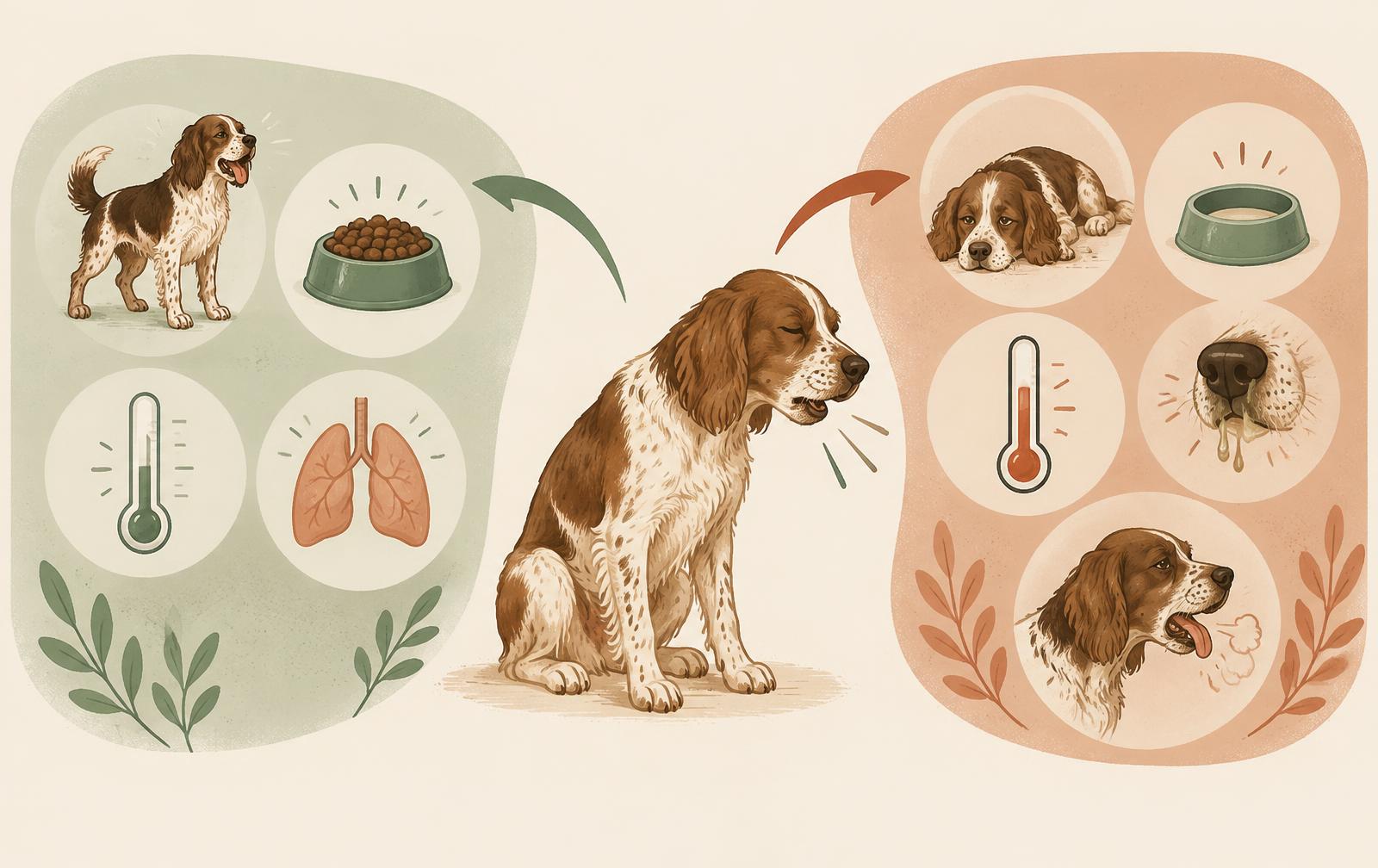
The classic sign is a sudden dry, harsh or hacking cough, sometimes ending in a retch that can be mistaken for vomiting. Some dogs also sneeze or develop nasal or eye discharge. In an uncomplicated case, however, the dog often remains bright, continues eating and otherwise appears reasonably well. Many of those dogs recover without an antibiotic.
What the guidance says about antibiotics
Veterinary antimicrobial guidance distinguishes uncomplicated respiratory disease from dogs showing evidence of more significant illness. For an otherwise healthy dog that remains bright, has a normal appetite and temperature and has no evidence of pneumonia, uncomplicated CIRD can resolve spontaneously — and antimicrobials are therefore not routinely recommended. This is consistent with both BSAVA responsible-use guidance and UK owner guidance from PDSA.
That doesn't mean the cough isn't real or unpleasant. An irritated airway can produce dramatic coughing fits, and some dogs sound considerably worse than they otherwise appear. It means an antibiotic isn't necessarily the medicine that will make that dog better.
The picture changes when there are signs suggesting more significant disease. Fever, lethargy, reduced appetite and mucopurulent nasal discharge can all increase concern about bacterial involvement, and a dog suspected of having pneumonia requires a different clinical approach altogether. Age, underlying disease and immune status may also influence how a vet assesses risk.
So the useful question isn't “do antibiotics work for kennel cough?” It is “is there something about this dog's illness that makes an antibiotic appropriate?”
What the new UK research found
The 2026 study by Alec Thomas, Alan Radford and Helen Clough was published in Preventive Veterinary Medicine. Rather than recruiting dogs specifically for an experiment, the researchers analysed electronic health records from veterinary practices participating in SAVSNET, using a text-search methodology to identify 2,163 records consistent with canine infectious respiratory disease. Systemic antibiotics were prescribed in 429 cases, while 1,734 did not receive one.
The researchers also found a seasonal pattern, with cases more strongly associated with autumn — which makes the research particularly relevant at this time of year.
Prescribing wasn't distributed evenly across dogs either. Older age groups had higher odds of receiving an antibiotic: compared with puppies, mature dogs had 2.31 times the odds and geriatric dogs 2.73 times the odds after adjustment in the researchers' model. Male dogs also had higher odds of receiving antibiotics than females. Those findings don't explain why an individual vet prescribed, but they do tell us that characteristics of the patient were associated with the decision.
Does that mean vets are overprescribing?
The study alone cannot answer that. There is a substantial difference between saying “19.8% of the CIRD cases identified received systemic antibiotics” and saying “19.8% were prescribed antibiotics unnecessarily.” The research supports the first statement. It does not support the second.
This was a retrospective study of routine electronic veterinary records. That's valuable because it shows what happens across a large network of real veterinary practices rather than under tightly controlled experimental conditions. But routine records cannot necessarily reconstruct every clinical judgement behind a prescription. A vet may have been treating an older dog differently from a healthy young adult. There may have been another medical condition. Examination findings may have raised concern about bacterial involvement or complications. Relevant details may not have been consistently available to the researchers, and the authors acknowledge the possibility of unmeasured confounding.
So the prescribing rate is a signal worth investigating, not a retrospective verdict on 429 veterinary decisions. The age finding reinforces that point: vets appear to have been more likely to prescribe to older dogs, although the study cannot tell us precisely what clinical reasoning lay behind that association.
Why the number still matters
One prescription in five is very different from four in five, but antimicrobial use in a condition that frequently resolves without it still deserves careful attention.
Every use of an antibiotic creates selection pressure favouring bacteria able to survive it. Over time, that contributes to antimicrobial resistance — one of the reasons veterinary and human medicine increasingly emphasise antimicrobial stewardship. Antibiotics can also cause adverse effects and alter bacterial communities elsewhere in the body.
None of that makes antibiotics bad medicines. Quite the opposite — they are enormously valuable when a bacterial infection warrants treatment. Antimicrobial stewardship is about preserving that value by avoiding them when the expected benefit is small or absent. The Liverpool research helps establish how often prescribing occurs and which dogs were more likely to receive treatment. Further work is needed to separate appropriate individual clinical judgement from prescribing that could safely be reduced.
What actually helps a coughing dog
If your vet assesses your dog and concludes that the illness is uncomplicated, not receiving an antibiotic doesn't mean nothing can be done.
Rest and reduced activity. Excitement and exertion often trigger coughing fits, so keeping things relatively quiet while the airway recovers is sensible.
Use a harness rather than a collar. Pressure on the neck can aggravate coughing in a dog with an already irritated airway.
Symptom relief where appropriate. Depending on the individual dog and the nature of the cough, your vet may consider medication to manage coughing or inflammation. Don't give human cough or pain medicines unless specifically instructed by a vet.
Keep your dog away from other dogs. CIRD is infectious, so daycare, kennels, training classes, group walks and close dog-to-dog contact should wait until your vet advises it is appropriate to resume.
Vaccination. This reduces risk from important components of the respiratory disease complex, including Bordetella bronchiseptica and canine parainfluenza, though it cannot prevent every case because several pathogens can be involved.
What to ask your vet
If your dog has been diagnosed with uncomplicated kennel cough and an antibiotic is suggested, there is no need to challenge your vet or refuse the prescription. Ask: what makes you think an antibiotic will help in this case?
That's a good question, not a challenge — and there may be a very good answer. Your dog's examination, age, medical history or symptoms may change the calculation, and your vet may be concerned about bacterial involvement or complications that aren't obvious at home. Equally, your vet may conclude that supportive care and monitoring are sufficient. The aim isn't to avoid antibiotics. It's to use them when they're likely to do something useful.
Try this today
If your dog develops a sudden cough, call your veterinary practice before walking into the waiting room. Respiratory infections spread readily between dogs, and the practice may ask you to wait outside or arrange the consultation differently to reduce the chance of exposing other patients.
Before you call, note whether your dog is eating normally, whether it remains bright and active, how long it has been coughing, and whether it has recently mixed with other dogs. If your dog is struggling to breathe, markedly lethargic or deteriorating rapidly, seek veterinary help urgently rather than monitoring at home.
The bottom line
New UK research found that 429 of 2,163 canine infectious respiratory disease cases received systemic antibiotics — around one in five. The remaining 1,734 did not. For a condition that is often mild and self-limiting, the prescribing that does occur is worth understanding. But the study does not show that those prescriptions were wrong. Routine veterinary records cannot capture every clinical factor behind an individual decision, and older dogs in the study were considerably more likely to receive antibiotics than puppies.
The useful lesson for owners is simpler. Kennel cough does not automatically mean antibiotics. Sometimes they're appropriate. Often an uncomplicated case can recover without them. If your dog is otherwise well, it is reasonable to ask your vet whether an antibiotic is genuinely indicated in this particular case. That's not refusing treatment. It's understanding why it's being given.
Burrow provides evidence-led pet health information and does not replace veterinary diagnosis or treatment. Never start, stop or change prescribed medication without speaking to your vet. If your dog is struggling to breathe or becomes seriously unwell, seek urgent veterinary care.
Common questions
Frequently asked.
Keep reading
Further reading.
Want calm, evidence-led notes on new pet health research? Join The Once-Over, our weekly note from Hazel.