Explainer · Dog · 16 Jul 2026
Grass Seeds and Dogs: A Hidden Summer Danger
By Burrow · 16 Jul 2026
TL;DR
- Grass seeds are shaped like barbed arrowheads. The barbs mean they only move one way — deeper — so once caught in fur they burrow through skin and keep travelling.
- Peak season is June to October, and worst in dry, sunny spells when seeds are ripe and falling.
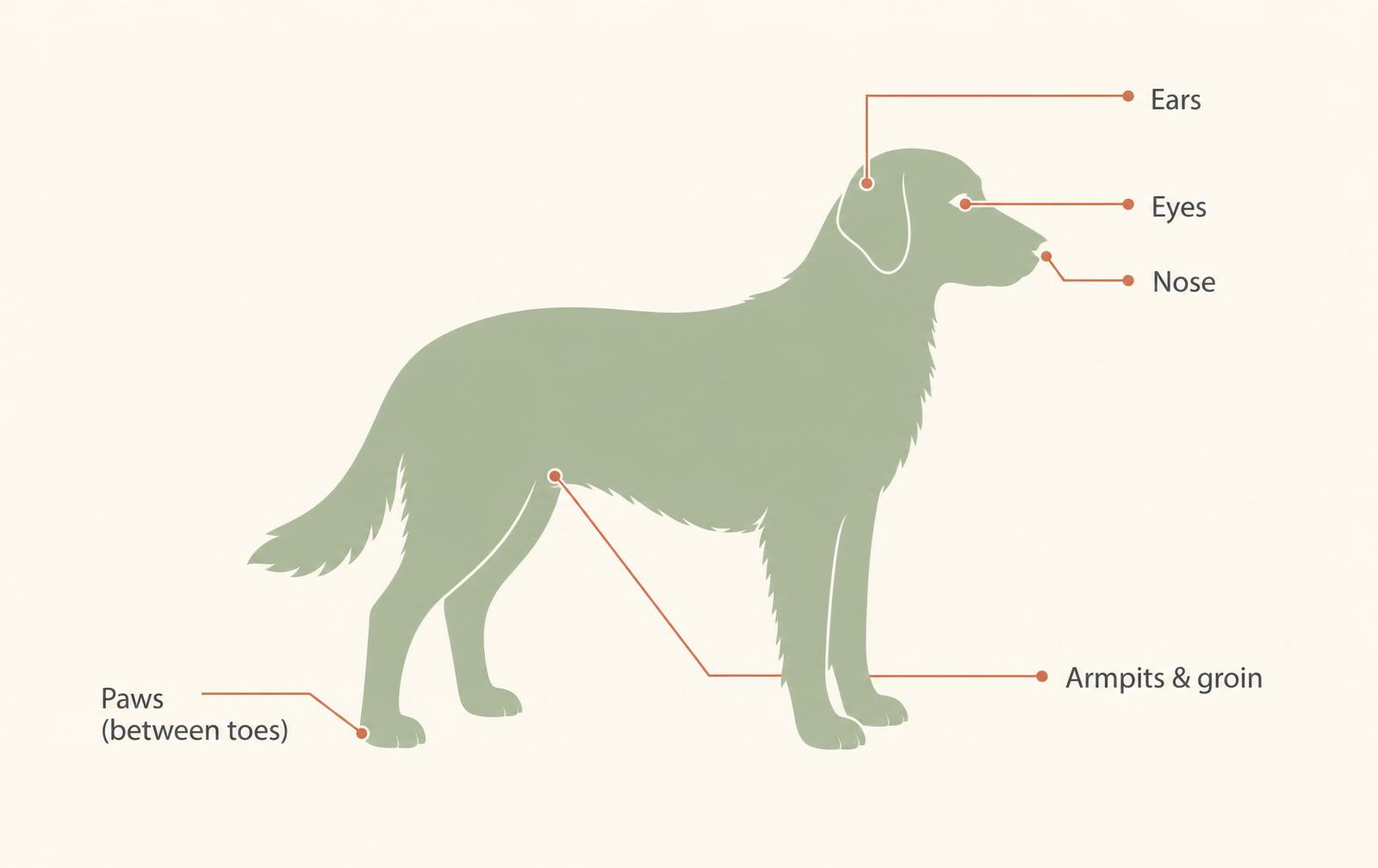
- The five places to check after every walk: between the toes, in the ears, around the eyes, at the nose, and in the 'armpits', groin and tail.
- The signs are behavioural: sudden paw-licking, violent head-shaking, frantic sneezing, a squinting eye, or obsessive licking of one spot.
- Don't dig an embedded seed out yourself. The barbs can snap it, leaving a fragment inside to migrate and infect. Visible in the fur, fine to remove; entering the skin, that's a vet job.
- Prevention is simple: avoid long grass in season, check thoroughly after walks, and trim the fur around paws and ears on hairy breeds.
A grass seed looks like nothing at all. Its shape is the problem: a barbed dart that only travels one way — inward.
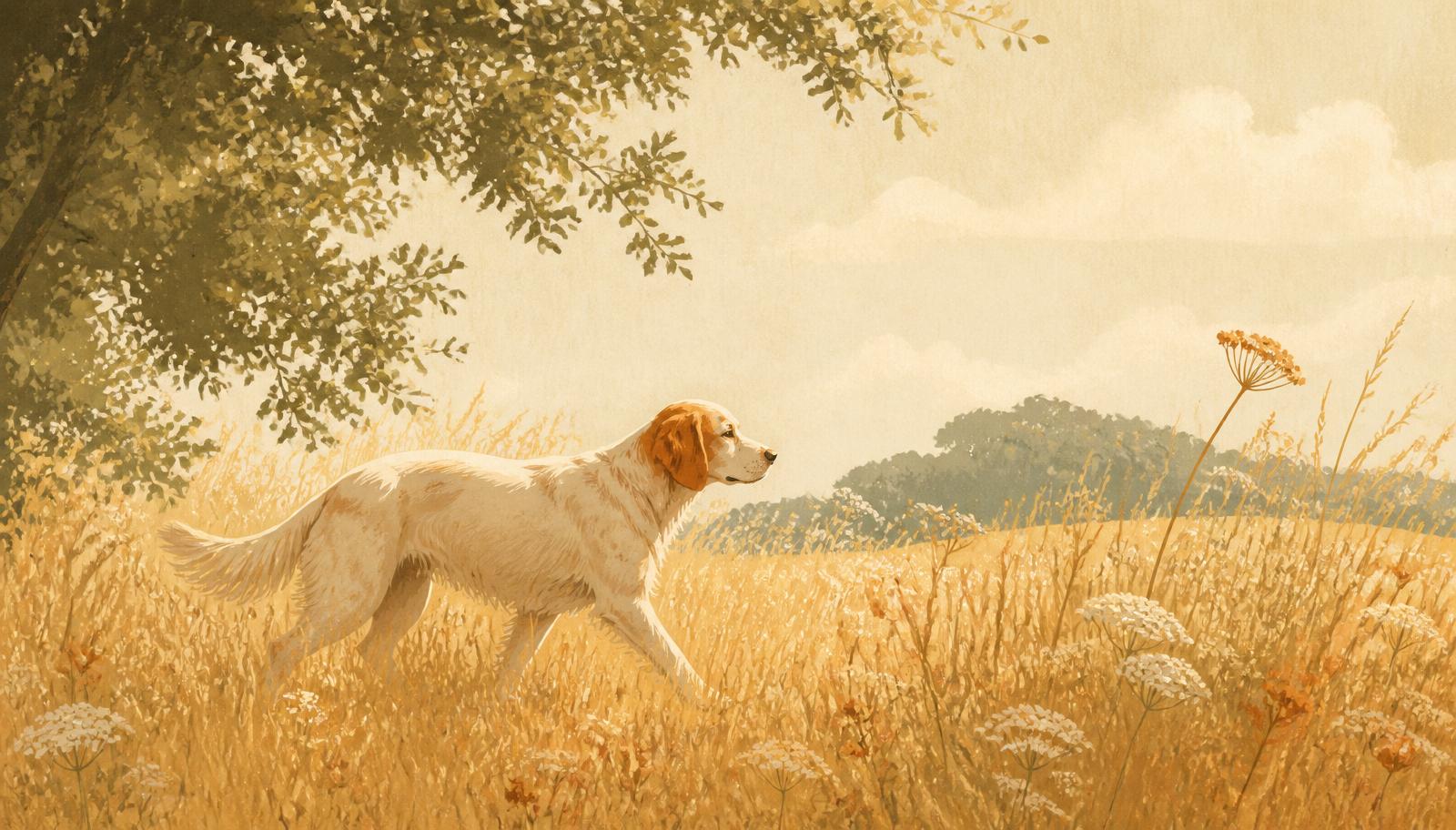
Every summer, vets across the UK see a wave of dogs in genuine distress from something most owners walk past without a second thought. Grass seeds are tiny, dry and utterly innocuous to look at. But their structure turns them into one of the more painful and insidious seasonal hazards a dog can pick up on an ordinary walk, and the damage they do is out of all proportion to their size.
Why something so small does so much harm
Look closely at a grass seed, a grass awn to give it its proper name, and you'll see it resembles a miniature arrowhead or dart: a sharp point at one end, and fine backward-facing barbs along its length. That structure is beautifully designed by nature to help the plant spread, and it's exactly what makes it dangerous to a dog.
The barbs act as a ratchet. Once the pointed end catches in a dog's coat, every movement drives it further in and nothing pushes it back out. It works through the fur to the skin, pierces it, and then keeps going, migrating through the soft tissue underneath. Left alone, a seed can travel a surprising distance inside the body, and in the worst cases reach vital structures like the lungs or spine. What began as an invisible speck in the fur becomes an abscess, an infection, or something needing surgery to find.
The cruel part is that it's so easy to miss. The seed is small, dry and the colour of everything else in a summer field, and by the time it's causing obvious trouble it may already be under the skin and out of sight.
When it happens
Grass seeds are a summer and early-autumn problem, roughly June to October in the UK, peaking in dry, sunny weather when grasses like foxtails and meadow grasses ripen and shed. Long grass in meadows, parks, verges and woodland edges is where dogs pick them up, though an unmown garden will do just as well.
Any dog can be affected, but some are far more prone: breeds with hairy feet and hairy ears — spaniels, retrievers, terriers and similar long or thick-coated dogs — whose fur gives seeds plenty to catch on. If yours is one of them, the after-walk check below matters even more.
The five places to check, and what each looks like
The most useful habit you can build this summer is a quick, thorough once-over after every walk. These are the five danger zones, each with its own tell.
The paws. By far the commonest site. Seeds lodge between the toes, in what vets call the interdigital space, then burrow into the thin skin there. The sign: licking or chewing at one paw, a red swollen lump between the toes, or sudden limping.
The ears. The second commonest, and often dramatic. A seed dropping into the ear canal is intensely irritating and can migrate towards the eardrum. The sign: sudden, violent, repeated head-shaking, tilting the head to one side, or pawing at an ear.
The eyes. A seed can lodge under the eyelid, risking damage to the surface of the eye. The sign: a suddenly watering or squinting eye, held partly shut, with redness or discharge.
The nose. Inhaled seeds cause an unmistakable reaction. The sign: sudden fits of violent, repeated sneezing, pawing at the nose, and sometimes a nosebleed.
The skin, armpits, groin and tail. Seeds work into the coat in the warm, folded areas where legs meet body. The sign: obsessive licking of one spot, or a weeping lump or abscess appearing on the skin.
If you spot any of these after a walk, particularly the head-shaking or the sudden paw-licking, take it seriously and ring your vet.
The mistake to avoid: digging it out yourself
Here is the single most important thing to get right, because the instinct to help can make things worse.
If you find a seed sitting loose in the fur, or just caught at the surface, by all means tease it out gently and thoroughly. That's exactly what the after-walk check is for, and catching them at that stage prevents almost all the trouble.
But if a seed has already begun to enter the skin, is lodged in an ear, eye or nose, or is anywhere you can't clearly see all of it, do not try to pull it out. Those barbs mean it can snap under tension, leaving a fragment buried inside that carries on migrating and causes infection. What's left behind is harder to find and worse than the original problem. Embedded seeds are a job for a vet, who can remove them properly, sometimes under sedation, and use imaging or a minor procedure to locate one that's already travelled. Acting quickly here genuinely changes the outcome: a seed found the same day is a simple fix, while one left for a week can become an abscess or a surgical hunt.
How to prevent them
Prevention is mostly about avoidance and routine.
Keep out of long, seeding grass during the summer months where you reasonably can, sticking to mown paths and open ground. Keep your own lawn short through the season. And build the after-walk check into your routine so it becomes automatic: run your hands through the coat, part the fur between every toe, look inside the ears, and glance at the eyes and nose, paying most attention to wherever your dog has been.
For hairy-footed and hairy-eared breeds, a summer trim helps a great deal, keeping the fur between the toes and around the ear openings short so seeds have less to catch on and are far easier to spot. Regular grooming through the season does the same job for long coats generally.
A quick word on cats
Cats are far less troubled by grass seeds than dogs, for two reasons: they groom themselves meticulously, often removing a seed before it embeds, and they tend not to go crashing through long meadow grass the way an off-lead dog does. It's not impossible, particularly in long-haired outdoor cats, so the same signs are worth knowing, but in practice this is overwhelmingly a canine problem.
The bottom line
Grass seeds are the summer hazard most owners underestimate, precisely because they look like nothing. Their barbed shape lets them burrow in and travel, turning a speck picked up on a walk into an abscess or a surgical hunt if it's missed. The defence is simple and effective: keep out of long grass in season, check your dog over after every walk — paws, ears, eyes, nose and armpits — and trim hairy feet and ears through the summer.
And if you find one that's already going in, resist the urge to dig it out. Loose in the fur, remove it. Under the skin, that's the vet's job, and the sooner the better.
This is general information, not veterinary advice. If you think your dog has a grass seed lodged in the skin, ear, eye or nose, or is showing any of the signs above, contact your vet promptly.
Common questions
Frequently asked.
Keep reading
Further reading.
Want plain-English notes on pet health and the things that affect it? Join The Once-Over, our weekly note from Hazel.