Seasonal Health · Cat · 13 Nov 2026
Antifreeze and Cats: Why the First Few Hours Matter
By Burrow · 13 Nov 2026
TL;DR
- **A tiny amount can kill.** The estimated minimum lethal dose of undiluted ethylene glycol for an average cat is about a teaspoon, and smaller exposures are not safe.
- **It's in more than antifreeze.** Some screen washes, de-icers and brake fluids, some garden water features and some snow globes can contain it.
- **Exposure is rarely seen.** Cats can be poisoned by licking a spill, drinking contaminated water or grooming it off their paws.
- **The signs can fade, then return.** Early drunk-like signs may appear to settle before kidney failure develops within a day or so.
- **Early treatment matters most.** In a small experimental study, cats treated within three hours survived. Any suspected exposure is still an emergency, however much time has passed.
- **Act on suspicion.** If your cat may have been exposed, or seems wobbly and quiet, call a vet straight away.
Antifreeze is one of the most dangerous poisons a cat can meet, and winter is when exposure is most likely. It usually happens unseen, the early signs are easy to dismiss, and treatment works best when it starts early, so knowing what to look for, and acting on suspicion, can make the difference.
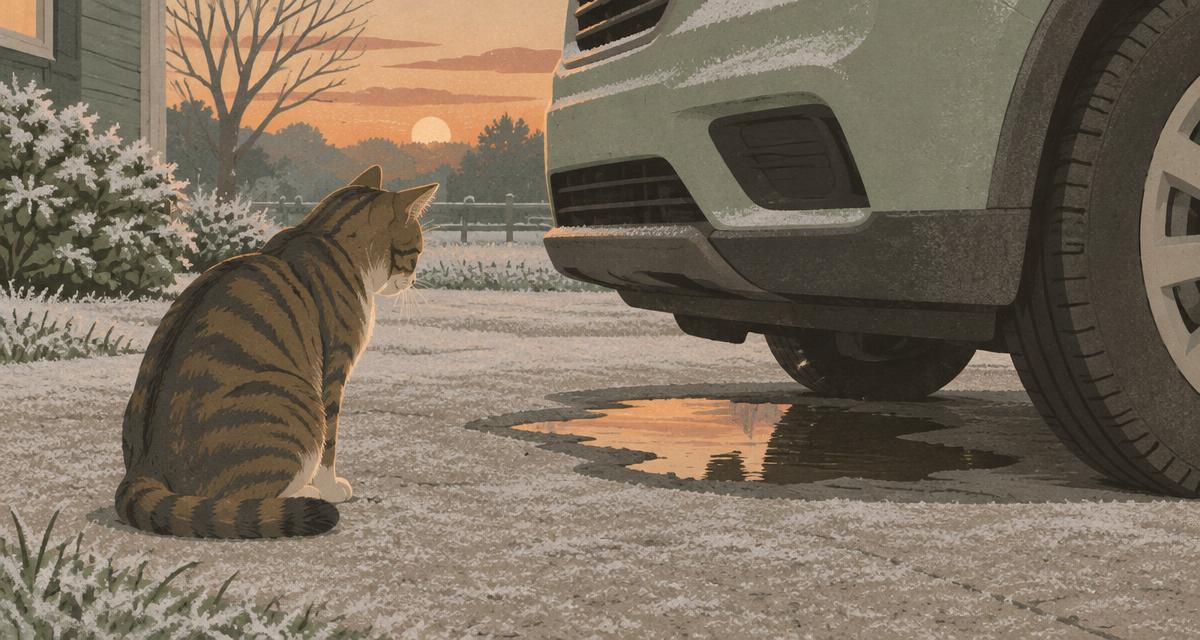
As the weather turns cold, antifreeze comes out of garages and into car engines, windscreen bottles and spray cans of de-icer. Many conventional antifreeze products are based on ethylene glycol, a chemical to which cats are especially sensitive. There are no national statistics on what kills pets in the UK, but the Veterinary Poisons Information Service (VPIS), which advises vets and owners on poisoning cases, collects outcomes on a proportion of the cases it handles. Of the eight cat deaths recorded in its 2025 follow-ups, suspected ethylene glycol was the most common agent, and in earlier annual reports it accounted for between 30% and 45% of the cat fatalities recorded. The Merck Veterinary Manual notes that in colder climates, cases cluster in autumn, winter and early spring.
The difficulty is that most owners never see it happen. A cat comes home a little unsteady, or seems quieter than usual, and by the time the cause becomes clear, the best chance for treatment may have passed. Understanding how little it takes, where cats find it and how quickly it acts is the best protection there is.
How little it takes
Cats are especially sensitive to ethylene glycol. The Merck Veterinary Manual gives the minimum lethal dose of undiluted ethylene glycol as 1.4 mL per kilogram in cats, compared with 4.4 to 6.6 mL per kilogram in dogs. For a typical 4kg cat, that works out at around 5.6 mL, roughly a teaspoon. This is an estimated minimum lethal dose, not a line below which exposure is safe: smaller amounts can still cause serious harm, and any suspected exposure needs a vet.
Concentration matters too. Merck notes that commercial antifreeze can contain up to 95% ethylene glycol, but it is usually diluted to around half strength in a car's cooling system, so a drip from a radiator is weaker than neat product from the bottle. That does not make small spills harmless. A cat does not need to drink deliberately to be poisoned. PDSA warns that cats can be harmed by grooming ethylene glycol off their fur or paws after walking through a spillage, and that they may even be poisoned by drinking rainwater collected in a container that once held antifreeze.
Where cats find it
Antifreeze in car radiators is the best-known source, but it is not the only one. PDSA lists screen wash, brake fluid and radiator fluid as products that can contain ethylene glycol, along with some garden water features, where it is sometimes added to stop them freezing. Formulations vary, and many screen washes and de-icers do not contain it, so check the label or the product's safety data sheet rather than assuming either way.
Christmas adds another. Cats Protection has warned that some snow globes contain ethylene glycol, and that even a small crack can allow it to seep out. A UK National Poisons Information Service review notes that manufacturers have reportedly added ethylene glycol to snow globes, at up to 20% of the water volume, to stop them freezing during transit or storage. Snow globes are not labelled with their contents, so it is safest to assume any liquid-filled ornament could contain it and keep them where cats cannot reach or knock them over.
Why cats drink it at all is less clear than it is often made to sound. Ethylene glycol is widely described as sweet-tasting, and PDSA says this is what tempts cats. Cats Protection points out, however, that cats do not taste sweetness as we do, yet can still be tempted to drink it. Whatever draws them, cats do drink it, and that is what matters for prevention.
The signs, and why an apparent recovery can mislead
Ethylene glycol is absorbed quickly, and the signs unfold in stages. According to Merck, the first signs appear between 30 minutes and 12 hours after ingestion and resemble drunkenness: vomiting, wobbliness and unsteadiness, and increased drinking and urinating. PDSA adds lethargy, rapid or difficult breathing, seizures and collapse.
What makes ethylene glycol especially treacherous is what can happen next. Merck notes that a brief apparent recovery may occur around 12 hours after ingestion. Meanwhile, the liver is converting ethylene glycol into compounds that damage the kidneys, and in cats, kidney failure follows 12 to 24 hours after ingestion. A cat that seemed drunk in the evening and brighter by the morning may be getting worse, not better.
Because the early signs are vague and the exposure is usually unseen, PDSA advises contacting a vet straight away if your cat shows any of these signs, even if you are not sure it has been near antifreeze.
Why early treatment matters
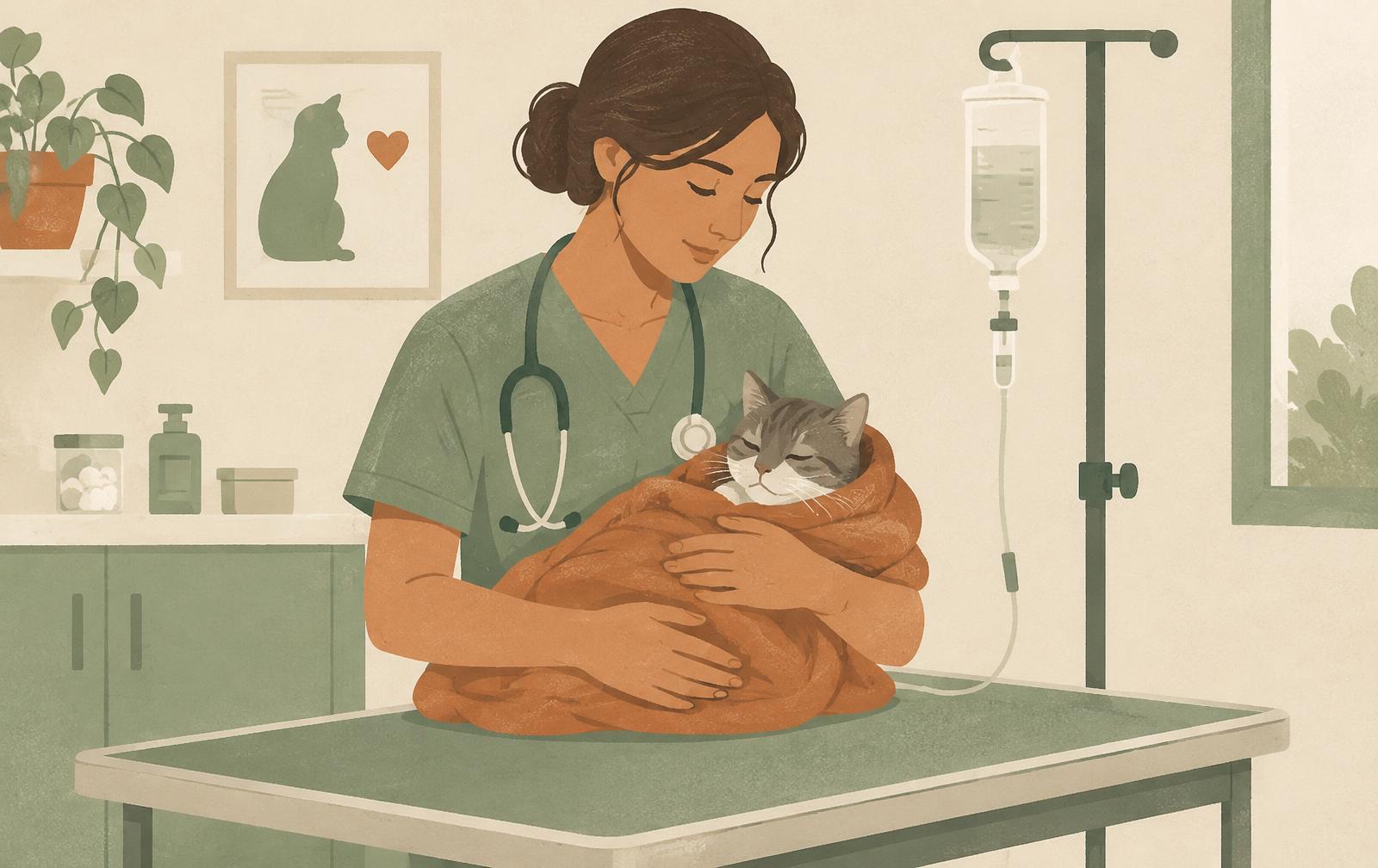
Treatment is a race against the body's own chemistry. Vets use medicines that block the liver from turning ethylene glycol into its toxic products, so that more of it can be passed out unchanged. Merck lists fomepizole and ethanol as the options, alongside intravenous fluids and supportive care. In the UK, ethanol is commonly used, partly because, as a Vet Times clinical article notes, fomepizole is very expensive and cats need around six times the dose given to dogs.
The clearest evidence on timing comes from a small experimental study in which cats were given potentially lethal doses of ethylene glycol. Cats treated with high-dose fomepizole within three hours survived, although one developed acute kidney failure before recovering. Cats treated four hours after ingestion developed kidney failure, whether they were given fomepizole or ethanol. The study was small and carried out under controlled conditions, so three hours is not an absolute deadline. The practical message is simpler: treatment should begin as soon as possible, and a cat needs emergency veterinary attention even if several hours have already passed. Merck notes that the crystals linked to a poor outlook can appear in a cat's urine as early as three hours after ingestion.
PDSA says treatment is likely to involve hospitalisation, medication to make the cat sick in the very early stages only, a specific medicine to counter the poison, a drip to support the kidneys and washing any antifreeze off the coat. Once kidney failure has developed, the outlook is poor, and PDSA notes that sadly, most cats die unless treated very quickly.
What to do if you suspect antifreeze
If you see your cat drink or walk through something that could contain ethylene glycol, or if your cat suddenly seems wobbly, drunk or unusually quiet, call your vet or an out-of-hours vet immediately. Do not wait for more signs to appear. PDSA's advice is clear: never wait for symptoms to develop, because the quicker a cat is treated, the better its chance of survival.
Leave any attempt to make your cat sick to the vet. Merck notes that ethylene glycol is absorbed so quickly that inducing vomiting may not help, and that it should not be done in an animal already showing neurological signs. If you know what your cat may have been exposed to, take the product or a photograph of its label with you.
Preventing exposure
Most poisonings are preventable, and the most effective step is not having ethylene glycol within a cat's reach in the first place. PDSA advises:
- Choosing screen washes, de-icers and other products that do not contain ethylene glycol wherever you can, and never using antifreeze in garden ponds or water features.
- Storing any products that do contain it in sealed, clearly labelled containers, out of reach of animals and children.
- Clearing up any spills straight away and fully.
- Disposing of old antifreeze containers, which can collect rainwater.
Some antifreeze products contain a bittering agent intended to make them unpalatable. PDSA suggests choosing one where possible, but warns that it is not completely reliable and cats may still drink it. Merck notes that manufacturers in the United States have added bittering agents since 2012, but that the products may still appeal to some animals, and a bittering agent does nothing to stop a cat licking a spill off its paws. It is a secondary precaution at best, not a reason to relax about storage or spills.
Products based on propylene glycol are widely described as much less toxic than ethylene glycol, although less toxic does not mean harmless. Indoors, keep snow globes and other liquid-filled ornaments well out of reach, and clean up thoroughly if one breaks.
Try this today
Check your garage, shed and car boot for antifreeze, screen wash and de-icer, and look at the labels for ethylene glycol. Where you can, swap to products without it. Make sure anything you keep is sealed and stored out of reach, and throw out any empty containers. Look under your car for drips. If you have a snow globe, move it somewhere your cat cannot knock it down. Finally, save your nearest out-of-hours vet's number in your phone, so you are not searching for it if the worst happens.
The Bottom Line
Antifreeze poisoning is one of the most serious emergencies a cat owner can face, and one of the most preventable. A teaspoon of undiluted ethylene glycol can kill, cats can be poisoned simply by grooming it off their paws, and the early signs may fade before kidney failure sets in. Treatment works best when it starts early, so if there is any chance your cat has been exposed, or it suddenly seems wobbly or unwell, call a vet straight away rather than waiting to see. At home, choose products without ethylene glycol where you can, store the rest safely, clear up spills and keep snow globes out of reach.
This article is for general information and does not replace veterinary advice. If you think your cat has been exposed to antifreeze or any product containing ethylene glycol, contact your vet or an out-of-hours vet immediately.
Common questions
Frequently asked.
References
Sources.
- Merck Veterinary Manual. Ethylene Glycol Toxicosis in Animals. Regehr T. Reviewed January 2022, modified September 2024.
merckvetmanual.com - PDSA. Antifreeze poisoning in cats. January 2024.
pdsa.org.uk - Cats Protection. Antifreeze poisoning.
cats.org.uk - Veterinary Poisons Information Service. Annual Report 2025.
vpisglobal.com - Veterinary Poisons Information Service. Annual Report 2019.
vpisglobal.com - Veterinary Poisons Information Service. Annual Report 2017.
vpisglobal.com - Veterinary Poisons Information Service. Annual Report 2016.
vpisglobal.com - Veterinary Poisons Information Service. Annual Report 2012.
vpisglobal.com - Connally HE, Thrall MA, Hamar DW. Safety and efficacy of high-dose fomepizole compared with ethanol as therapy for ethylene glycol intoxication in cats. Journal of Veterinary Emergency and Critical Care. 2010;20(2):191–206.
doi.org - Vet Times. Ethylene glycol: a common toxicity in cats.
vettimes.com - MRCVSonline. Cats Protection warns owners to keep cats away from snow globes.
mrcvs.co.uk - Harbon SCD, Vale JA, Eddleston M, Thomas SHL, Thompson JP. Behind the scenes of snow globe toxicity. National Poisons Information Service, 2016.
npis.org
Keep reading
Further reading.
Want plain-English notes on seasonal pet health? Join The Once-Over, our weekly note from Hazel.