Research · Dog · 24 Sept 2026
Why Are Dogs Suddenly Developing Severe Dry Eye?
By Burrow · 24 Sept 2026
TL;DR
- UK veterinary ophthalmologists are investigating an apparent increase in dogs developing acute bilateral keratoconjunctivitis sicca (KCS) — sudden dry eye affecting both eyes.
- The British Association of Veterinary Ophthalmologists says more than 200 cases have been reported through its survey, although those reports are still being validated and analysed.
- Fresh dog-food company Years recalled its meals in August after reports among dogs eating its food. It says around 63,000 dogs had eaten Years food during the investigation period.
- The investigation is not confined to Years. BrAVO says affected dogs have eaten a range of diets, and no causal relationship has been established with any particular food, ingredient or manufacturer.
- Some affected dogs may have sustained significant damage to their tear-producing glands, so removing a suspected trigger may not restore normal tear production.
- Suddenly red, painful, discharging or unusually dry-looking eyes deserve prompt veterinary attention.
Veterinary eye specialists are investigating more than 200 reports of dogs suddenly developing dry eye in both eyes. A dog-food recall put diet at the centre of the story — but affected dogs haven't all eaten the same food, and the cause remains unknown.
Dry eye isn't a new condition in dogs. Keratoconjunctivitis sicca, usually shortened to KCS, occurs when the eyes don't produce enough of the watery component of tears. Without an adequate tear film, the surface of the eye becomes irritated and can eventually be damaged.
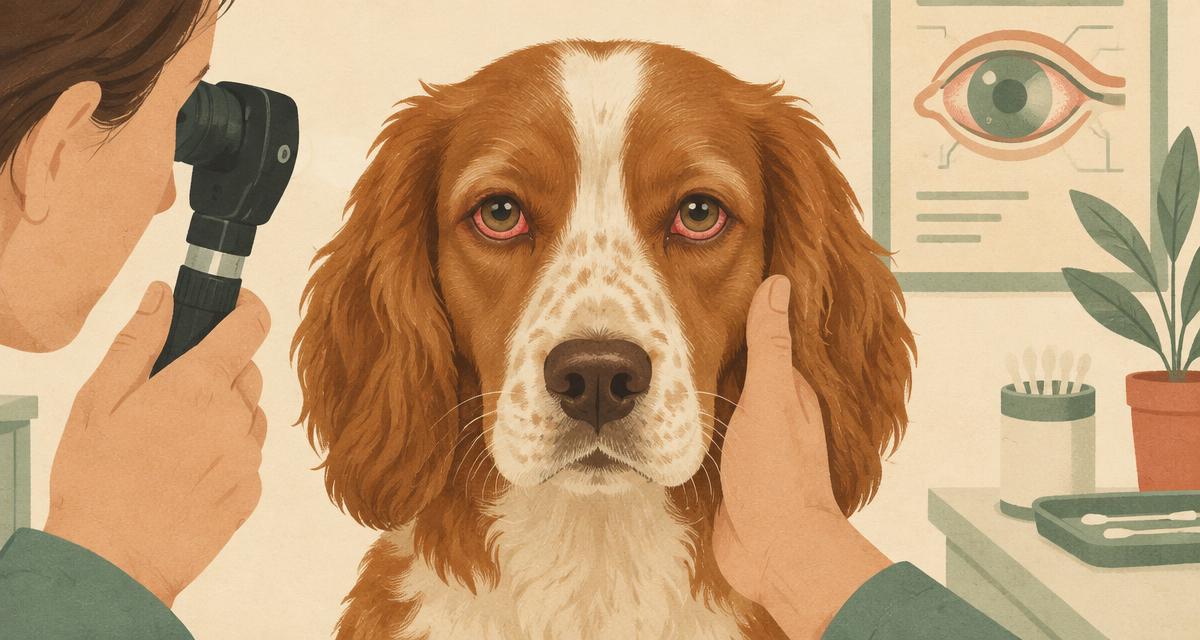
What has concerned veterinary ophthalmologists this year is not simply that dogs are developing KCS. It is the sudden appearance of severe disease in both eyes in a number of dogs.
Something unusual is happening
The British Association of Veterinary Ophthalmologists, BrAVO, is now carrying out an independent UK-wide investigation into an apparent increase in acute bilateral KCS. As of 23 September, it said more than 200 cases had been reported through its survey.
That figure needs context. These are reports submitted for investigation, and BrAVO says they are still being validated and analysed. We don't yet have a published epidemiological study establishing the incidence of this presentation, or precisely how much more frequently it is occurring than expected.
But the reports are sufficiently unusual for specialist veterinary ophthalmologists to investigate them.
Why dog food became part of the story
One manufacturer became involved early. Fresh dog-food company Years began investigating after customers reported dogs developing sudden dry eye in both eyes, and as reports accumulated, the company voluntarily recalled its fresh meals on 17 August. Attention focused particularly on buckwheat, which had been introduced into its recipes.
That created an obvious hypothesis: dogs eating the same food had developed an unusual condition, and perhaps something in that food was responsible. But the investigation hasn't established that.
Years says approximately 63,000 dogs were fed its food between 1 March and 17 August. Case data published alongside its investigation identified 155 cases in dogs fed Years food, plus 96 cases in dogs that had never eaten Years — including cases in Finland and Hungary, where the company doesn't sell its food.
Those numbers shouldn't be treated as an incidence study. The cases have not all been independently validated, reporting intensified after the recall became public, and the company itself has acknowledged that publicity is likely to have produced reporting bias towards its customers. That is exactly why the independent BrAVO investigation matters.
BrAVO says affected dogs have eaten a range of diets and has asked vets to report relevant cases regardless of what food the dog was eating. Its current position is straightforward: no causal relationship has been established between this form of KCS and any particular food, ingredient or manufacturer.
What did Years find?
Years investigated its food, ingredients, manufacturing process and packaging. The company says its investigation generated 21,757 individual test results covering 1,129 substances, without identifying contamination, toxins, packaging migration, a manufacturing problem or another food-safety issue that explained the cases.
That doesn't prove food cannot be involved. Testing can only identify what it is designed and capable of finding, and an unexplained cluster cannot be resolved simply by failing to find a contaminant. But nor is there currently evidence that allows us to say Years food — or buckwheat — caused these dogs' eye disease.
Interestingly, Years says it plans to restart deliveries with buckwheat-free recipes, despite saying its investigation found no evidence that buckwheat was responsible. The company describes the decision as precautionary and responsive to customer concerns.
So where does that leave us? With a suspected association that was important enough to investigate and trigger a recall, but without an established cause.
What else could be causing it?
We don't know. That is unsatisfying, but currently it's the scientifically defensible answer.
Investigators first need to determine whether the reported cases represent the same clinical phenomenon. They can then look for common exposures and compare affected dogs with those that haven't developed the condition. Diet remains one possible avenue of investigation, but it isn't the only one — medication, environmental exposures, underlying disease, immune-mediated processes and other shared factors may also need consideration, and more than one factor could be involved.
There is also a classic problem in investigating apparent disease clusters: awareness changes reporting. Once vets and owners know that a particular condition is being investigated, they're more likely to recognise and report it. That can help reveal a genuine safety signal, but it can also make an existing condition suddenly appear much more common. The purpose of collecting and validating the cases is to separate those possibilities.
What happens when a dog develops dry eye
Tears do considerably more than make an eye wet. The tear film lubricates and protects the cornea and conjunctiva, supplies nutrients to the ocular surface and helps remove debris.
When tear production falls substantially, dogs can develop redness, thick or sticky discharge, frequent blinking, squinting, rubbing at the eyes and a dry or dull-looking cornea. Severe disease can damage the surface of the eye and potentially threaten vision.
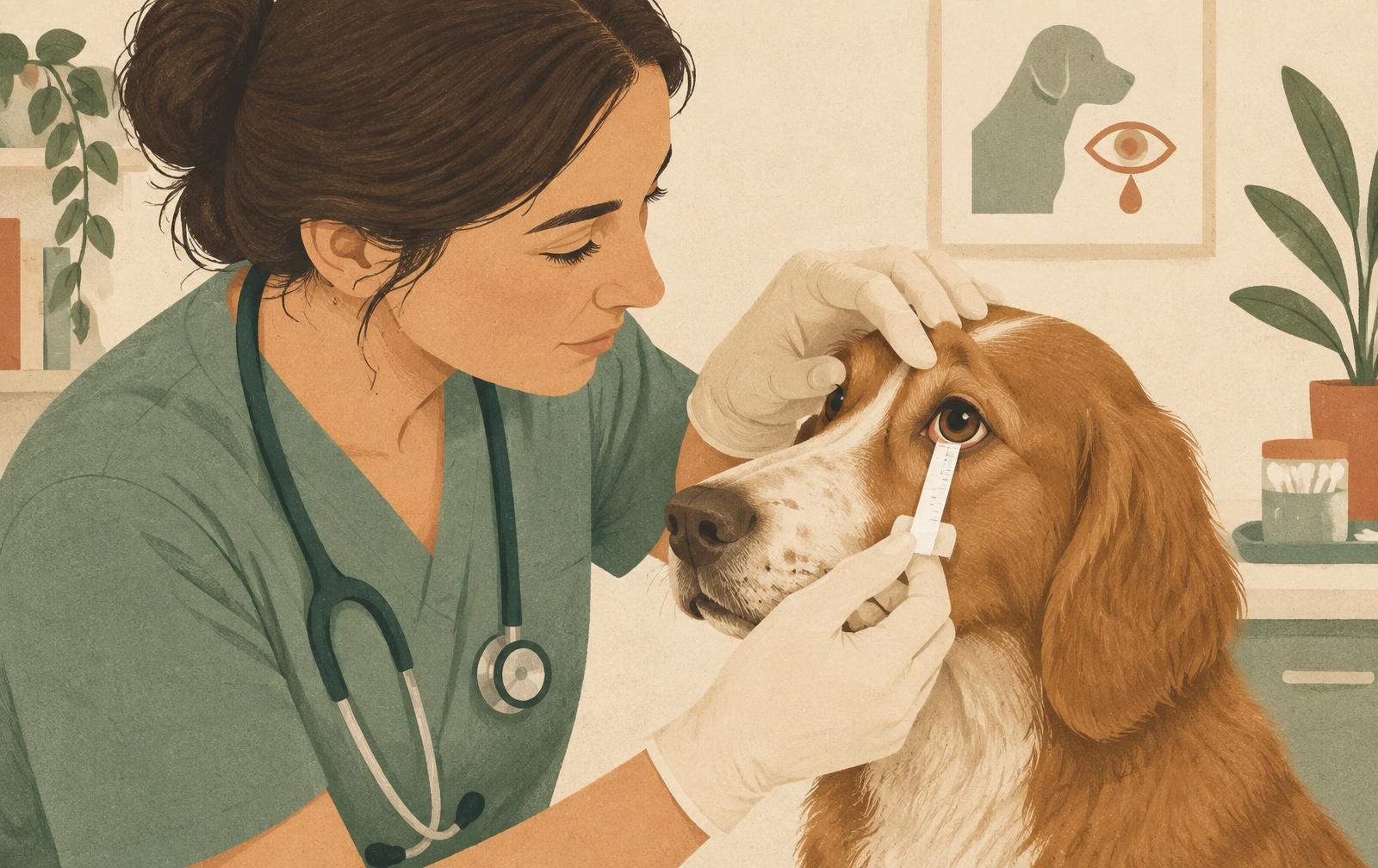
A vet can assess aqueous tear production using a Schirmer tear test, in which a small strip of paper is placed inside the lower eyelid and the amount of moisture travelling along it over a set period provides a measure of tear production.
The concern in the current cluster is the apparent speed and severity of the loss of tear production in some dogs. BrAVO says significant injury to the tear-producing glands is suspected in some affected animals.
Changing the food may not fix the eyes
This is particularly important for owners whose dogs have already been diagnosed. Even if an exposure is eventually identified as the trigger, removing it doesn't necessarily undo damage that has already occurred. If the glands responsible for producing tears have been significantly injured, normal tear production may not simply return when a suspected food or environmental factor is removed.
BrAVO has therefore warned owners not to stop prescribed KCS treatment unless advised to do so by their vet or veterinary ophthalmologist. The question of what originally triggered the disease and the question of what the dog's eyes need now are separate.
What owners should look for
There is no reason to start inspecting a healthy dog's eyes obsessively because of this investigation. But eye changes deserve respect, because conditions that look similar at home can require very different treatment.
Contact your vet promptly if your dog suddenly develops persistent redness, squinting or obvious eye discomfort; thick or sticky discharge; repeated rubbing at the eyes; or eyes that appear unusually dry, dull or cloudy.
Dry eye is only one possibility. Corneal ulcers, foreign bodies, glaucoma, uveitis and other eye conditions can produce overlapping signs. This is therefore not a situation where trying some eye drops and waiting several days to see what happens is particularly useful.
If your dog is already receiving treatment for KCS, don't alter or stop it because you've changed its food unless your vet advises you to.
Should you change your dog's food?
For most owners, nothing needs to change on the basis of this investigation alone. There is currently no ingredient that BrAVO is advising all dog owners to avoid, and no particular diet has been established as the cause.
Owners affected by the Years recall should follow the manufacturer's recall advice and discuss concerns with their vet, particularly if their dog has developed eye symptoms. For everybody else, switching foods speculatively risks getting ahead of the evidence.
The useful thing to watch isn't an ingredient list. It's your dog.
The bottom line
There is enough here to justify a serious investigation. More than 200 reports of acute bilateral dry eye have reached BrAVO, and some dogs appear to have experienced profound loss of tear production.
The initial concentration of reports among dogs eating one food was important. It prompted a recall and deserved investigation. But the investigation is not confined to dogs eating that food — affected dogs have eaten different diets, testing has not identified an explanation, and BrAVO has not established a causal relationship with any food, ingredient or manufacturer.
The signal is real enough to investigate. The explanation isn't there yet.
For owners, that means avoiding two equally premature conclusions: that a particular food has been proved responsible, or that food has been completely ruled out. What matters today is simpler. If your dog's eyes suddenly become red, painful, sticky, dull or unusually dry, get them checked. And if your dog is already being treated for KCS, don't stop that treatment simply because a suspected trigger has been removed.
Burrow provides evidence-led pet health information and is not a substitute for veterinary diagnosis or treatment. Eye problems can deteriorate quickly. If your dog develops sudden eye pain, redness, discharge, cloudiness or changes in vision, contact your vet.
Common questions
Frequently asked.
References
Sources.
- British Association of Veterinary Ophthalmologists (BrAVO), statement and case-reporting information on acute bilateral KCS in dogs, September 2026 — via Vet Times.
- Years, recall and investigation updates, July–September 2026 — via Improve International and Pet Business World.
- UK national reporting on the recall and investigation, including The Standard, August–September 2026.
Keep reading
Further reading.
Want calm, evidence-led notes on pet health research? Join The Once-Over, our weekly note from Hazel.