Fish & Aquatics · Fish · 06 Nov 2026
Does Your Fish Tank Need Different Care in Winter?
By Burrow · 06 Nov 2026
TL;DR
- **Don't automatically turn up the heater.** Keep the water within the right range for your fish, not a higher winter setting.
- **Stability is what matters.** Abrupt temperature changes can stress fish and affect their immune response.
- **Check the actual temperature.** A separate thermometer is more useful than the heater's dial, because heaters and thermostats can fail.
- **Coldwater tanks need attention too.** Goldfish may not need heating, but they still need suitable, stable conditions.
- **Match water-change temperatures.** Cold tap water added in winter can cause a sudden drop.
- **Have a power-cut plan.** Insulate the tank, keep water moving if you can, and avoid unnecessary feeding while filtration is interrupted.
Your aquarium may be indoors, but the room around it changes with the seasons. Winter care is less about making the water warmer and more about keeping the right conditions steady.
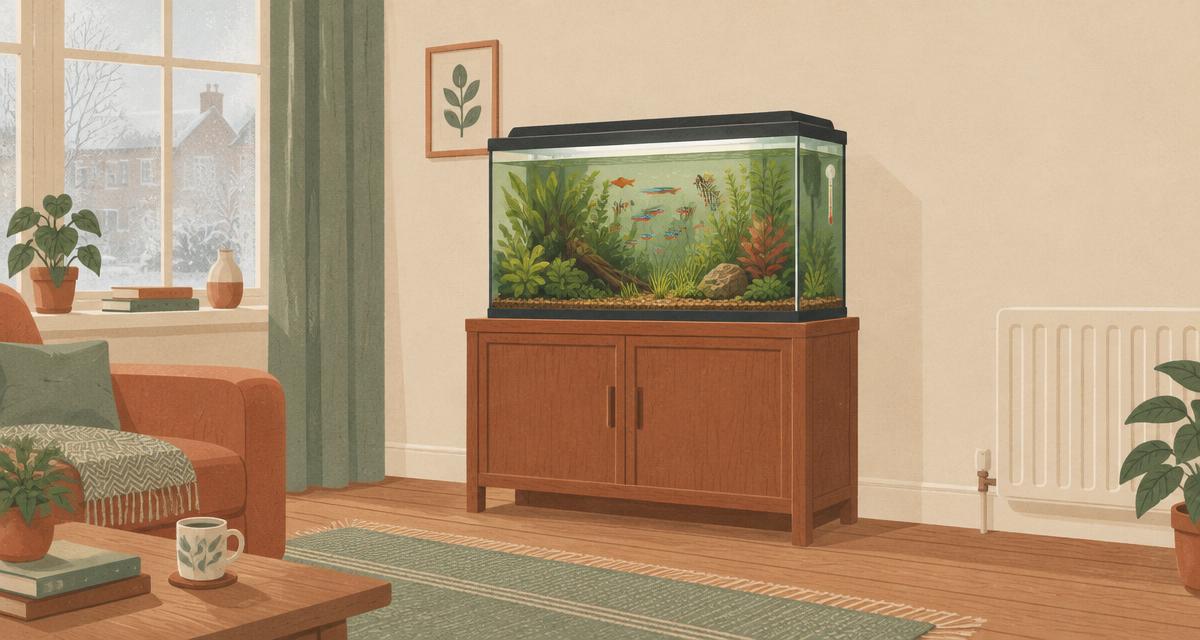
A fish tank in a centrally heated home can seem insulated from the British winter. The fish are indoors, the heater has a thermostat and the filter runs continuously. For many established aquariums, November is not very different from July. If the water stays at the right temperature and the equipment works, there may be little reason to change the routine.
But homes do not stay at the same temperature all year. Heating goes off overnight, cold air comes in through doors, and some rooms become much cooler than others. A tank that held its temperature easily in summer may put more demand on its heater in winter, and winter storms bring power cuts. The useful question is not whether winter requires warmer water, but whether the aquarium is still providing the conditions its fish need.
Why stability matters
Fish are ectothermic, meaning their body temperature is largely determined by their surroundings. Temperature influences their metabolism, immune function and susceptibility to disease. The Merck Veterinary Manual notes that sudden temperature changes, even of a few degrees, can compromise immunity and make some infections more harmful, and that white spot is more common when temperatures fluctuate or the seasons change. That does not mean every small fluctuation will make fish ill, and white spot still needs the parasite to be present. The aim is to avoid abrupt or sustained changes outside the range appropriate for the species.
The RSPCA notes that larger volumes of water have more stable temperatures, which is one reason small tanks change temperature more quickly when a room cools down.
The room changes, even when the tank looks the same
An aquarium constantly exchanges heat with the room around it. In a warm room, a tropical tank's heater may only switch on now and then. As the room cools, it has to supply more heat to hold the same temperature. That matters most in rooms that get particularly cold overnight, in conservatories and in rooms where the heating is off for long periods.
The RSPCA's winter advice is to check for draughts and temperature fluctuations in the room, and to keep tanks away from windows, doors and radiators to maintain a stable environment. A tank beside a radiator can warm and cool as the heating cycles on and off, which is the kind of swing to avoid.
Moving an established aquarium is not always practical or safe. A better first step is to measure the water temperature at different times of day and check whether the heater is keeping it steady. If it is, the tank may need no seasonal adjustment at all.
Should you turn up your aquarium heater?
Usually, no. A thermostatically controlled heater is designed to hold a chosen water temperature. If your tropical aquarium is normally kept at 25°C, winter does not mean it should suddenly be set to 27°C.
The right temperature depends on the species. The RSPCA describes tropical fish as usually thriving between 24°C and 28°C as a general range, and gives guppies as an example of fish that tolerate approximately 22–28°C, but other species have different requirements. Research every species in the tank. In mixed aquariums, choose fish whose preferred temperature ranges overlap, and do not make a tank warmer or colder to suit one species if that pushes another outside its range.
The RSPCA advises that all heaters must be controlled by a thermostat, and that because heaters and thermostats can fail, you should use a digital thermometer and check the temperature every day. Check at a consistent time, and if the room gets much colder overnight, take an extra reading first thing in the morning. Check too that water circulates freely around the heater and that it is installed according to the manufacturer's instructions. Poor circulation can create uneven heating, and incorrect placement can affect how well the thermostat works. If the water is repeatedly below the right range, look at the heater, its position and the room before simply turning up the setting.
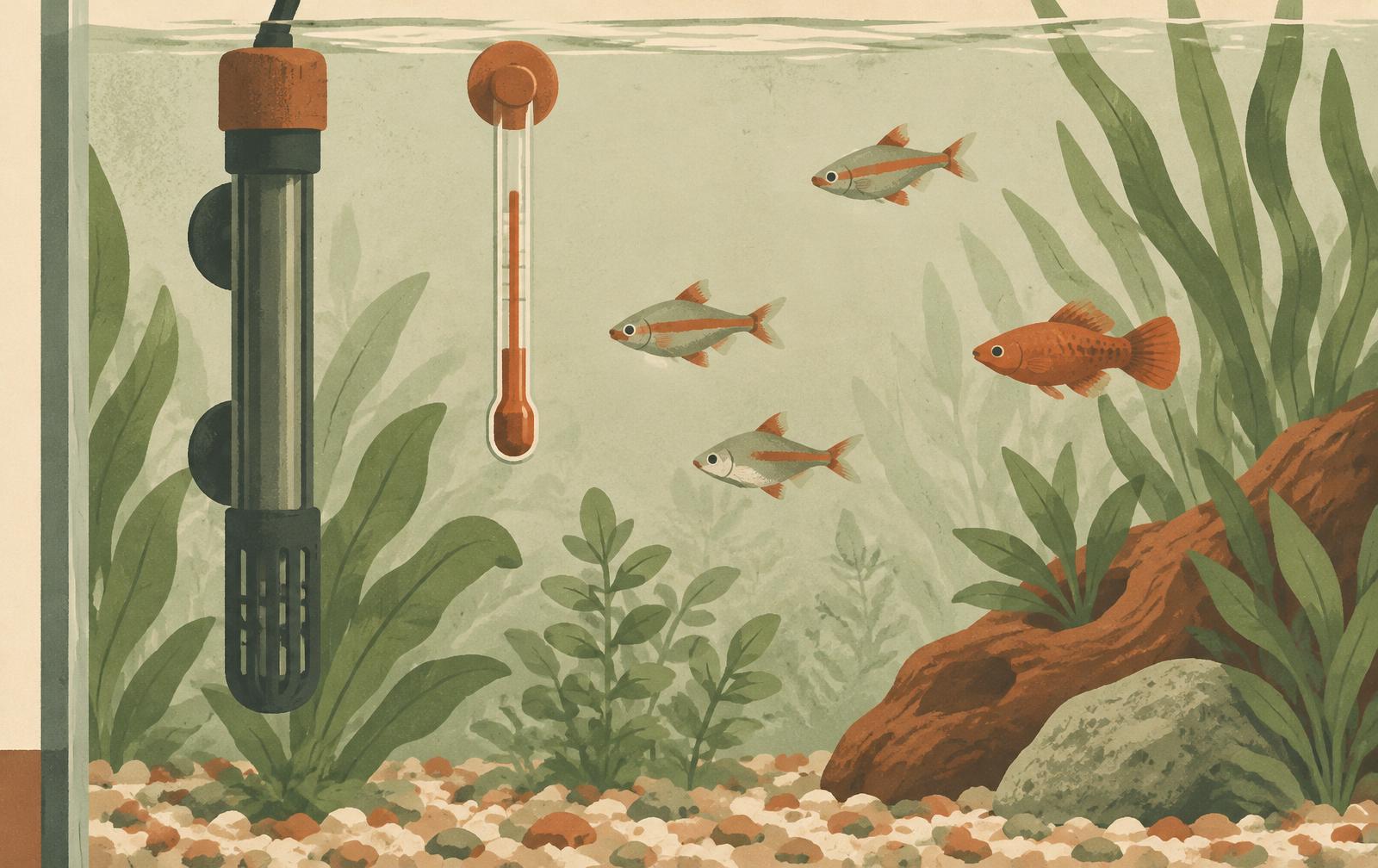
Tropical, coldwater and the space between
Tropical fish generally need a heater in British homes. Even when a room feels warm to the people in it, the water may be cooler than the fish need.
Coldwater fish are not simply fish that tolerate any temperature above freezing. Goldfish need cooler water than most tropical fish, and the RSPCA gives guidance of 10–21°C for them. A heater is not normally necessary, but an unheated tank follows the temperature of the room, and in a cold room in winter it can drop and swing between day and night. The RSPCA suggests that if you are concerned about temperature swings, you could include a heater set at the lower limit of the range.
Other fish sold for unheated tanks have their own needs, so base their care on the species, not on the absence of a heater.
What happens if a heater fails?
Heaters can fail in more than one way. A heater may stop working, letting the tank cool towards room temperature, which in winter is colder than at any other time of year. A faulty thermostat can also leave a heater stuck on, causing dangerous overheating. Merck lists both power failure and thermostat failure among the common environmental hazards for fish, with consequences that range from infection to sudden death.
Before inspecting, removing or replacing a submerged heater, disconnect it from the electricity supply and follow the manufacturer's instructions. Aquarium heaters can remain hot after being switched off, and damaged glass heaters should not be handled or reused. Never operate a heater outside water unless its manufacturer specifically permits it.
If the tank seems too cold, confirm the reading with a reliable thermometer and check that the heater has power and is working. If it has failed, replace it with a correctly sized, thermostatically controlled heater suitable for the tank. A gradual drop may first make fish less active or less interested in food. A sudden or large change is more serious, particularly for species with narrow ranges. Avoid pouring hot water into the aquarium or making a large, sudden change to the thermostat, as rapid changes add stress.
If the water is substantially warmer than it should be, check the reading with a second thermometer and disconnect a suspected faulty heater safely. Increase aeration if needed, since warmer water holds less dissolved oxygen. Seek urgent specialist advice if fish are distressed, and avoid suddenly cooling the aquarium with ice or large quantities of cold water.
A thermometer with a temperature alarm can be useful for a heavily stocked or valuable aquarium, although it is not essential for every home tank.
What to do in a winter power cut
A power cut affects more than the heater, because filters and air pumps stop at the same time. A tropical tank will gradually cool towards room temperature, and how quickly depends on its size and the room. In a heavily stocked tank, the loss of water movement and filtration may become urgent before the temperature changes much.
UK Power Networks recommends insulating the aquarium with blankets, including the top, which it identifies as where most heat is lost, to slow heat loss, and using hot water bottles around the outside where appropriate. Keep hot water bottles wrapped rather than pressing them directly against the glass, and keep blankets clear of electrical equipment, ventilation openings and plugs. Do not seal the aquarium or obstruct necessary gas exchange. A battery-powered air pump can help maintain aeration if the filter stops.
Many healthy adult aquarium fish can tolerate a short interruption to feeding, and reducing food during a power cut may help limit waste while filtration is unavailable, as North Carolina State University's vet school notes. The appropriate approach depends on the species, age, health and expected duration of the outage. If the temperature continues to fall outside the species' safe range, seek advice from an aquatic vet or experienced aquatic specialist about emergency warming. Avoid improvised heating methods or sudden changes to the water temperature, and never use candles near the tank or improvised electrical connections.
When the power returns, check the thermometer, filter and heater, and let the tank warm up gradually. A prolonged interruption can reduce oxygen availability within the filter and impair biological filtration. Once circulation resumes, monitor ammonia and nitrite over the following days, particularly in heavily stocked aquariums. There is no reliable universal time a filter can safely stay off, because it depends on the filter, the stocking, the temperature and how much oxygen is available.
It helps to prepare before an outage. Keep a battery-powered air pump, spare batteries, an independent thermometer and the contact details of an aquatic specialist together. Owners of heavily stocked or temperature-sensitive aquariums may also benefit from a temperature alarm or a backup power supply suitable for aquarium equipment.
Water changes still matter
Winter is not a reason to stop maintaining water quality. Fish still produce waste, and uneaten food still breaks down. The RSPCA advises continuing partial water changes through winter and regularly testing pH, ammonia, nitrite and nitrate. How much and how often depends on your tank, its stocking and your test results.
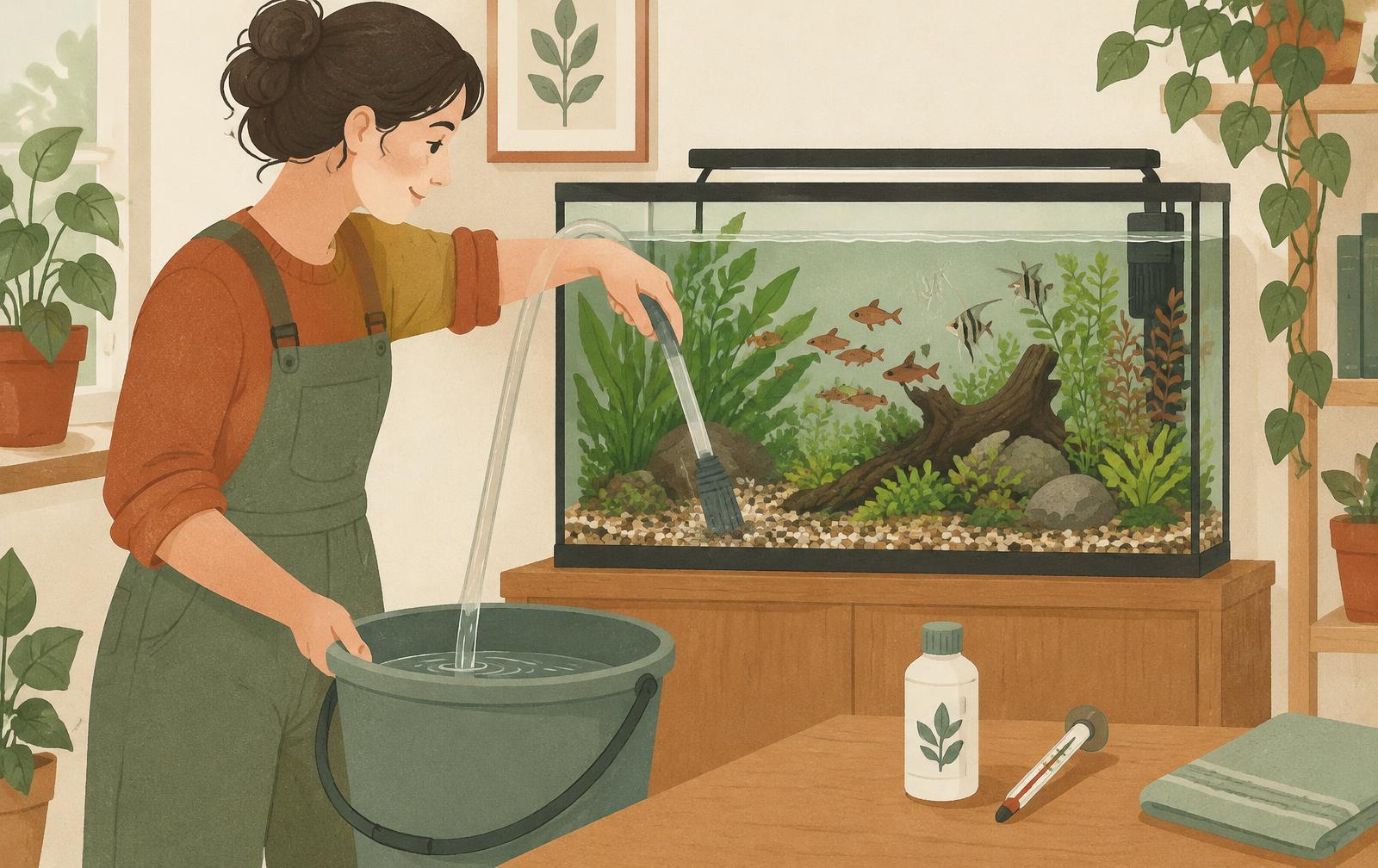
The main winter issue is the temperature of the new water. Cold tap water can be far cooler than a tropical tank in a cold spell. The RSPCA advises that new water should not be a different temperature from the water in the tank, because the difference will shock the fish, and suggests heating it with a separate aquarium heater before adding it. Treat it with a dechlorinator first, since chlorine in tap water harms both fish and filter bacteria.
In an established freshwater tank, ammonia and nitrite should be undetectable on standard test kits all year. If either appears, look for the cause and act, rather than assuming the cold weather explains it.
Does cold weather affect the filter?
The bacteria in a biological filter are affected by temperature, oxygen and water chemistry. The RSPCA notes that cold water can reduce the activity of these bacteria. In a tank that stays at its normal temperature through winter, the filter should not become less effective just because it is cold outside. But if the tank itself cools significantly, or the filter stops, its ability to process waste can fall.
Keep the filter running continuously. When cleaning it, rinse established biological media gently in water removed from the tank; the RSPCA advises never washing it under the tap, as this kills the beneficial bacteria. Do not replace all the filter media because winter has arrived, as that removes established bacteria and can destabilise the tank. If equipment is switched off for maintenance, restart it promptly and check that water is flowing normally. Some filters do not restart automatically after being disconnected, particularly if they need priming.
Oxygen and signs of distress
Cold water can hold more dissolved oxygen than warm water, as Merck explains, so winter itself does not starve a tank of oxygen. But the oxygen a tank actually contains still depends on aeration, circulation, stocking and how much waste is being broken down, so a cool tank does not always have enough, and there is no reason to cool a tropical tank to improve it. The real winter oxygen risk is a filter or air pump stopping during a power cut, made worse by overcrowding or excess waste.
Merck identifies low dissolved oxygen and high ammonia as the two water-quality problems most likely to kill fish directly, and lists low oxygen, high nitrite and gill disease as the main causes of fish gathering at the surface and gulping air. Some species, including gouramis, take air from the surface normally, so judge behaviour against what is usual for your fish.
If several fish suddenly gasp at the surface or show severe distress, act straight away. Check that the filter and any air pump are working, increase surface movement to restore aeration, and test the water. A temperature-matched, dechlorinated partial water change may be needed if the water is unsafe. Do these things immediately while you arrange urgent advice from an aquatic vet, rather than waiting for a response. A normal thermometer reading does not rule out an emergency.
Feeding in winter
In an indoor tank kept at a stable temperature, feeding generally does not need to change with the season. If an unheated tank cools within its fish's normal range, they may become less active and eat less. Feed according to the species, the actual water temperature and your fish's appetite, and remove uneaten food. A heated tropical tank at 25°C is not experiencing winter the way a garden pond is, so pond feeding rules do not apply to it.
Outdoor ponds
Ponds need separate winter care, because their temperature follows the weather. The RSPCA advises maintaining an opening in pond ice for gas exchange, using a pond heater or de-icer if needed, and highlights the importance of avoiding dangerously low water temperatures. The appropriate winter temperature and whether heating is needed depend on the species, pond depth and local conditions. If a pond has already frozen, do not break the ice, as this can harm the fish. Instead, carefully place a saucepan of hot water on the surface to melt a hole. Never pour boiling water straight onto the pond, and never use antifreeze or salt to thaw it.
The RSPCA advises against releasing aquarium fish into outdoor ponds, where they can harm wildlife through hunting and spread disease, and fish should never be released into natural waterways.
Try this today
Check your aquarium's temperature with a separate thermometer, not the heater dial. If the room gets cold overnight, take another reading first thing in the morning and compare the two. Make sure the tank is not in a draught or next to a radiator. Before your next water change, plan how you will bring the new water close to the tank's temperature. And put a blanket, a couple of hot water bottles, a battery air pump with spare batteries and an aquatic specialist's phone number together, ready for a power cut. There may be nothing else to change. A stable aquarium is already doing what it should.
The Bottom Line
Most established indoor aquariums do not need a different care routine in winter. They need the same fundamentals: a temperature that suits the species, working filtration, enough oxygen and good water quality. What changes is the room around the tank. Colder nights can put more demand on the heater, cold tap water makes water changes riskier, and storms bring power cuts. Check the actual water temperature every day, match the temperature of new water, keep a simple power-cut kit to hand and watch your fish for signs of distress. The aim is not a warmer aquarium in winter, but a steady one.
This article is for general information and does not replace advice from an aquatic vet. If your fish show severe breathing difficulty, sudden abnormal behaviour or several deaths, test the water immediately and seek urgent specialist advice.
Common questions
Frequently asked.
References
Sources.
- RSPCA. Caring for your pet fish in winter.
rspca.org.uk - RSPCA. Choosing an aquarium.
rspca.org.uk - Francis-Floyd R, Yanong RPE, Petty BD. Environmental Diseases of Aquatic Animals in Aquatic Systems. Merck Veterinary Manual (professional version). Last updated June 2026.
merckvetmanual.com - UK Power Networks. How do I look after my tropical fish during a power cut?
ukpowernetworks.co.uk - North Carolina State University College of Veterinary Medicine. Dealing with aquariums and ponds during power outages.
news.cvm.ncsu.edu
Keep reading
Further reading.
Want plain-English notes on keeping your fish well through the seasons? Join The Once-Over, our weekly note from Hazel.